
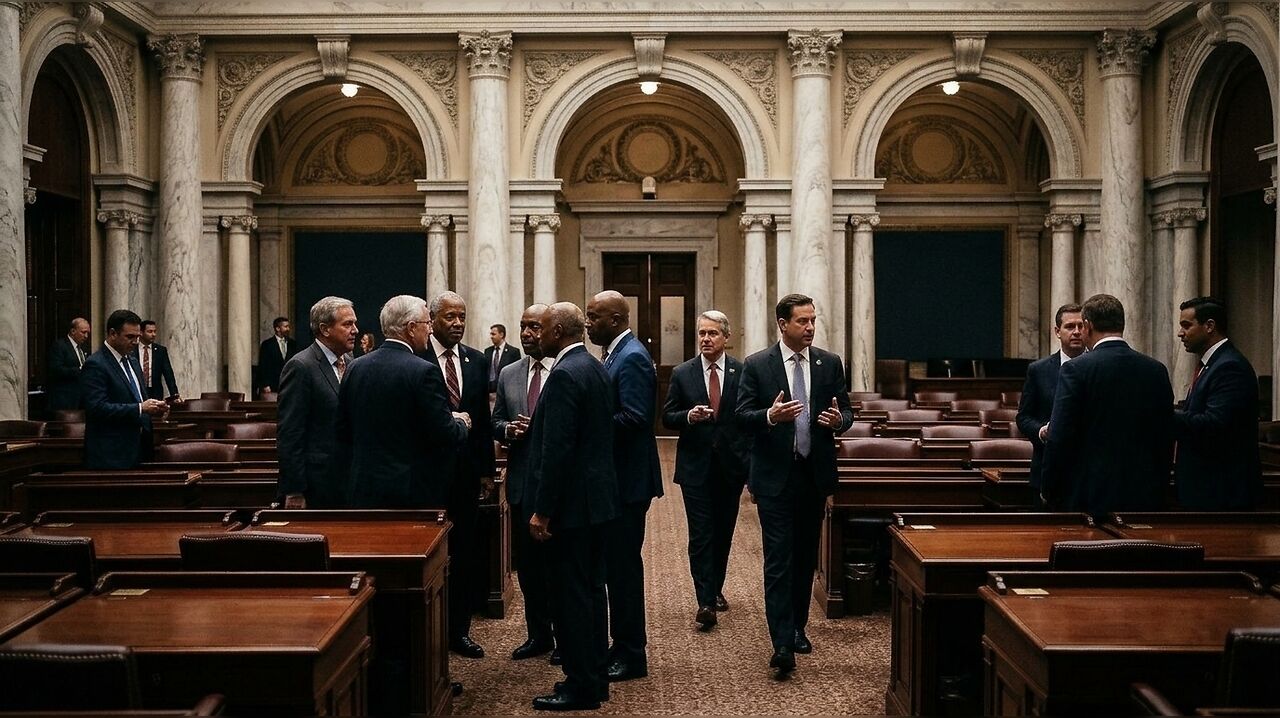
The Democratic Party has regained control of both chambers of the United States Congress following a successful showing in the 2026 midterm elections. By securing majorities in the House of Representatives and the Senate, Democrats have ended two years of Republican legislative dominance, setting the stage for a period of intense scrutiny regarding President Donald Trump’s economic policies and administrative appointments.
In the 100-member Senate, Democrats captured key seats in traditionally Republican-leaning states, including Texas, South Carolina, and Kansas, ensuring they will hold at least 54 seats. The party’s hold on the House was confirmed early Wednesday following critical victories in Pennsylvania, New Jersey, and Colorado. This shift in power grants Democrats the authority to launch investigations, issue subpoenas, and introduce legislation aimed at countering the current administration’s agenda.
Legislative Challenges and Oversight Priorities
Democrats are reportedly preparing an ambitious legislative agenda focused on reversing recent healthcare funding cuts and challenging the administration’s tariff policies. Representative Brendan Boyle, who is expected to lead the House Budget Committee, has indicated that the party intends to prioritize the restoration of
Beyond direct legislative action, the party is expected to utilize its control of congressional committees to conduct rigorous oversight. Plans are reportedly underway to investigate the Treasury Department and the Internal Revenue Service, with particular focus on the policies of Treasury Secretary Scott Bessent. Senator Elizabeth Warren is anticipated to play a central role in these efforts through the Senate Banking Committee, where she is expected to lead inquiries into the administration’s financial regulations and the broader economic impact of current trade strategies.
Focus on Business Ties and Regulatory Efficiency
The new congressional majority is also signaling an intent to examine the intersection of private business interests and federal governance. Lawmakers have expressed interest in reviewing the operations of the Department of Government Efficiency, specifically the role of Elon Musk, as well as federal contracts awarded to his aerospace firm, SpaceX. These investigations are expected to bring increased transparency to the administration’s business dealings and the influence of private sector figures on federal policy.
While the political landscape remains polarized, some sectors may see shifts in their regulatory outlook. Analysts suggest that the Democratic majority could move to protect existing clean energy tax credits, potentially providing stability for renewable energy firms. Despite these potential areas of policy friction, the practical ability of Congress to force a change in the executive branch’s direction remains constrained by the existing constitutional balance of power, ensuring that the coming months will be defined by a persistent partisan tug-of-war over the nation’s economic and social priorities.




