
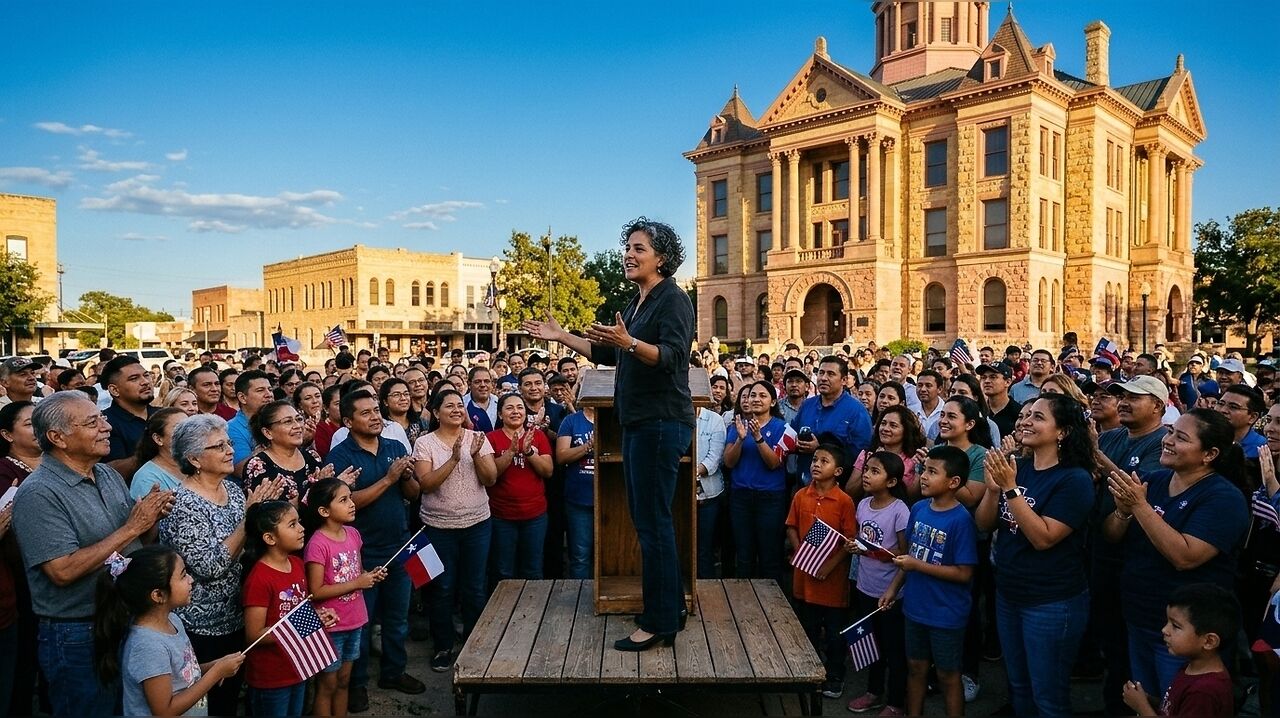
In a historic political realignment, the Democratic Party has secured major victories in Texas, capturing both a U.S. Senate seat and the governorship. These results mark the first time in decades that Democrats have held the state’s top offices, effectively ending a long-standing Republican stronghold. The shift was punctuated by James Talarico’s victory over Ken Paxton in the Senate race and Gina Hinojosa’s defeat of three-term incumbent Governor Greg Abbott.
Hinojosa, who will become the state’s first Latina governor, focused her campaign on the economic pressures facing ordinary families. These electoral outcomes represent a significant departure from Texas’s recent political history; the state had not elected a Democratic senator since 1988, and the last Democratic governor left office in 1995. Beyond the top-tier races, Democrats also made notable progress in the U.S. House of Representatives, securing 11 of the 20 Texas district races called by the Associated Press, with several contests still pending.
Shifting Voter Demographics and Economic Concerns
Analysts point to a decisive shift among Hispanic voters as a primary driver of the Democratic success. Data from South Texas, particularly in Cameron, Hidalgo, and Webb counties, showed substantial Democratic gains in areas with large Hispanic populations. In Cameron County, for instance, Talarico led by 38 percentage points, a stark contrast to the 2024 presidential election results in the same region. Exit polling from NBC News indicated that 43% of Latino voters identified as Democrats, up from 39% in 2024, while Republican identification within the group saw a slight decline.
Advocacy groups, including Voto Latino and Mi Familia Vota, attributed this turnout to a combination of economic anxiety and opposition to the Trump administration’s immigration enforcement policies. Beatriz Lopez, executive director of Voto Latino, noted that the organization registered approximately 400,000 voters during the cycle, emphasizing that affordability and immigration were central to the electorate's concerns. Hinojosa’s campaign strategy, which prioritized family-focused economic issues over broader cultural divisions, appears to have resonated with this demographic.
Impact of Foreign Policy and Inflation
The midterm results were also heavily influenced by the ongoing war involving Iran and its subsequent impact on the domestic economy. Voters cited the conflict as a significant factor in rising fuel prices and general household expenses. Critics, including Democratic candidates, argued that the administration’s military actions and tariff policies exacerbated the financial strain on American families. According to Reuters, nearly nine in ten voters identified the cost of living as a primary factor in their decision-making process.
The broader electoral landscape saw Democrats gain momentum in the U.S. House, with notable wins by candidates including Lizzie Pannill Fletcher, Veronica Escobar, and Joaquin Castro. While Republicans maintained victories in nine of the called districts, the overall trend suggests a challenging environment for the incumbent party. As the final results for the remaining 18 districts are tallied, the outcome in Texas stands as a significant indicator of the current political climate, reflecting deep-seated voter dissatisfaction with the intersection of foreign military engagement and domestic economic stability.




