
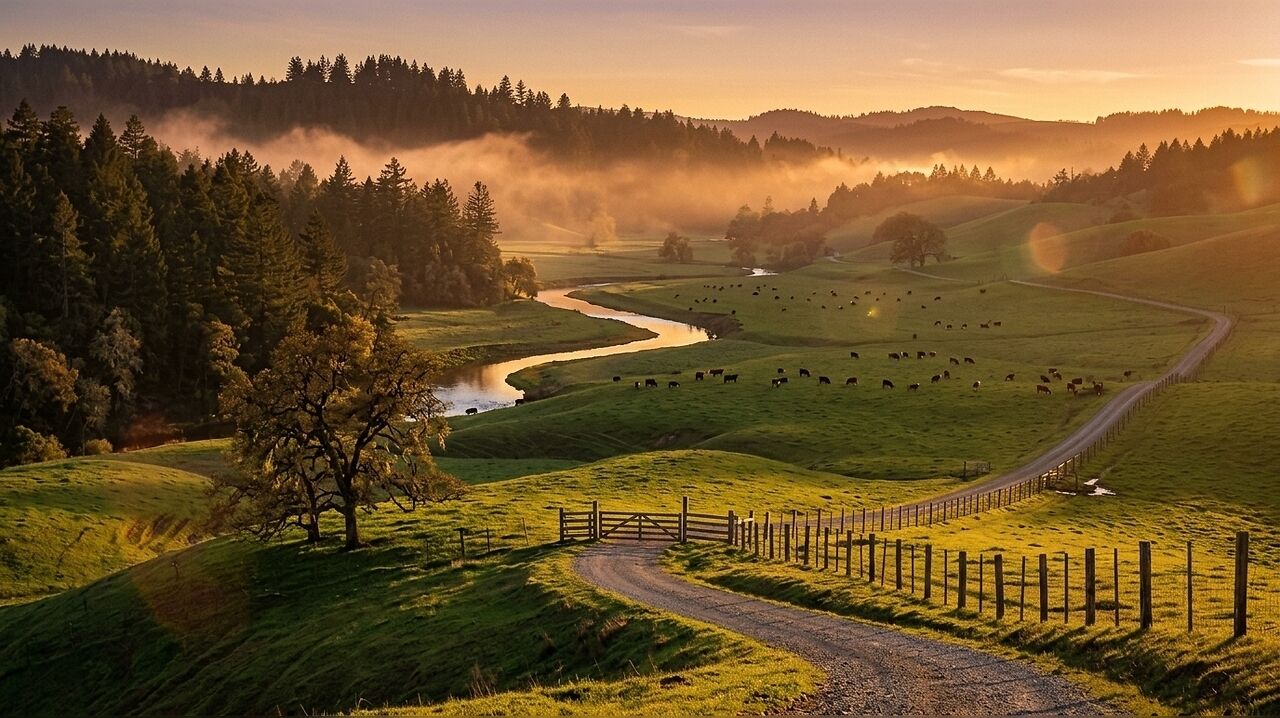
A historic 6,625-acre working cattle ranch in Southern
The ranch, located in Benbow, was originally purchased by Charles and Alice Kinsey in 1914. Over the subsequent 112 years, the family transformed the property into a productive operation that currently supports more than 4,500 acres of cow-calf grazing and sustainable timber management. Beyond its agricultural utility, the ranch encompasses over five miles of the East Branch of the South Fork Eel River and ten miles of smaller streams, providing essential habitat for endangered salmon and diverse wildlife species.
A Legacy of Land Stewardship
The conservation effort was largely driven by the late David Johnson, a grandson of the original founders who spent his life working the land. According to his sister, Marjorie Johnson Yates, protecting the ranch was a long-held dream for her brother, who passed away earlier in 2024. Yates noted that the easement provides a financial and legal safeguard, ensuring that the property remains intact and protected from development, regardless of whether it stays within the family or is eventually sold.
The easement restricts development while allowing the family to continue their traditional ranching and forestry activities. By protecting the riparian habitats and farmland soils, the agreement creates a significant ecological buffer in the region. The project also complements other nearby conservation efforts, such as the Wagner Ranch and Sproul Creek easements, which together form a growing corridor of protected working lands in the Benbow and Garberville area.
Collaborative Conservation Efforts
The completion of the project involved coordination between the Kinsey family, the NRLT, and state partners, including the Department of Conservation and the Strategic Growth Council. Zach Wenderott, a project manager at the NRLT, described the agreement as a successful model for balancing agricultural productivity with environmental preservation. He emphasized that the outcome provides long-term benefits for both the local farming community and the wildlife populations that rely on the watershed.
Tom Strobel, who served as the representative for the Kinsey family during the negotiations, highlighted the importance of proactive preservation over future restoration. With the legal protections now in place, the ranch is set to continue its century-long history as a working landscape. The NRLT intends to formally recognize the Kinsey and Johnson families for their multi-generational commitment to the land during an upcoming celebration scheduled for October 11.




