
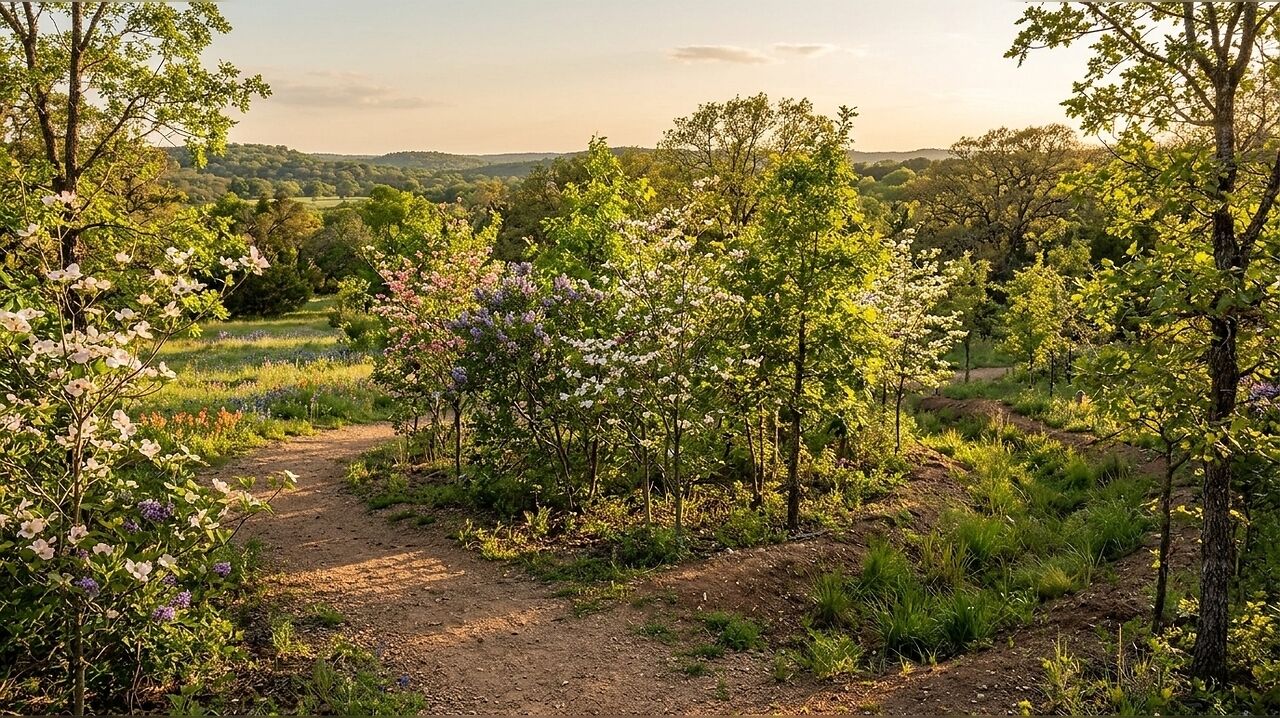
A native woodland grove established in Austin’s
The initiative was funded by the singer’s Changemaker Ticket Program, which is managed in partnership with the environmental nonprofit
Restoration and Water Management
The grove was developed by Zilker 351, the nonprofit organization responsible for the stewardship of the 351-acre park. Rather than serving as a purely aesthetic addition, the site was engineered to address specific environmental challenges. The nonprofit installed soil berms and vegetated swales to slow the flow of water and filter pollutants from runoff originating near Azie Morton Boulevard. These features are currently operational, assisting in both water quality improvement and aquifer recharge, a priority for the region as it navigates ongoing drought conditions.
The planting process involved more than 150 volunteers who worked over two weekends to install 150 native trees. The selection includes flowering dogwoods, mountain laurels, Mexican plums, redbuds, cedar elms, and Texas red oaks. These were arranged in a motte formation—a clustering technique that mimics the natural woodland patterns of the Texas Hill Country. As these clusters mature, they are expected to form a continuous canopy that will provide shade and help lower local temperatures through transpiration.
Community Impact and Future Outlook
While the site is informally referred to as the Billie Eilish Grove, it remains a public space accessible to all park visitors. Zilker 351 has requested that the public remain on established trails to ensure the protection of the young trees. The nonprofit is currently seeking a formal dedication from the City of Austin, which could potentially lead to an invitation for the artist to visit the site.
The project represents a collaborative effort involving TreeFolks, American Forests, and the City of Austin’s Urban Forest program. Beyond the trees, the area now features a wildflower meadow designed to support local pollinators. To ensure the grove’s long-term viability, a temporary irrigation system utilizing a refillable cistern has been installed to support the trees during their establishment phase. As the woodland matures, organizers anticipate that the ecological benefits—including habitat creation, carbon capture, and improved stormwater management—will continue to increase, providing a lasting environmental contribution to the park.




