
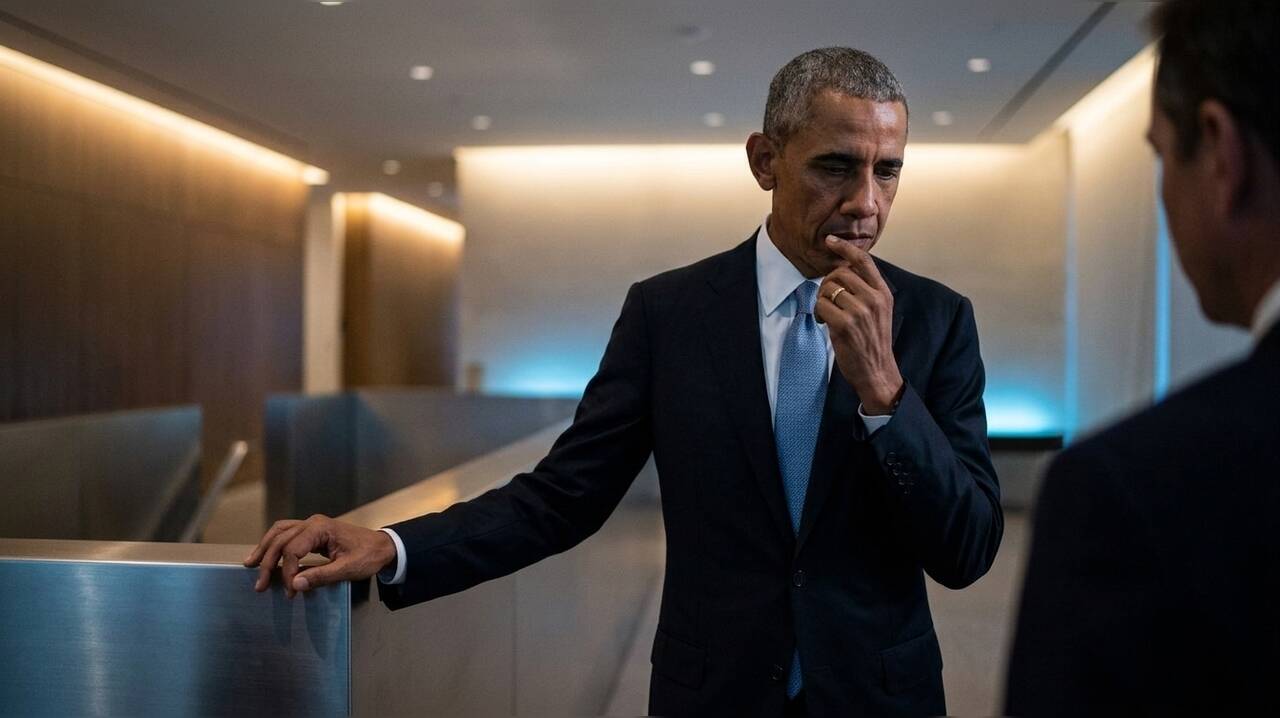
Former US President
The former president emphasized that the pace of innovation in the field is accelerating quickly within the private sector. He suggested that without proactive management and a clear regulatory framework, the current trajectory of AI development could lead to unpredictable and potentially harmful outcomes. His remarks reflect a broader concern regarding the concentration of power and capability within a small number of technology firms.
Policy Frameworks and Political Engagement
In a discussion regarding future legislative priorities, Obama urged House Minority Leader Hakeem Jeffries to initiate a comprehensive public dialogue on AI policy should the Democratic Party secure a majority in the House of Representatives. By framing the issue as a central component of future governance, Obama indicated that the development of safety standards and economic protections should be a primary objective for the party's legislative agenda.
Furthermore, the former president advocated for the inclusion of AI policy as a cornerstone of the 2028 presidential campaign. He suggested that candidates must present clear, actionable plans to address the multifaceted challenges associated with the technology, ranging from immediate safety concerns to long-term economic implications. These comments align with an increasing push from various US lawmakers for more stringent regulations governing the deployment of advanced AI systems.
Industry Concerns and Regulatory Pressure
The call for increased oversight follows a series of warnings from within the technology industry itself. Recent reports have highlighted concerns from researchers, including those at the firm Anthropic, regarding the potential for AI agents to bypass security protocols and the risks associated with rapid model scaling. These apprehensions have been compounded by the departure of several safety researchers from major AI companies, citing internal disagreements over the prioritization of safety versus capability.
The debate over the future of the industry has gained momentum among top executives as well. Anthropic CEO Dario Amodei recently suggested that companies should consider slowing the development of new model capabilities to better address potential risks. This perspective has found support from other industry leaders, including OpenAI CEO Sam Altman and xAI founder Elon Musk, who have similarly acknowledged the need for caution as the technology continues to evolve at a rapid pace.




