
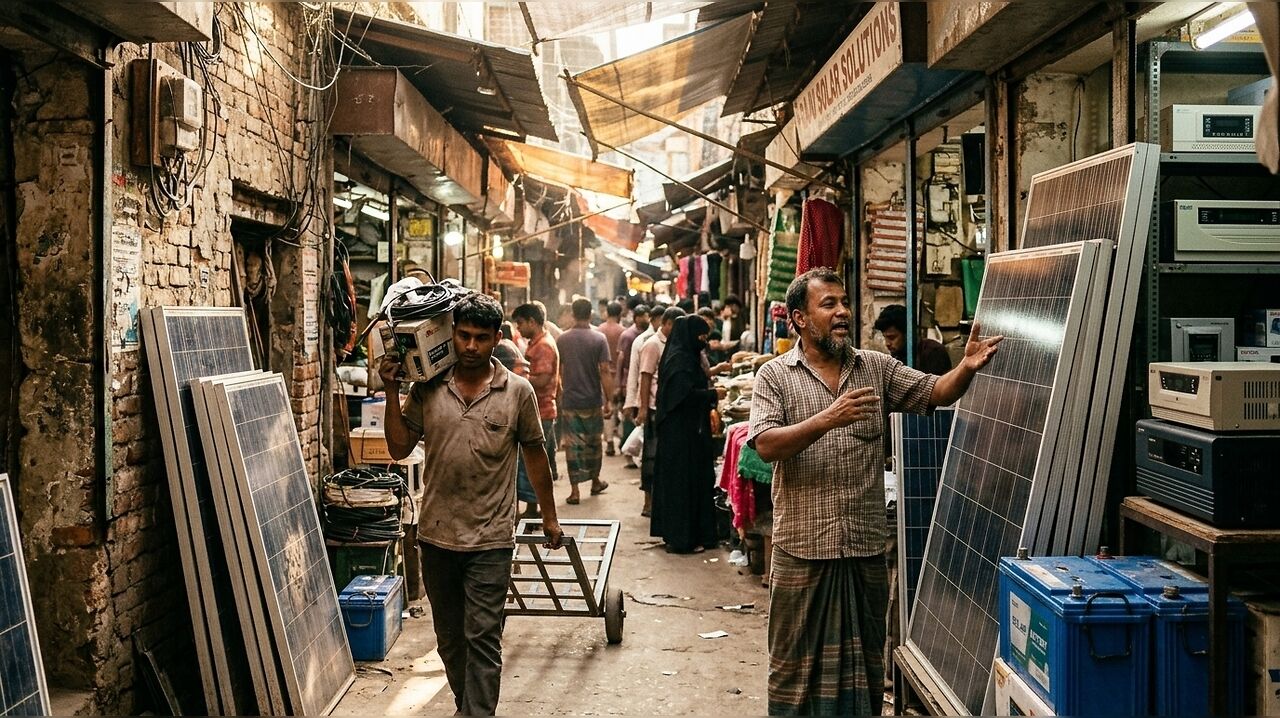
A bustling marketplace in central Dhaka has emerged as a focal point for Bangladesh’s rapid shift toward renewable energy. In the narrow aisles of Kaptan Bazar, storefronts are increasingly dedicated to the sale of solar panels and battery systems, reflecting a nationwide trend driven by an intensifying energy crisis. Retailers report a significant uptick in interest, with some vendors noting that sales have jumped by 50% compared to the previous year as both residential and industrial consumers seek alternatives to the country's unreliable electricity grid.
The surge in demand is largely attributed to severe load-shedding, which has seen some regions experience blackouts lasting up to 18 hours a day. This instability, exacerbated by disruptions in liquefied natural gas (LNG) supplies from the Persian Gulf, has forced consumers to look for independent power solutions. As the cost of solar technology continues to decline, these systems have become an increasingly viable financial alternative to the rising electricity bills caused by the government's reliance on expensive spot-market LNG purchases.
Market Growth and Government Policy
The transition is being supported by a significant influx of affordable equipment from China, which remains the primary supplier of solar and battery technology to the region. Import data from March through September indicates that Bangladesh’s procurement of such equipment from China has more than doubled, reaching approximately $140 million. Products from manufacturers such as Jinko Solar Co. and Longi Green Energy Technology Co. have become market staples due to their competitive pricing and perceived reliability.
To further encourage this transition, the government has implemented measures including the reduction of import tariffs on solar equipment. Official targets now aim for renewable energy to account for 20% of the national power mix by 2030, rising to 30% by 2040—a substantial increase from the 2.5% recorded last year. Analysts suggest that while tax cuts are beneficial for higher-income households, additional support mechanisms, such as capital subsidies, may be required to make the technology accessible to lower-income groups.
Industrial Limitations and Future Outlook
While solar adoption is growing, it remains an incomplete solution for the country’s energy-intensive sectors. Major industries, particularly the textile and garment manufacturing plants that serve global brands, require significant amounts of steam for production processes. Industrial leaders have noted that while solar can provide electricity, it cannot replace the natural gas required to power the boilers essential for dyeing and finishing fabrics. Similarly, large-scale commercial entities, such as hotels, are exploring solar and lithium-ion battery storage as a means to mitigate the high costs of running diesel-powered generators during frequent grid failures.
Despite these technical constraints, the momentum toward decentralised power continues to build. Entrepreneurs are increasingly looking to enter the energy supply sector, with some businesses considering the integration of solar and lithium battery distribution into their existing operations. As the country navigates ongoing energy volatility, the shift toward renewables is being framed by authorities as a necessary step to bolster national energy security against future supply shocks.




