
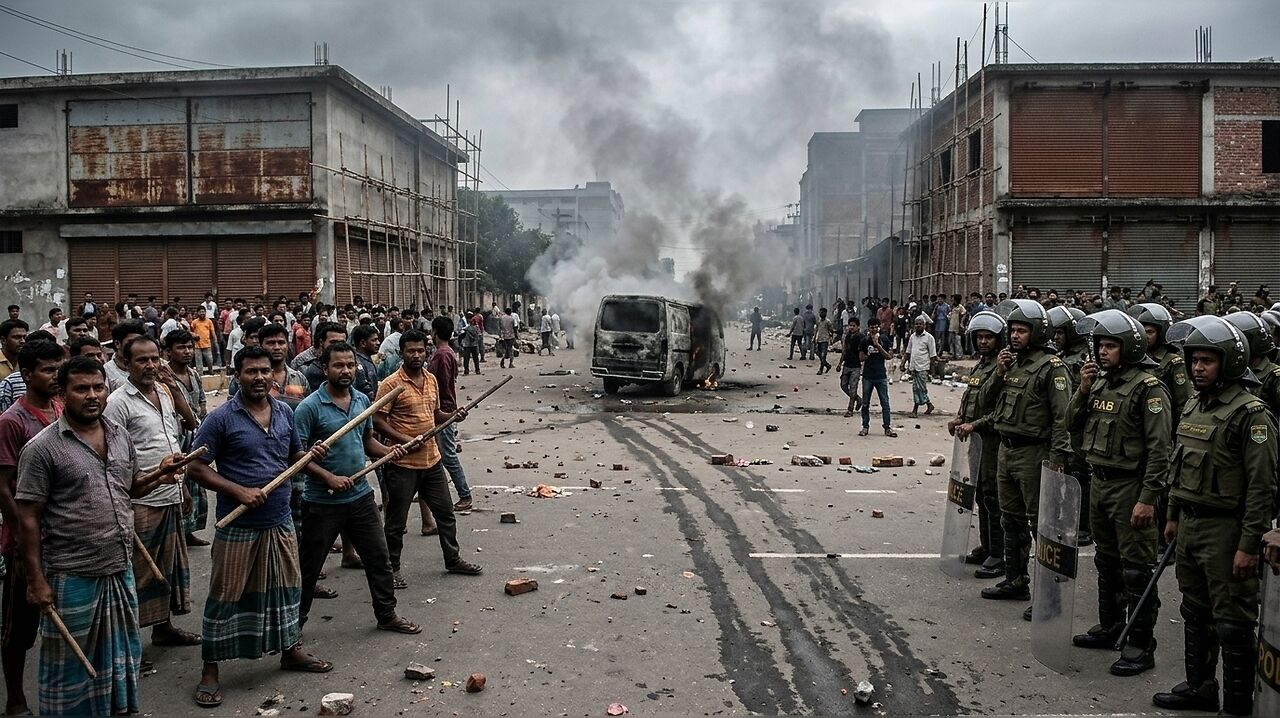
Authorities in Bangladesh have deployed additional paramilitary forces to industrial hubs surrounding the capital as protests by garment workers over wage demands entered their fifth consecutive day. The unrest, which has seen clashes between demonstrators and law enforcement, has prompted widespread factory closures and heightened security measures across the region.
The Bangladesh Garment Manufacturers and Exporters Association reported that approximately 50 factories in the Gazipur suburb have suspended operations due to safety concerns. This decision followed reports of a worker succumbing to injuries sustained during the ongoing demonstrations. In the Savar industrial area, protesters blocked the Dhaka-Aricha highway and set a police vehicle on fire, marking a significant escalation in the industrial action.
Security Response and Political Tensions
In response to the mounting instability, the government has intensified its security presence. According to reports from the state-run BSS news agency, 10,000 police officers have been deployed in the Mirpur district alone. They are being supported by various specialized units, including the Counter Terrorism and Transnational Crime division and the Armed Police Battalion. Furthermore, 24 platoons of the Border Guard Bangladesh have been stationed across key industrial zones, including Ashulia, Gazipur, and Narayanganj, with authorities utilizing drones and body-worn cameras to monitor the situation.
The unrest has also taken on a political dimension. Activists from the Bangladesh Nationalist Party (BNP) have taken to the streets, claiming they are acting to maintain order and prevent infiltration by members of the disbanded Awami League. Zahedur Rahman, an adviser to the government, publicly accused former Prime Minister Sheikh Hasina—who fled the country following a student-led uprising in August 2024—of orchestrating the protests to destabilize the nation. These allegations have been met with counter-claims regarding the political climate in the country.
Wage Negotiations and Economic Context
The garment sector, a critical pillar of the national economy, is currently grappling with the dual pressures of global market competition and domestic inflation, which is currently hovering around 8 per cent. Workers argue that their existing wages are insufficient to meet the rising cost of living, leading to the current wave of industrial action.
In an effort to address the grievances, the government established a six-member Wage Board on Sunday, chaired by a senior district judge. During its inaugural meeting on Wednesday, the board committed to finalizing recommendations for a new wage structure within one month. While the government had initially intended for the new pay scales to take effect in January, reports indicate that authorities are now working to implement the changes starting December 1 in an effort to quell the ongoing demonstrations.




