
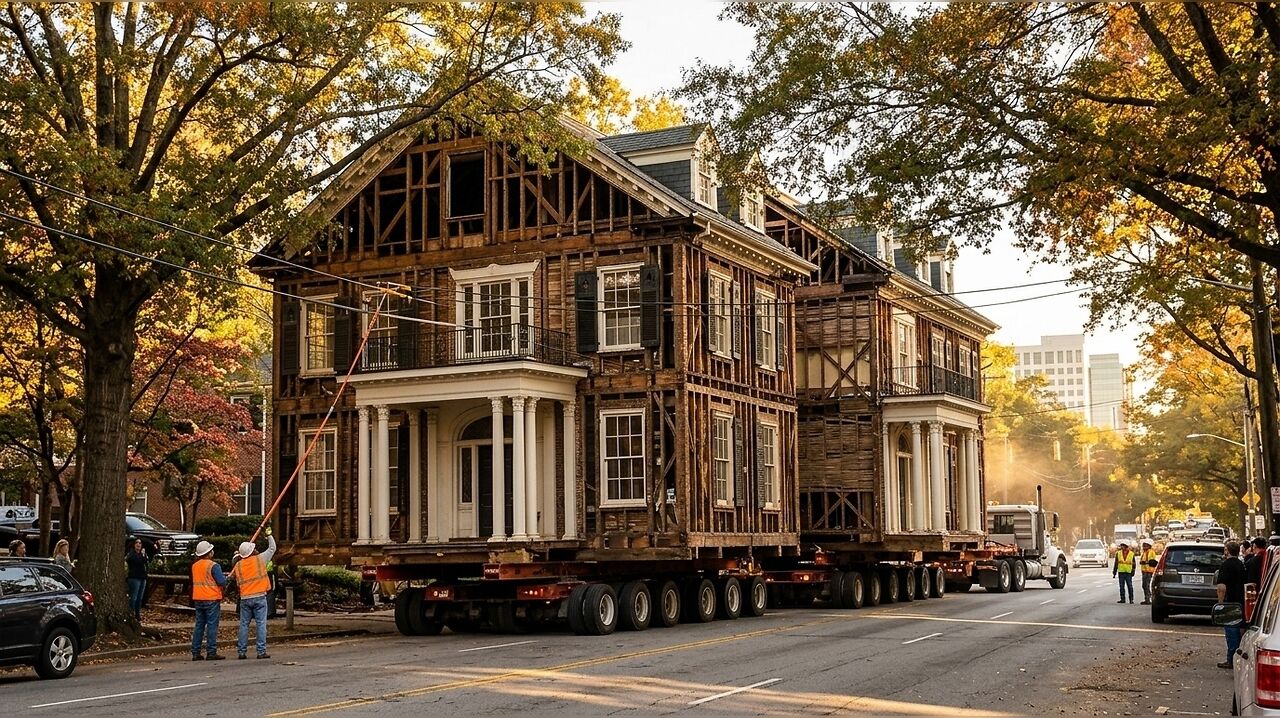
In a remarkable feat of
The residence, originally constructed in 1924 for Hollins Nicholas Randolph—a prominent attorney and the great-great-grandson of Thomas Jefferson—was designed by architect P. Thornton Mayre. Its architectural roots were inspired by the Randolph family’s ancestral home near Charlottesville, Virginia. Following its initial decade under the Randolph family, the property was purchased by Margaret Lucas in 1935, remaining in her family’s possession until 1987. The home later gained cultural recognition when it was featured on the cover of the 1988 bestselling novel Peachtree Road.
A Preservation Effort Against the Odds
The mansion’s precarious future began in 1998 when the 2500 Peachtree Condo Association acquired the property. Although the association initially intended to repurpose the building as a clubhouse, the mounting costs of maintenance led to neglect. By late 2012, the association had secured a demolition permit and offered the structure for free to any party capable of relocating it.
Preservationists Roger Smith and the late Christopher M. Jones intervened after learning of the impending demolition. Their firm, NewTown Partners, took on the project, which included securing a new site at 78 Peachtree Circle in Ansley Park and donating a preservation façade easement to the
The Logistics of Moving a Mansion
The process of moving the home began in July 2013 with a meticulous dismantling phase. Crews removed the slate roof and brick façade to reduce the building's weight, while interior elements such as baseboards and doors were carefully cataloged to ensure they could be restored to their original positions. The structure was eventually split above the first floor, with each section reaching a height of 19 feet.
On November 8, 2013, the house began its seven-hour, 2.1-mile journey. Using hydraulic lifts, the two halves were transported across a specially constructed temporary road. Following the move, a comprehensive rehabilitation process commenced in 2014. Smith and Jones lived on-site to oversee the project, which Smith described as a challenging financial and logistical endeavor. Christopher M. Jones passed away in January 2019, shortly before the restoration was finalized. In his honor, the property was renamed the




