
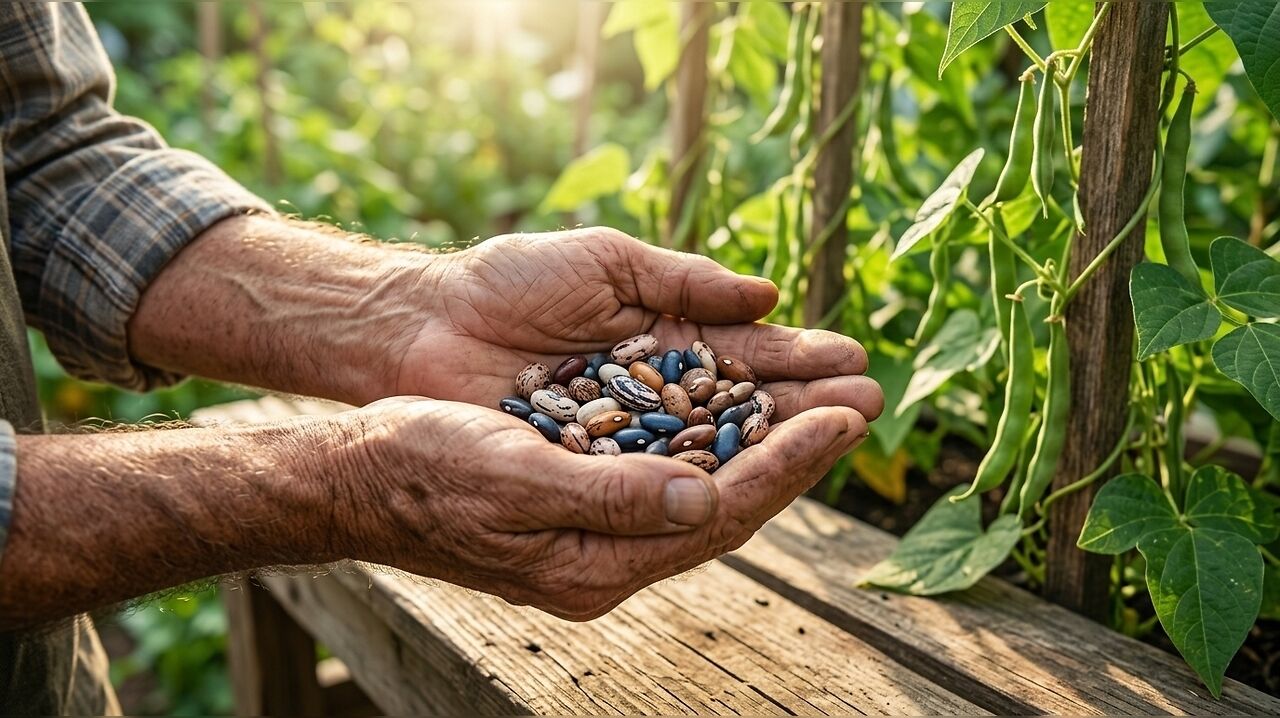
A rare dwarf French bean, preserved by a single family for nearly eight decades after being gifted by a World War II soldier, has been officially inducted into Britain’s National Collection of Heritage Vegetables. Known as Weller’s Blue, the bean is one of 11 heirloom varieties recently added to the Heritage Seed Library, a project managed by the charity
The inclusion of Weller’s Blue follows a rigorous two-year initiative titled Sowing Your Seeds, which is funded by the National Lottery Heritage Fund. The project focuses on identifying and conserving rare vegetable varieties grown in private gardens and allotments across the Midlands. According to Garden Organic, the bean’s history dates back to 1946, when a soldier returning from service in France provided the seeds to the father of the current donor, who has personally cultivated and saved the variety since 1970.
Preserving agricultural history through community discovery
The Heritage Seed Library functions as a living archive, selecting seeds that are not available through commercial suppliers and have demonstrated consistent performance in UK growing conditions. Before a variety is accepted into the permanent collection, the horticultural team conducts extensive research into its origins, often interviewing donors and cross-referencing historical seed catalogues. This process ensures that the library adds unique genetic diversity to its holdings rather than duplicating common market varieties.
During the 2025 trial phase, 19 varieties were evaluated at the library’s site. The assessment process involved monitoring germination rates, plant vigour, and resistance to pests and disease. Horticulturalists also hand-pollinated the plants to ensure purity. While five varieties were rejected due to poor growth or variability, and two biennial crops require further cultivation, 11 were successfully admitted to the permanent collection. These include historical staples such as the 150-year-old Grandfather’s Broad Bean and the Borough Wonder lettuce, which dates back to at least 1945.
Ongoing efforts to secure rare genetic traits
The project also highlights the complexities of maintaining genetic consistency in heirloom crops. For instance, the runner bean known as Bumpsteed Black—a variety prized for its unique all-black seeds—was excluded from the 2025 intake after some plants reverted to traditional speckled patterns due to cross-pollination. Garden Organic is currently working to isolate the desired traits, with plans to re-evaluate the variety in 2026.
In contrast, other additions have provided researchers with new insights into plant resilience. Red Orach, another 2025 inductee, is the first variety in the collection noted for producing two distinct types of seeds on a single plant. Experts suggest that the varying seed coat thicknesses may allow the plant to stagger germination, potentially aiding survival in diverse environmental conditions. As the Sowing Your Seeds project continues through 2026, the organisation is preparing to trial an additional 27 varieties, while continuing to call for public contributions of rare seeds held within families and local communities.




