
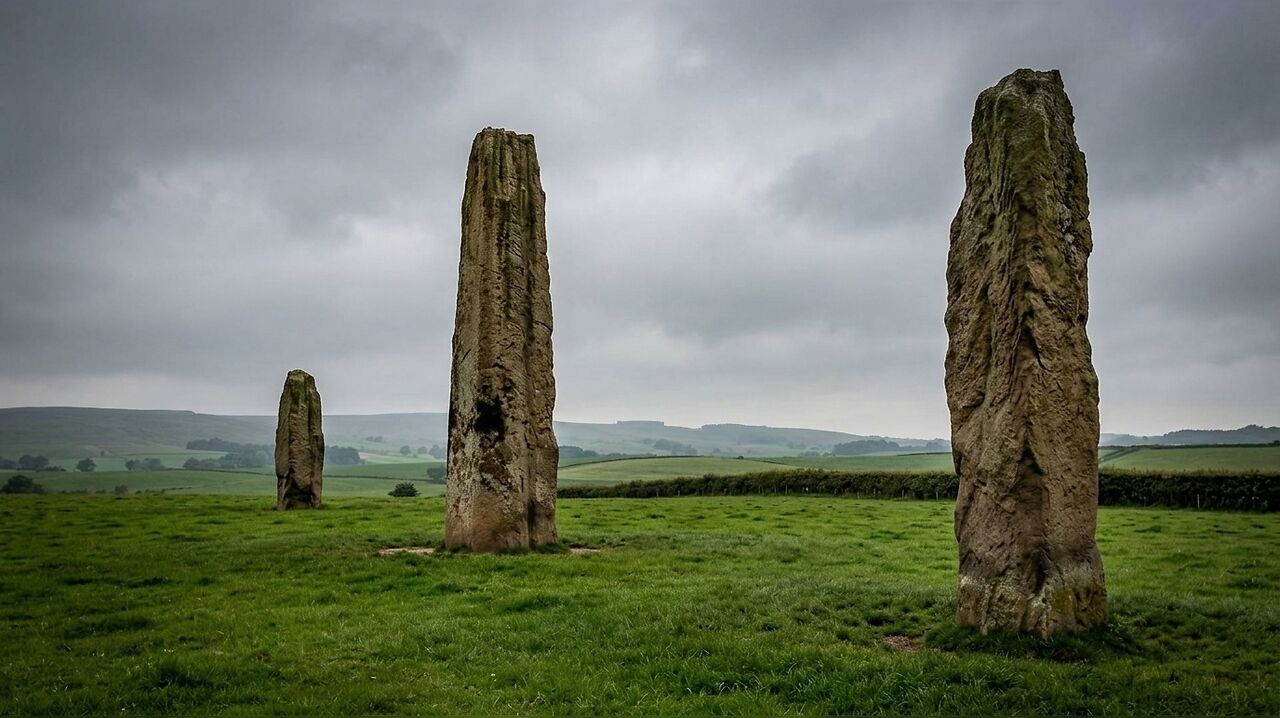
New scientific research has resolved a long-standing mystery regarding the origins of the Devil’s Arrows, a series of prehistoric standing stones located near
The findings, published in the journal Proceedings of the Royal Society A, utilized advanced isotopic fingerprinting to trace the geological origin of the stones. By analyzing microscopic zircon and apatite minerals, the research team determined that the megaliths originated from
Uncovering the history of Britain’s tallest stone row
Standing nearly seven metres high, the three surviving Devil’s Arrows represent the tallest prehistoric stone row in Britain, surpassing the height of the stones found at Stonehenge. The site, which features stones made of Pennine Basin Millstone Grit, has long been a subject of archaeological interest. While local folklore once attributed the placement of the stones to the Devil, who allegedly hurled them toward Boroughbridge, the new geological data provides a concrete timeline for the human labor involved in their construction approximately 4,000 years ago.
Dr. Jim Leary of the University of York noted that while monuments in southern England and Scotland often dominate archaeological discourse, the Devil’s Arrows remain a significant, albeit understudied, feature of the Neolithic landscape. The stones are believed to have served as a southern gateway to a vast ceremonial area situated between the Rivers Swale and Ure, a region characterized by a high concentration of late-Neolithic henges.
A missing monument identified
In addition to identifying the source of the stones, the study provided evidence to support a 19th-century theory regarding a missing fourth monolith. Historical records from the 16th century mentioned a fourth stone that had disappeared, with later accounts suggesting it had been broken up for local construction projects. Antiquarian J.R. Walbran had previously proposed that a segment of this lost stone was repurposed to create the Battle Cross, a 15th-century monument in the nearby village of Aldborough.
The recent mineral analysis confirmed Walbran’s hypothesis, identifying the medieval cross as a carved section of one of the original Devil’s Arrows. This discovery validates long-standing local legends and historical theories about the fate of the missing stone. Representatives from heritage organizations, including Historic England and the National Trust, have welcomed the research, noting that the findings provide a deeper understanding of the Neolithic communities that shaped the Yorkshire landscape and offer new insights into how these ancient monuments can be preserved for the future.




