
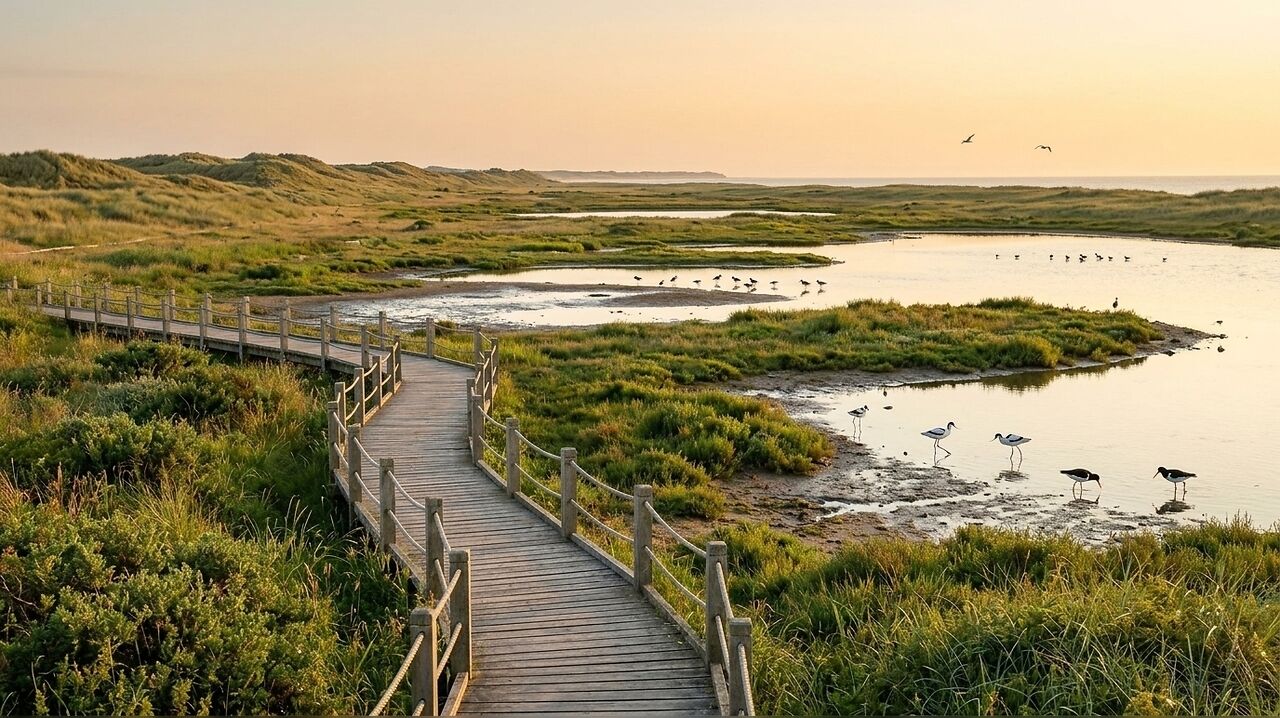
A two-kilometre stretch of the
The
Restoring Biodiversity Through Landscape Engineering
The conversion of the former golf course required significant environmental engineering, including the movement of approximately 52,000 cubic metres of earth to create shallow pools, islands, and wading areas. These features were specifically designed to attract shore and marsh birds. The success of these efforts has been noted by the early arrival of various species; in 2026, avocets and oystercatchers were recorded nesting and breeding at the site, while little ringed plovers have successfully raised chicks for two consecutive years.
Beyond the creation of water features, the project involved the introduction of native flora to encourage biodiversity. Green hay from a nearby Lincolnshire Wildlife Trust reserve was utilised to establish species-rich grassland, and thousands of native coastal shrubs—such as sea buckthorn, gorse, and blackthorn—were planted across the site. The management of the land has also shifted, with large areas of grass left unmown to allow for the natural emergence of plant life, supported by a team of over 200 volunteers who have assisted with planting and habitat maintenance.
Public Access and Future Conservation Goals
The transformation of Sandilands has transitioned the land from a private members' facility to a public space. The reserve now features new walking paths, boardwalks, and an accessible visitor building that houses a café and community area. This development adds a significant wetland component to the 3,500-hectare Lincolnshire Coastal Country Park network.
Looking ahead, the National Trust intends to continue refining the site’s ecological health. Future plans include the introduction of Highland ponies for conservation grazing to manage vegetation, as well as the potential reintroduction of natterjack toads once the pond habitats reach the necessary level of maturity. For now, the focus remains on monitoring the site’s development and managing the habitats to ensure they continue to support the diverse range of wildlife that has already begun to inhabit the former fairways.




