
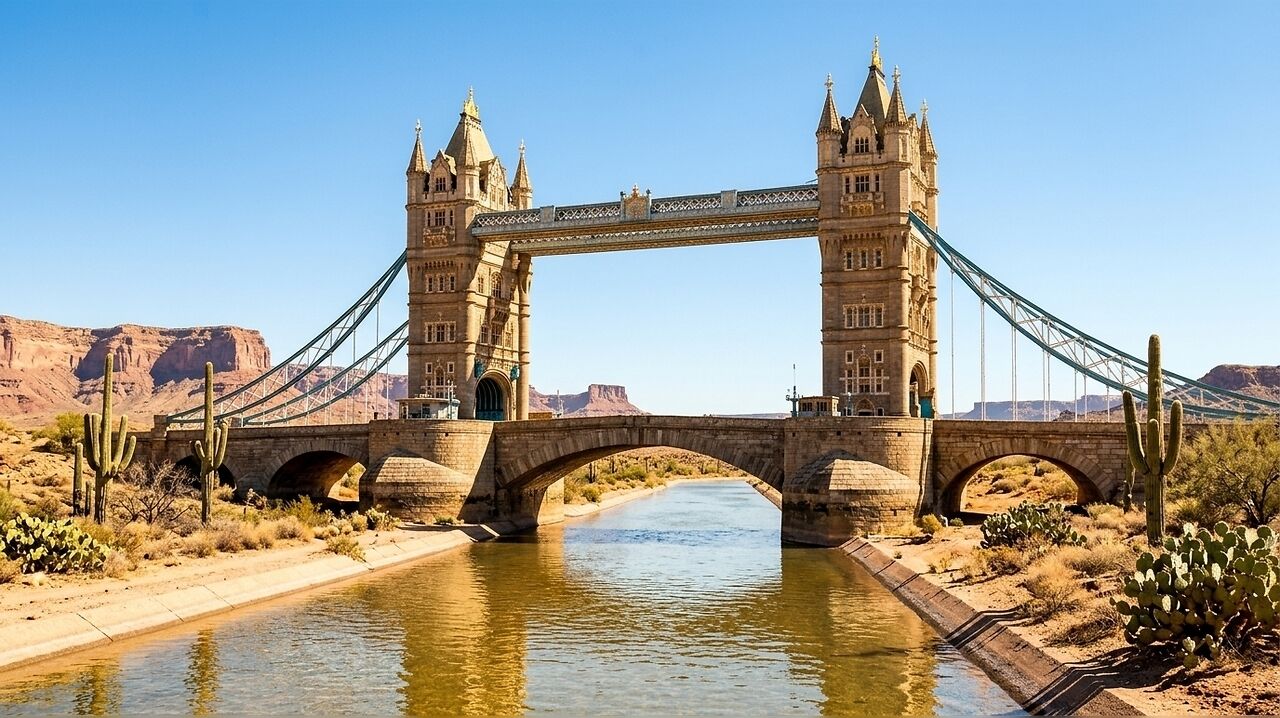
The iconic
Rather than consigning the bridge to a scrapyard, city officials sought a buyer who might preserve the monument. Councillor Ivan Luckin spearheaded the effort to market the structure in the United States, framing it as a tangible piece of 2,000 years of history. His pitch eventually reached
A Transatlantic Engineering Feat
In April 1968, McCulloch secured the purchase of the bridge for $2,460,000. The price was calculated based on the estimated cost of dismantling the structure, with an additional $60,000 added as a symbolic gesture—$1,000 for each year of McCulloch’s age at the time of the planned reopening. The project, which would become one of the most complex logistical puzzles in history, required the meticulous cataloging of 10,276 exterior granite blocks.
Each stone was assigned a four-number identification code, detailing its specific arch span, row, and position. Once dismantled, the granite pieces were shipped through the Panama Canal to Long Beach, California, before being transported by truck to the Arizona desert. The reconstruction process, overseen by architect Robert Beresford, took three years to complete. To ensure the bridge could handle modern traffic, engineers built a hollow core of steel-reinforced concrete, using the original granite as a decorative exterior facade.
Creating a New Landmark
To provide the bridge with a functional purpose in its new environment, McCulloch’s team excavated a channel through a peninsula in Lake Havasu, effectively turning the land into an island. This allowed the bridge to span a body of water, mirroring its original role on the Thames. The total cost of the project, including shipping, assembly, and the excavation of the channel, reached approximately $7 million.
The bridge officially reopened in its new desert home in the early 1970s. Decades later, the structure remains a prominent landmark in Lake Havasu City. Visitors can still observe the original numbering system etched into the granite blocks, serving as a permanent reminder of the bridge's journey from the banks of the Thames to the shores of an Arizona lake.




