
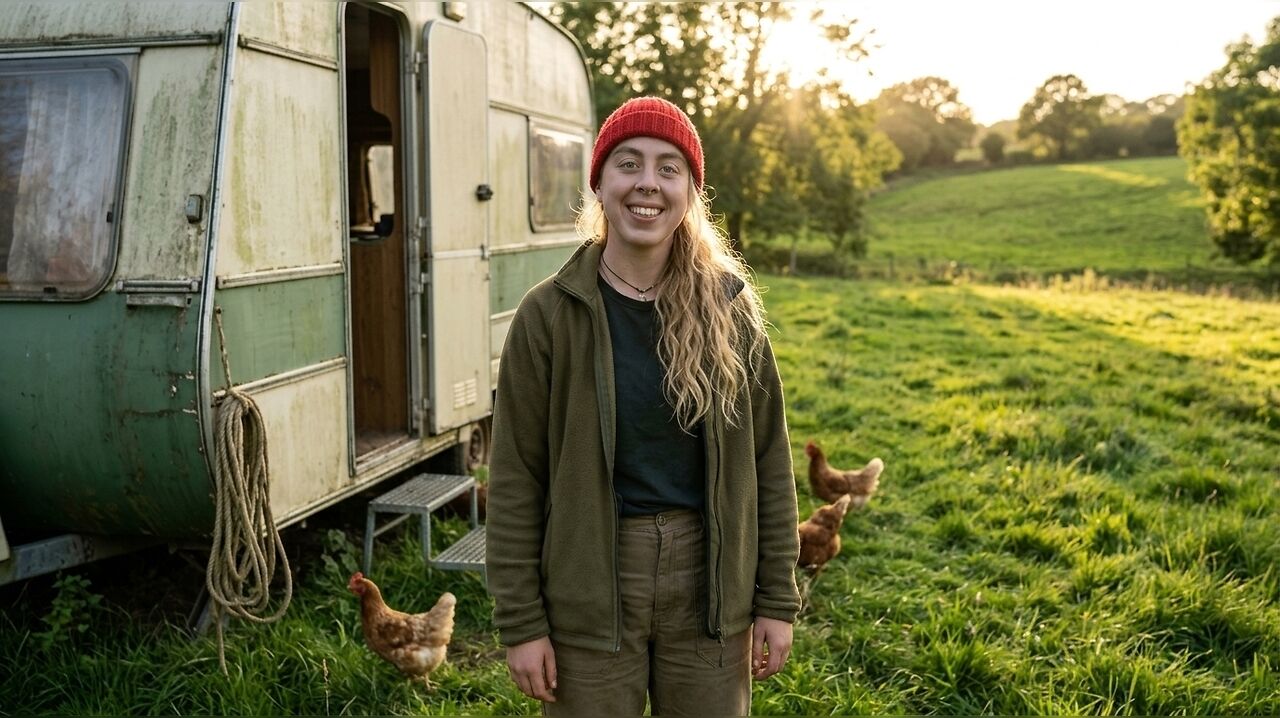
A former National Health Service (NHS) project manager has undergone a radical lifestyle shift, leaving behind a stable career and a conventional home to embrace a nomadic existence in a caravan.
Prior to her departure from the corporate world, Outram described feeling trapped on a metaphorical treadmill, where the majority of her income was consumed by mortgage payments and the associated costs of maintaining a traditional lifestyle. Having purchased a two-bedroom flat in October 2022, she found that the financial obligations of homeownership left her feeling restricted and unfulfilled. Her time on the survival show, which required her to navigate extreme isolation and forage for food with minimal resources, served as a catalyst for her decision to seek a different path.
Transitioning to a Minimalist Lifestyle
Following her return to the UK, Outram moved into a caravan with her partner, 33-year-old stonemason Tom Park. The couple purchased the vehicle for approximately $6,100 and began renting out her former flat. Their current living arrangement involves staying on farmland, where they provide a few hours of labor—such as property maintenance or childcare assistance—each week in exchange for accommodation, electricity, and water. This shift has eliminated their primary housing expenses, which previously included significant monthly mortgage and utility payments.
The couple reports that their new lifestyle has resulted in substantial financial savings, estimated at roughly $3,200 per month. While they have significantly reduced their overhead, they continue to work; Outram generates income through content creation and the development of outdoor workshops, while Park maintains his career as a stonemason. Outram has since launched The Grim Adventure Club, an initiative through which she leads hiking, canoeing, and bushcraft expeditions to help others engage more deeply with the natural environment.
Future Objectives and Perspectives
Despite their departure from traditional housing, the couple maintains long-term financial goals. They are currently saving with the intention of eventually purchasing a plot of land to build a home or acquiring a property for renovation. Outram has emphasized that their choice to live in a caravan is a deliberate move toward freedom rather than a result of financial hardship. She noted that she currently earns more than she did in her previous role and has no desire to return to her former routine.
Outram’s experience highlights a growing trend of individuals re-evaluating the balance between professional stability and personal autonomy. By prioritizing lower living costs and outdoor pursuits, she and her partner have secured a lifestyle that allows for greater flexibility and disposable income. For now, the couple remains committed to their nomadic arrangement, viewing it as a sustainable way to achieve their financial objectives while living in accordance with their personal values.




