
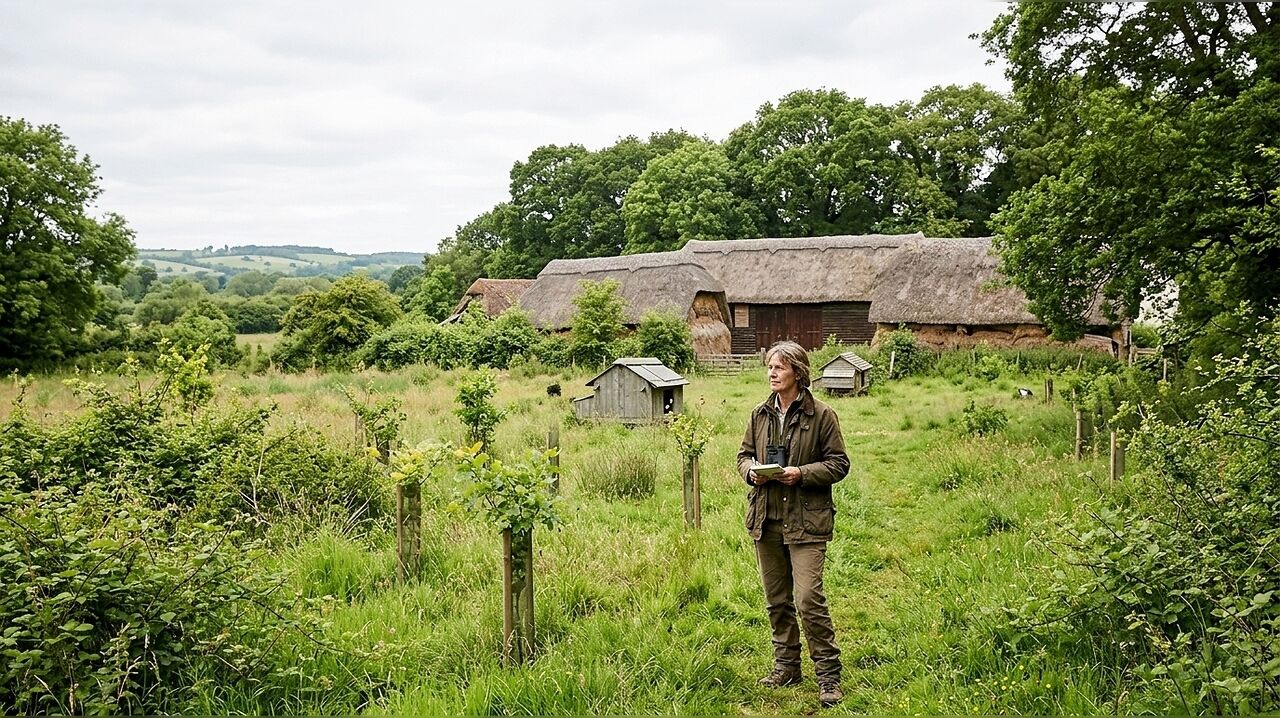
An Essex estate has initiated a significant 200-acre nature-recovery project, drawing inspiration from the successful natural regeneration of a smaller plot of land left untouched for ten years. The
The initiative stems from a land management decision made by the Clark family three decades ago. After initially setting aside their entire farm, the family resumed agricultural operations in 2014 but deliberately left 50 acres to return to a wild state. Over the following decade, the land saw the growth of scrub and self-seeded oak trees, eventually providing a habitat for rare bird species, including nightingales and turtle doves. Duncan Clark, the estate owner, noted that the visible success of this natural recovery prompted the decision to expand the project to its current 200-acre scale.
Meeting Biodiversity Requirements Through Habitat Banking
The expanded project functions as an off-site BNG habitat bank, designed to assist property developers in meeting UK planning regulations. Current legislation mandates that new developments must achieve at least a 10 per cent increase in local biodiversity. When such improvements are not feasible on a construction site, developers are permitted to purchase biodiversity units from established habitat banks to satisfy these legal obligations.
To ensure the project's longevity, the estate has entered into a 30-year Section 106 legal agreement. This framework provides local planning authorities and developers with the assurance that the land will be actively managed and monitored for three decades. The property consultancy Bidwells is overseeing the strategy and the commercial distribution of the biodiversity units, ensuring that all transactions align with local planning conditions and environmental trading rules.
Local Stewardship and Ecological Conservation
Practical management of the site is being handled by a combination of estate staff and conservation specialists. Mark Dronfield, the estate’s BNG Implementation Officer, is overseeing the planting of new woodlands, hedgerows, and grasslands. The project also incorporates expert guidance from environmental organisations, including the Royal Society for the Protection of Birds (RSPB). Mark Nowers, an RSPB conservation adviser, is providing input on habitat requirements to support the recovery of the turtle dove, a species that has experienced significant population declines across Britain.
The 70-hectare site is intended to serve as a continuous ecological corridor within the Northern Thames Basin. By integrating native grasslands and scrubland with existing oak woods, the project aims to support regional




