
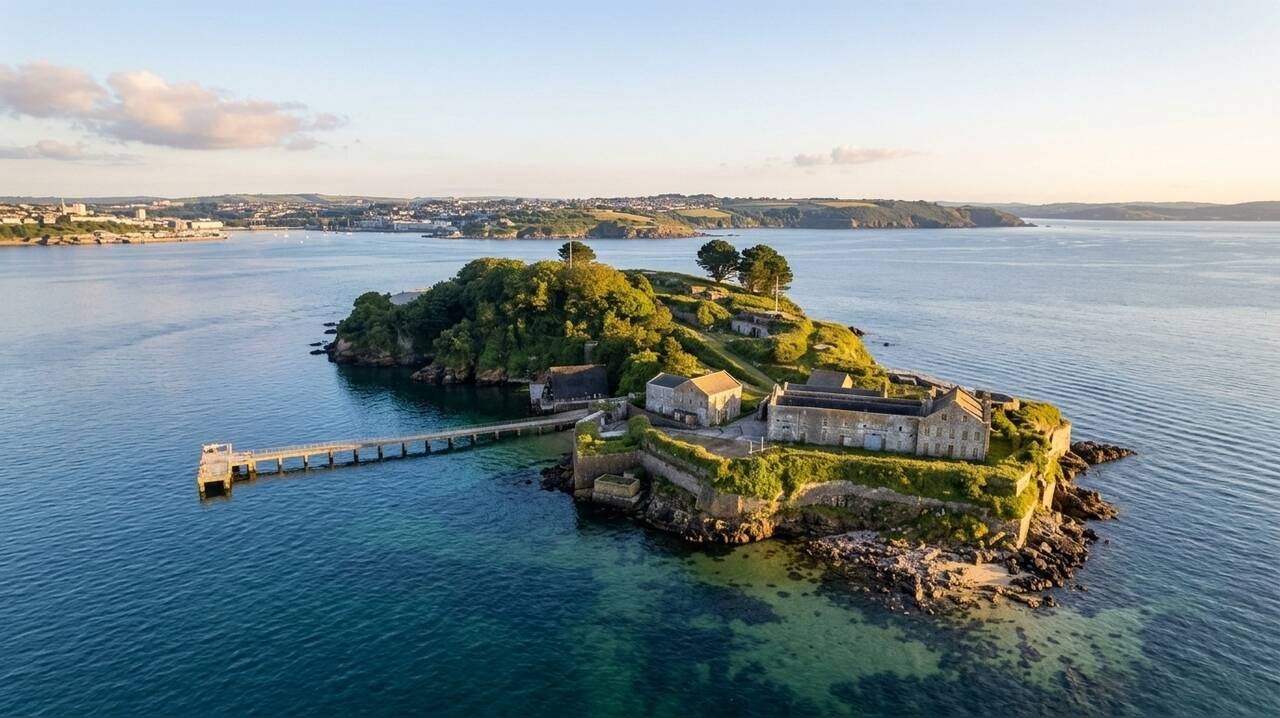
Drake’s Island, a 6.4-acre historic landmark situated in Plymouth Sound, has been placed on the market with an asking price of more than £2 million. The site, which sits approximately 500 metres off the coast of Devon, is being marketed by estate agent
The island features approximately 30,000 square feet of disused structures, including a Grade-II listed Governor’s House, former military batteries, and an extensive network of underground tunnels. While the property is currently vacant, it holds existing planning consent for the development of a 43-bed hotel, subject to specific planning conditions and a Section 106 obligation. The site is designated for heritage-led regeneration, with proposals focusing on integrating visitor facilities and marine-related research alongside hospitality ventures.
A Site of Strategic and Historical Significance
Known originally as St. Nicholas Island, the landmass has served as a critical defensive position for Plymouth since the 16th century. Its military utility persisted through the Second World War, and it is famously associated with Sir Francis Drake, who served as the island’s governor in the late 1500s. Due to its unique architecture and archaeological value, portions of the island are designated as a Scheduled Ancient Monument.
The island is also the subject of persistent local folklore, most notably regarding an alleged network of tunnels connecting the site to Plymouth Hoe on the mainland. While these legends suggest the tunnels were used for military supply lines, their existence has never been confirmed, and they remain a point of mystery surrounding the site’s unexplored areas. The island’s history has also been marked by unusual events, including a fatal 18th-century diving experiment, a 1957 mock invasion by local students, and a 2005 anti-nuclear protest.
Commercial Potential and Future Development
Despite its current vacancy, the island has demonstrated a capacity for revenue generation. In 2023, the site recorded approximately £590,000 in gross income through activities such as guided tours, private events, film location rentals, and theatrical performances. These operations were suspended earlier this year to facilitate safety inspections, a necessary step as the site prepares for a new ownership structure.
Carter Jonas highlights the island as a rare prospect for developers looking to balance heritage conservation with modern commercial use. The previous owner, businessman Morgan Phillips, purchased the island in 2019, but it failed to secure a buyer when it was listed again in 2024. The current sales campaign seeks a buyer capable of navigating the complexities of the site’s protected status while establishing a sustainable, long-term business model that preserves the island’s distinctive character.




