
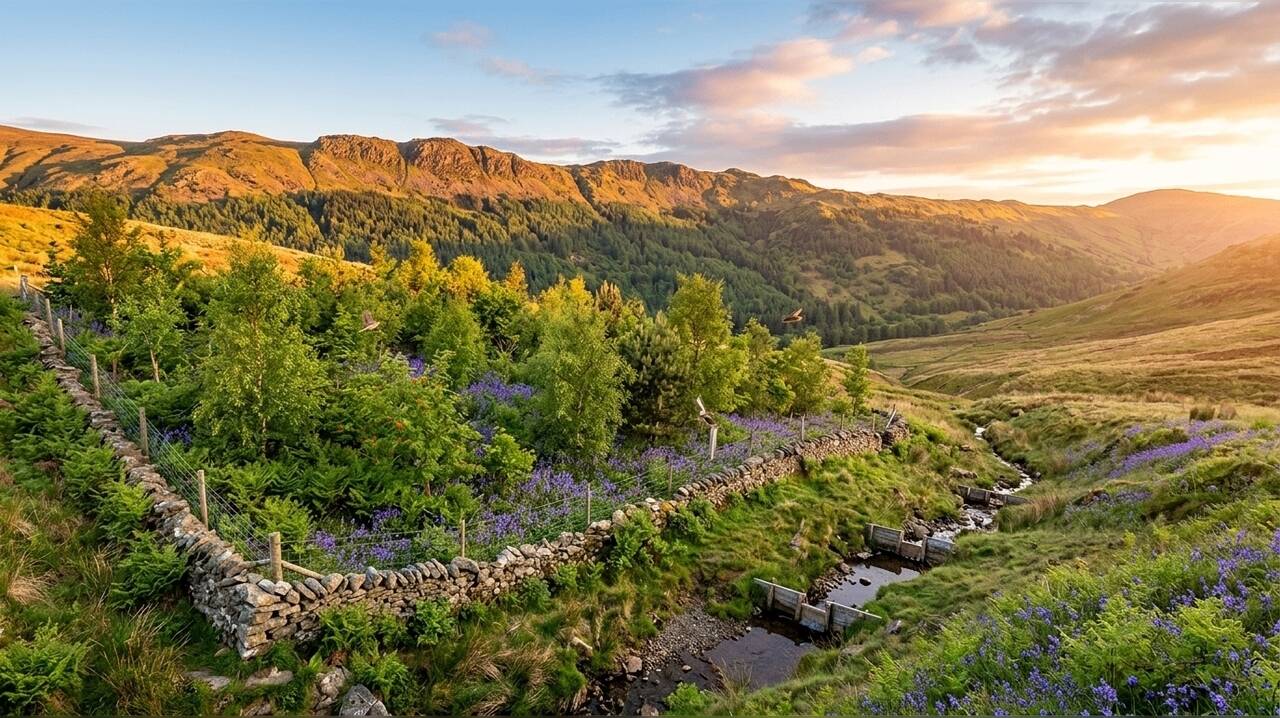
A decade-long conservation initiative in Cumbria has transformed a once-barren upland landscape into a thriving ecosystem, demonstrating the potential for restoring native woodland while maintaining traditional agricultural practices. Since 2012, the project at
The restoration was made possible through a collaborative partnership involving local farmers, the Lonsdale Estates, and the Woodland Trust, supported by a 10-year government agri-environment scheme. By strategically fencing off specific sections of the fell to exclude sheep and semi-feral ponies, the project allowed long-dormant seed banks to regenerate. According to Peter Leeson of the Woodland Trust, the emergence of bluebells and bracken indicates that the soil has retained the memory of its forested past despite centuries of intensive grazing.
Ecological Recovery and Avian Diversity
The environmental impact of the project has been most visible in the rapid recovery of local bird populations. Ecologist Mike Douglas, who has conducted annual surveys at the site, reported that 11 new breeding bird species have established themselves in the area since 2016. By 2024, the total number of breeding species identified within the restored zone had reached 14, including meadow pipits, reed buntings, and stonechats.
Experts anticipate that as the native trees mature and the canopy develops, the site will attract a wider variety of woodland birds, such as blackbirds, dunnocks, and various tit species. This shift challenges the long-held perception of the British uplands as inherently barren environments. The project’s success is attributed to a careful balance between conservation goals and the practical needs of local graziers, ensuring that essential livestock routes and open grazing areas remain accessible.
Flood Mitigation and Sustainable Farming
Beyond its ecological benefits, the Tebay Common project serves as a practical model for
The initiative also provides a financial framework that supports the viability of hill farming. The Tebay Common Grazing Association receives an annual payment of £25,600 through an environmental agreement, which compensates for restricted grazing rights and covers the maintenance of fencing. Tim Winder, chairman of the association, noted that such schemes are becoming increasingly vital for the future of upland livestock farming. As agricultural subsidies evolve, the project offers a potential blueprint for other upland commons across Britain to integrate woodland creation with existing land-use rights.




