
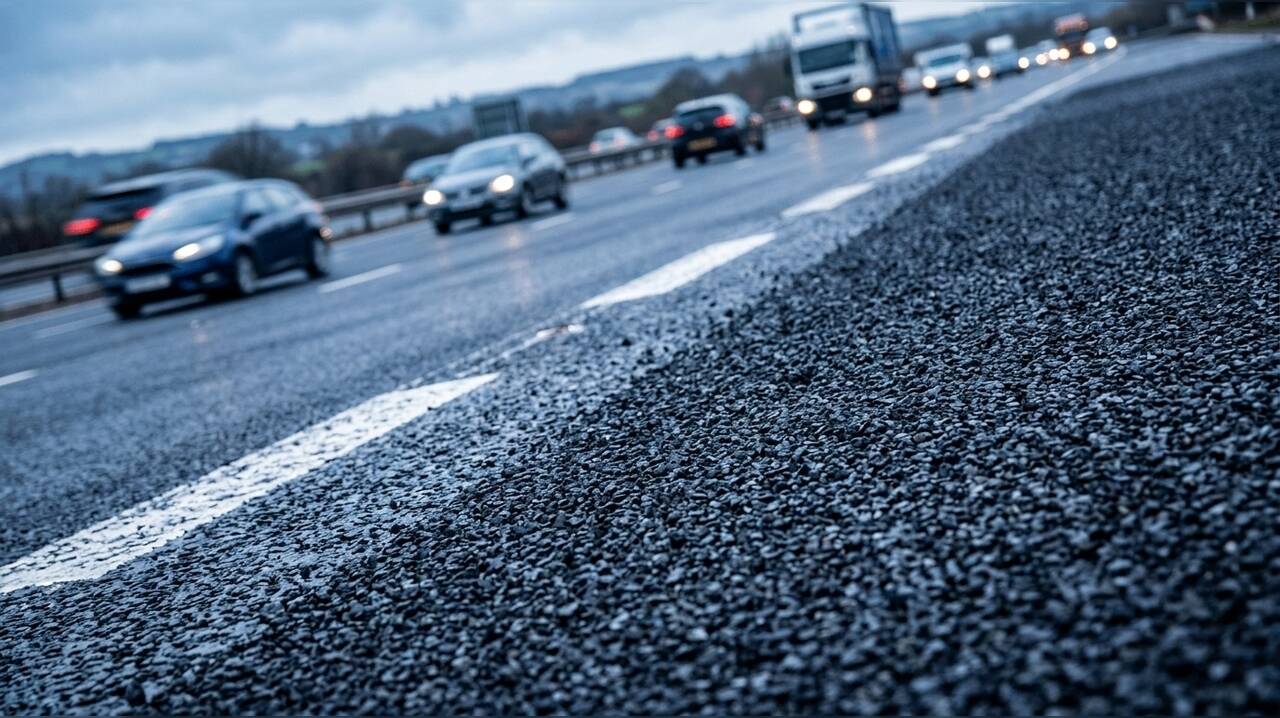
British road authorities have officially approved the use of
The initiative was designed to determine if rubber recovered from end-of-life tyres could be integrated into asphalt durable enough to withstand the intense demands of the UK’s busiest transport corridors. By incorporating processed rubber into the road mix, officials sought to create a domestic alternative to the common practice of exporting or disposing of used tyres, which currently number approximately 40 million annually in Britain.
From Motorway Trials to National Certification
The initial experiment on the southbound M1 between junctions 23 and 22 served as a critical testing ground for the material's performance. Following these tests, Tarmac announced in 2021 that its specific rubber-modified asphalt system, known as ULTIPAVE R, had secured BBA HAPAS Clause 942 approval. This certification is particularly significant as it covers thin surfacing systems used specifically on the strategic road network.
According to the British Board of Agrément, the product is a stone mastic asphalt that incorporates ground tyre rubber and is officially assessed for use in both new road construction and maintenance projects. Tarmac noted that the system is the first of its kind in the UK to receive this specific industry approval, paving the way for its broader application across the country's infrastructure.
Sustainability and Circular Infrastructure
Beyond the primary goal of waste reduction, the use of recycled rubber is part of a wider effort to improve the sustainability of road construction. The material utilizes warm-mix technology, which allows the asphalt to be produced at lower temperatures than traditional hot-mix methods. This process is intended to reduce the embodied carbon generated during the manufacturing phase.
Estimates suggest that each kilometre of highway surfaced with this material can incorporate the rubber recovered from up to 750 waste tyres, though the exact figure varies based on the design and thickness of the road. By integrating these materials into the very infrastructure that supports vehicle traffic, the project aims to transform a significant waste stream into a functional component of the national transport network. This approach aligns with broader goals to move toward a more circular economy, ensuring that materials from end-of-life products are repurposed domestically rather than being sent overseas for disposal.




