
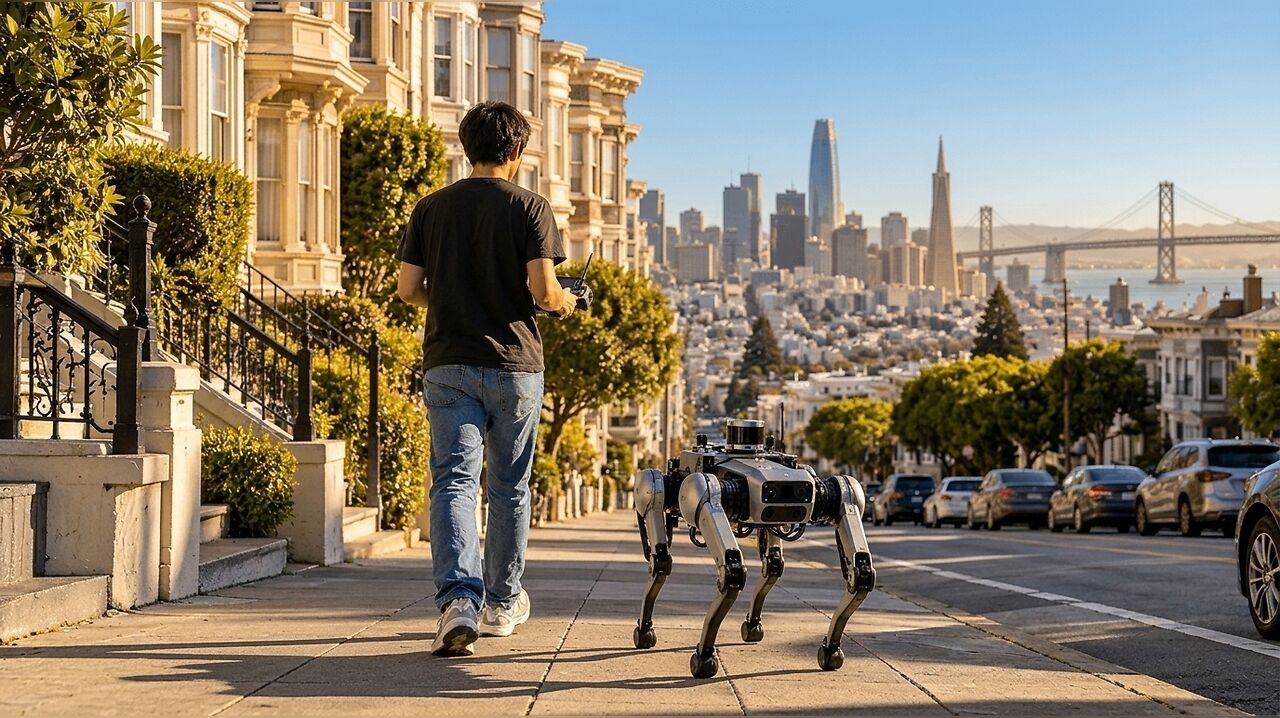
A San Francisco-based robotics startup, Dimensional, recently launched a recruitment drive seeking individuals to walk robotic dogs through city streets. The initiative, which offered compensation of $20 per hour, was designed to gather essential navigation data to improve artificial intelligence systems, allowing them to better interact with complex, real-world environments.
The job posting, which appeared in a local online job forum in early October, required no prior technical experience. Participants were tasked with guiding four-legged robotic units along specific outdoor routes for shifts lasting between four and six hours. While the role was straightforward, it included a physical requirement: operators had to be capable of lifting and carrying the equipment, which weighs approximately 33 pounds (15 kg), in the event of a technical malfunction or overheating.
Data Collection and the Role of Human Operators
The primary objective of these walks was to provide Dimensional with a comparative dataset. By equipping the robots with various sensors and cameras, the company could measure how the machines performed under human guidance versus how they navigated when controlled by AI agents. According to the company’s founder, Stash Pomichter, the experiment highlighted that current AI technology still faces significant challenges when attempting to control physical hardware independently.
The robots utilized in these trials are manufactured by the Chinese firm Unitree and retail for roughly $2,000 each. Dimensional has reportedly acquired a fleet of more than 100 of these robot dogs, alongside 50 humanoid robots sourced from manufacturers across the United States, China, and Germany. The company’s long-term goal is to develop an open-source operating system that enables robots to execute physical tasks in sectors such as construction, security, and data center management with minimal human oversight.
Future Implications for Robotics
Despite the company's ambition to automate physically demanding labor, the recent San Francisco trials underscore the current limitations of autonomous robotics. Pomichter noted that human intervention remains a critical component of the development process, as the machines are not yet capable of reliably navigating public spaces without assistance. The startup maintains that its ultimate vision is to transition these strenuous manual tasks away from human workers, though the recent reliance on human walkers suggests that full autonomy remains a work in progress.




