
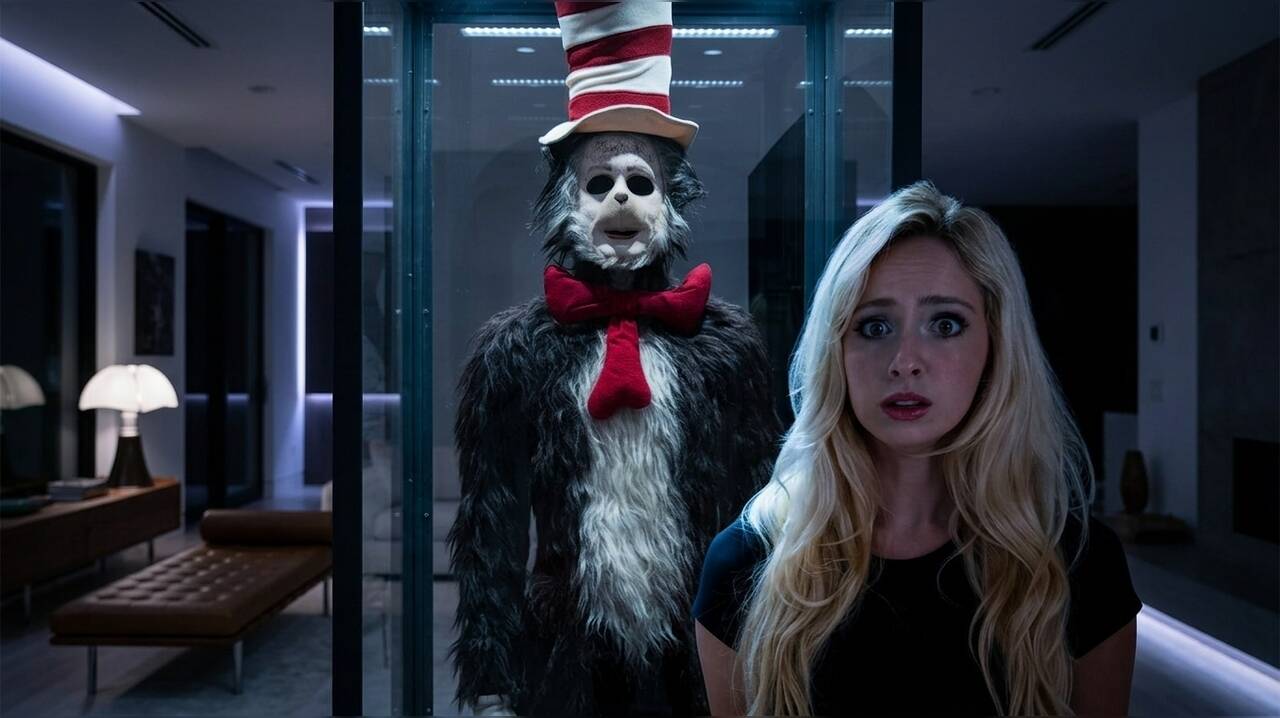
Social media influencer and livestreamer
The costume was acquired through a
Claims of Paranormal Activity
Following the purchase, Reynolds alleged that a previous owner of the costume had warned her against looking directly into the prop's eyes. Upon the arrival of the item at her Los Angeles-area home, she placed the costume inside a glass display case and began documenting what she described as strange occurrences. In several videos shared with her audience, she characterized the outfit as one of the most haunted props in cinematic history. In one instance, she claimed to observe eyes appearing behind the mask’s openings, though some viewers suggested these visual anomalies were merely part of the internal support structure used to display the headpiece.
Despite the nature of these claims, there is no evidence to support the suggestion that the costume is haunted or that the actor’s soul is connected to the prop.
Context of the Acquisition
The costume’s recent notoriety follows a broader trend of online interest surrounding the character. Prior to Reynolds’ purchase, AI-generated imagery depicting the Cat in the Hat in various suburban settings circulated on social media, prompting local law enforcement agencies in several regions to issue warnings clarifying that the viral images were fabricated. Reynolds’ ongoing commentary regarding the costume has added a new dimension to the online discourse surrounding the 2003 film’s memorabilia.
Natalie Reynolds, who is based in the Los Angeles area, has built a following through content focused on pranks, challenges, and lifestyle videos. She frequently collaborates with fellow creator Zachary Huelsman, to whom she is engaged. While she continues to share updates regarding the costume with her followers, the claims regarding its supernatural status remain unsubstantiated.




