
In 1985,
The foundation of Zhang’s success lay in her ability to identify value where others saw only refuse. Recognizing that China’s rapidly expanding manufacturing sector faced a chronic shortage of raw materials, she focused on the supply of waste paper. Her business model was built on a simple yet effective premise: collecting recovered paper in the United States and shipping it to China to be processed into cardboard and packaging materials for the country’s booming export industry.
Building a Trans-Pacific Supply Chain
Zhang’s expansion into the United States began in 1990 when she relocated to Los Angeles. In the early days, the operation was a lean, family-run effort. Zhang and her husband navigated the country in a used Dodge minivan, visiting local garbage dumps to source scrap paper. Despite language barriers and the logistical challenges of starting from scratch, the couple successfully established
The venture benefited from a unique logistical advantage. As Chinese container ships frequently arrived at US ports laden with manufactured goods, they often returned to Asia with significant unused cargo space. Zhang leveraged this by securing low shipping rates for her bulky waste-paper shipments, making the long-distance transport of recycled fiber commercially viable. By 2002, America Chung Nam was shipping approximately 3 million tons of waste paper annually, maintaining its status as the nation’s top exporter for 18 consecutive years.
Transition to Industrial Manufacturing
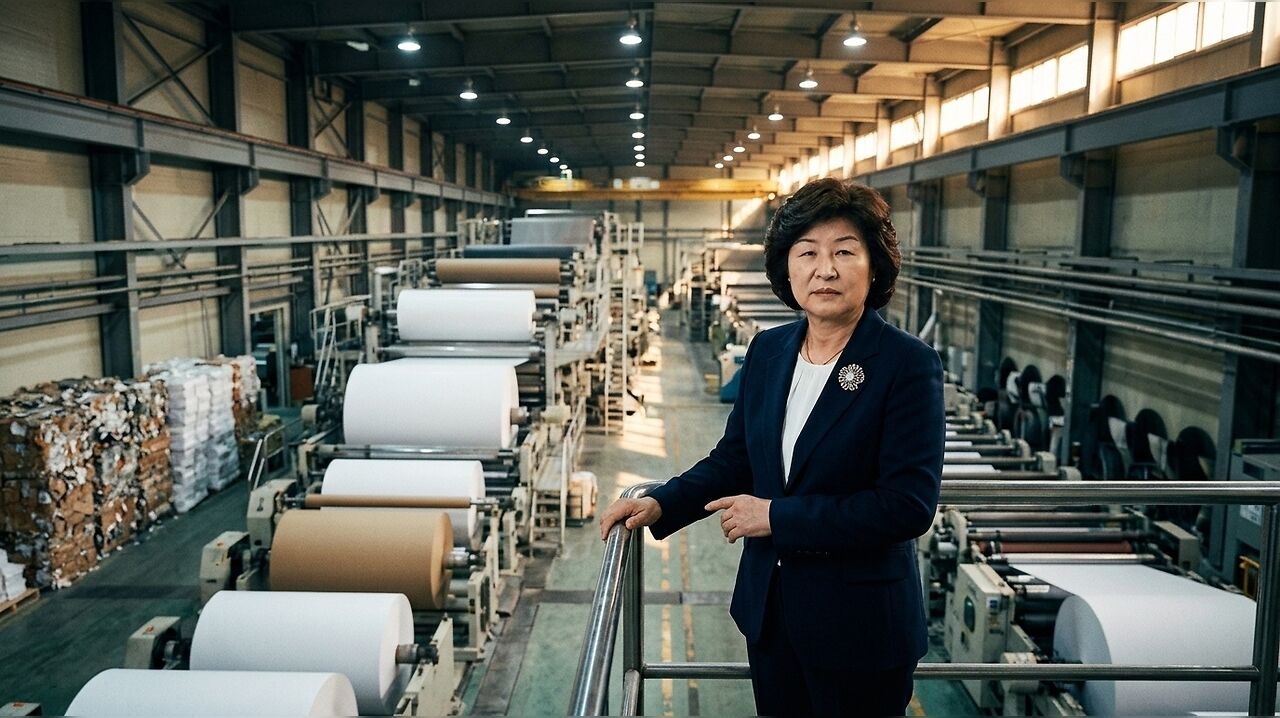
While the export business provided a steady foundation, Zhang sought to capture more of the value chain. In 1995, she established Dongguan Nine Dragons in Guangdong to manufacture containerboard directly. The company’s production capacity grew rapidly, rising from 200,000 tonnes in 1998 to 3.3 million tonnes by 2006. This vertical integration allowed her to control both the sourcing of raw materials and the production of finished packaging.
This strategy proved highly lucrative as China’s export economy surged. Manufacturers of everything from electronics to bicycles required vast quantities of cardboard boxes for international shipping. By the time




