
South African
Organised as the
Physical Demands and Technical Challenges
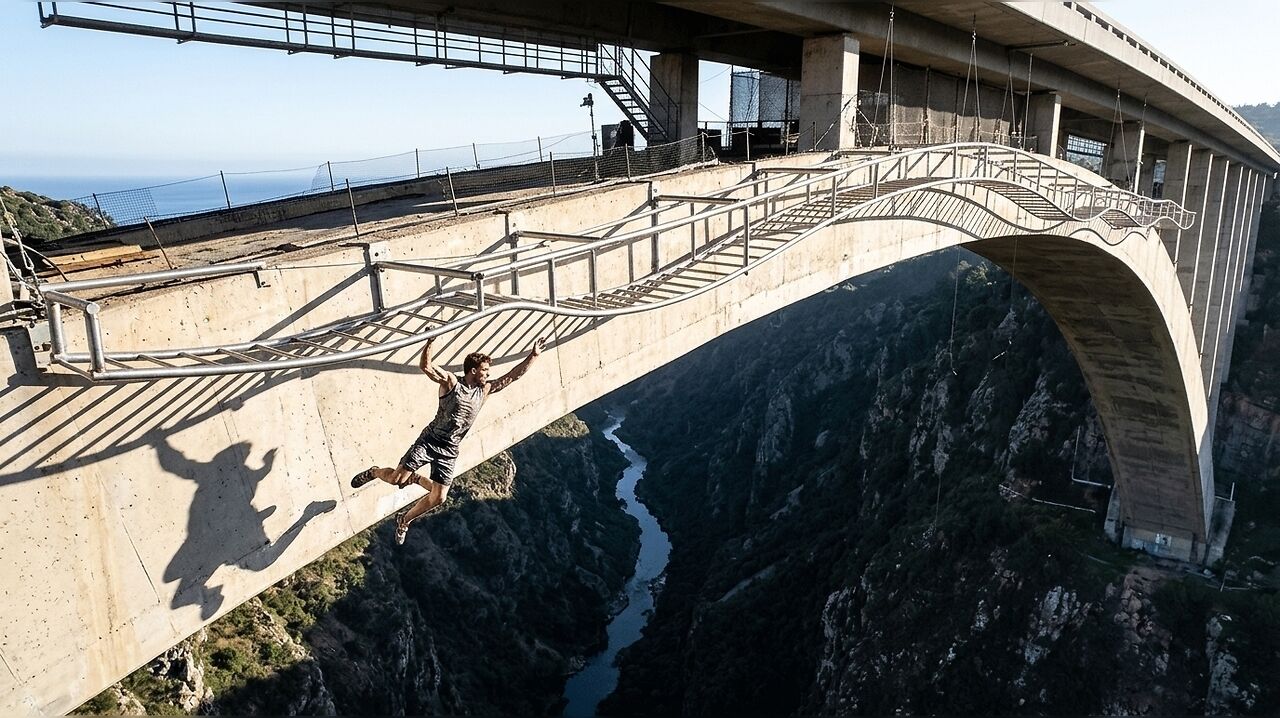
The intensity of the course proved significantly more taxing than Van Tonder’s extensive training simulations. Starting at 10:21 am with a heart rate of 150 beats per minute, the athlete encountered unexpected levels of fatigue by the midpoint of the structure. While he had initially estimated a completion time of approximately 30 to 35 minutes, the continuous strain on his upper-body muscles forced him to adjust his pace and focus on smaller, manageable sections of the course to ensure he could reach the end.
As he moved into the descent, the challenge shifted from pure strength to momentum control. Gravity increased the speed between bars, and the protective tape on his fingers began to wear through, further complicating his grip. Van Tonder noted that the incline and the sustained nature of the effort were far more humbling than he had anticipated, despite his background as a 2019 obstacle course racing world champion and a Guinness World Record holder for rope climbing.
Rigging and Safety Considerations
The project required a sophisticated safety and rigging system designed by Richard Lievaart and his team at Vertical Safety Systems. To protect the integrity of the Bloukrans Bridge—a major landmark connecting the Western and Eastern Cape provinces—the team installed the course without drilling into or bolting fixtures onto the structure. The setup utilised two independent safety points to support the suspended bars while following the arch's trajectory.
The successful crossing marked the end of a two-year ambition for Van Tonder, who had spent six months training on a custom-built rig at home to prepare for the steep ascent. By choosing the arch route over a simpler, straighter path, the athlete sought to push his physical boundaries. Following the completion of the 600-bar traverse, Van Tonder expressed satisfaction in achieving his goal, noting that the event had pushed him beyond his previous expectations of his own capabilities.




