
Tennis icon
The projects, launched in 2007 and 2010 respectively, were designed to provide students in remote areas of Makueni and Kitui counties with access to
A Long-Term Commitment to Rural Education
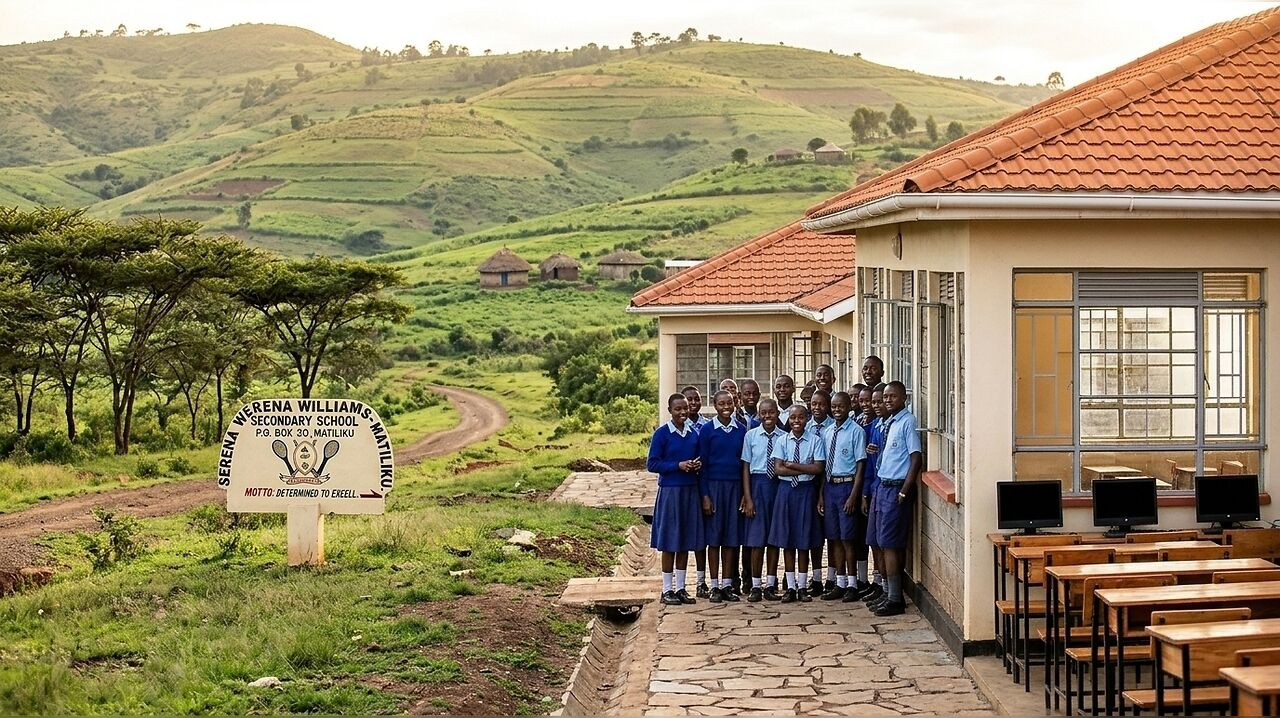
The first project, Matooni Serena Williams Secondary School, was established in a remote mountainous region. During her visit to open the school in 2008, Williams emphasised the transformative power of schooling, noting that education serves as a gateway to opportunity for children who might otherwise face significant barriers to further learning. The construction of the school provided a permanent local venue for students, mitigating the logistical and financial challenges often associated with travelling long distances to reach secondary institutions.
In 2010, Williams returned to Kenya to inaugurate the second facility, Wee Serena Williams Secondary School. A key feature of this project was the inclusion of a computer laboratory equipped by HP. During this visit, the tennis star engaged with students, demonstrating the use of digital tools intended to help bridge the technological gap between rural and urban educational environments. At the time, Williams expressed an ambition to support the creation of additional schools in regions where educational access remained limited.
Integration into the National System
According to Build African Schools, the sustainability of these institutions is rooted in their integration into the Kenyan public education system. The organisation’s model involves constructing permanent infrastructure and subsequently transitioning the management of the schools to local community boards, supported by the Kenyan Ministry of Education. This approach ensures that the facilities remain functional as part of the state’s broader educational network.
While the schools continue to operate today, the focus of the initiative remains on the enduring availability of classrooms for successive generations of students. By combining physical infrastructure with technological resources, the partnership aimed to provide a stable foundation for academic growth in rural Kenya. The ongoing operation of both schools serves as a practical example of how philanthropic investments in educational facilities can be sustained through local management and national oversight.




