
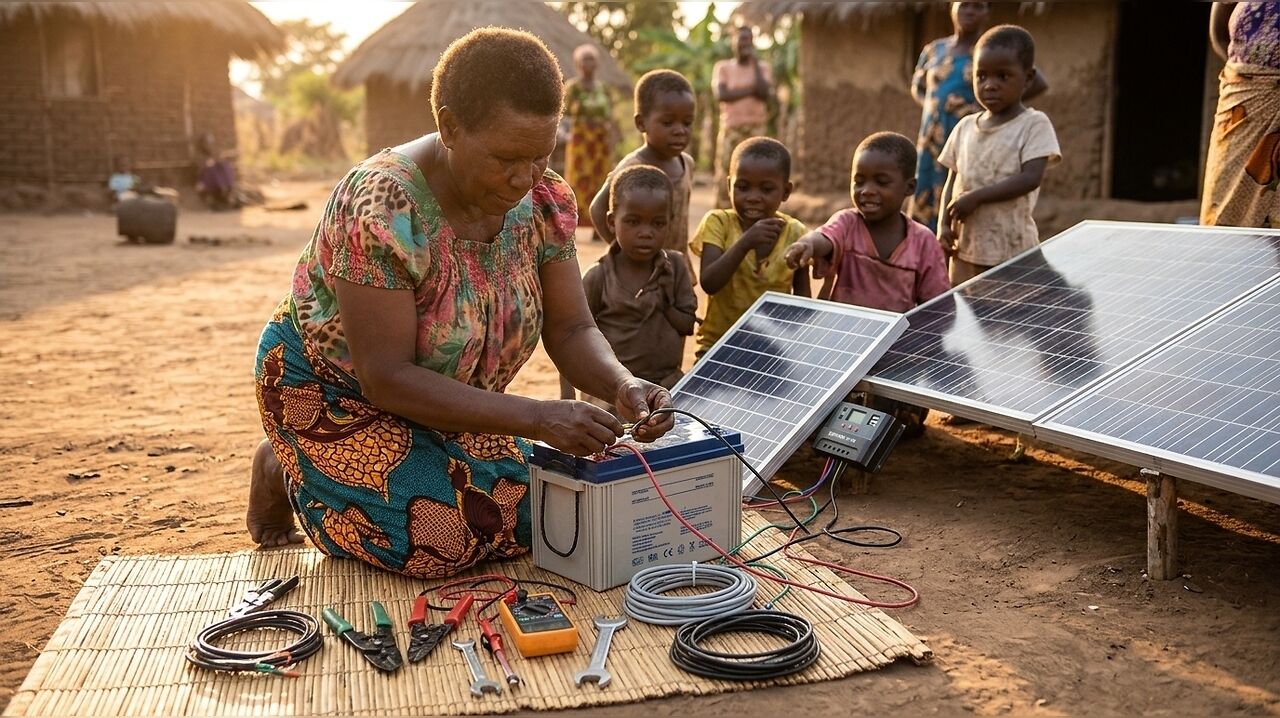
In remote villages across Africa, a quiet revolution is replacing the reliance on kerosene lamps and candles with sustainable, solar-powered electricity. This transformation is being led by women who, despite having little or no formal education, have been trained as solar engineers. By learning to assemble, install, and maintain complex lighting systems, these rural mothers and grandmothers are providing their communities with a reliable energy source that was previously unavailable.
The initiative is spearheaded by the India-based
Practical Training and Local Empowerment
Rather than relying on textbooks or written manuals, the programme utilises a hands-on, residential training model at the organisation's Tilonia campus in Rajasthan, India. Over a six-month period, participants learn the intricacies of solar technology, including circuit assembly, component connection, battery maintenance, and panel installation. The objective is to equip these women with the skills to establish and manage local solar workshops, ensuring they become the primary point of contact for their neighbours when technical issues arise.
The impact of this training is evident in regions such as southern Tanzania, where women from the Mtwara and Lindi districts returned home to install solar units in their communities. Through the Rural Women Light Up Africa initiative, supported by UN Women, these engineers provided households with essential equipment, including solar panels, batteries, and lamps. To ensure the long-term viability of the systems, the programme incorporates community-based financial arrangements to cover maintenance costs and engineer stipends, fostering a sense of local ownership and sustainability.
Challenging Gender Roles and Building Expertise
Beyond the immediate benefit of electricity, the programme is reshaping social dynamics within rural communities. Research published in Nature Energy in May 2024 suggests that the Solar Mamas initiative effectively challenges traditional gender roles by placing women in technical, engineering-focused positions. By selecting women who are established residents of their villages, the programme ensures that technical expertise remains embedded within the community, reducing dependence on external contractors.
While participants may face societal pressure due to entrenched patriarchal attitudes, those who complete the training often gain significant status as community leaders and problem-solvers. In Sierra Leone, graduates of the programme have taken on roles as chief engineers, responsible for training others and maintaining infrastructure. As Barefoot College expands its network with new vocational centres in countries such as Senegal, Burkina Faso, and Liberia, the initiative continues to demonstrate that technical proficiency is not confined to the classroom, but can be cultivated through practical, community-centred education.




