
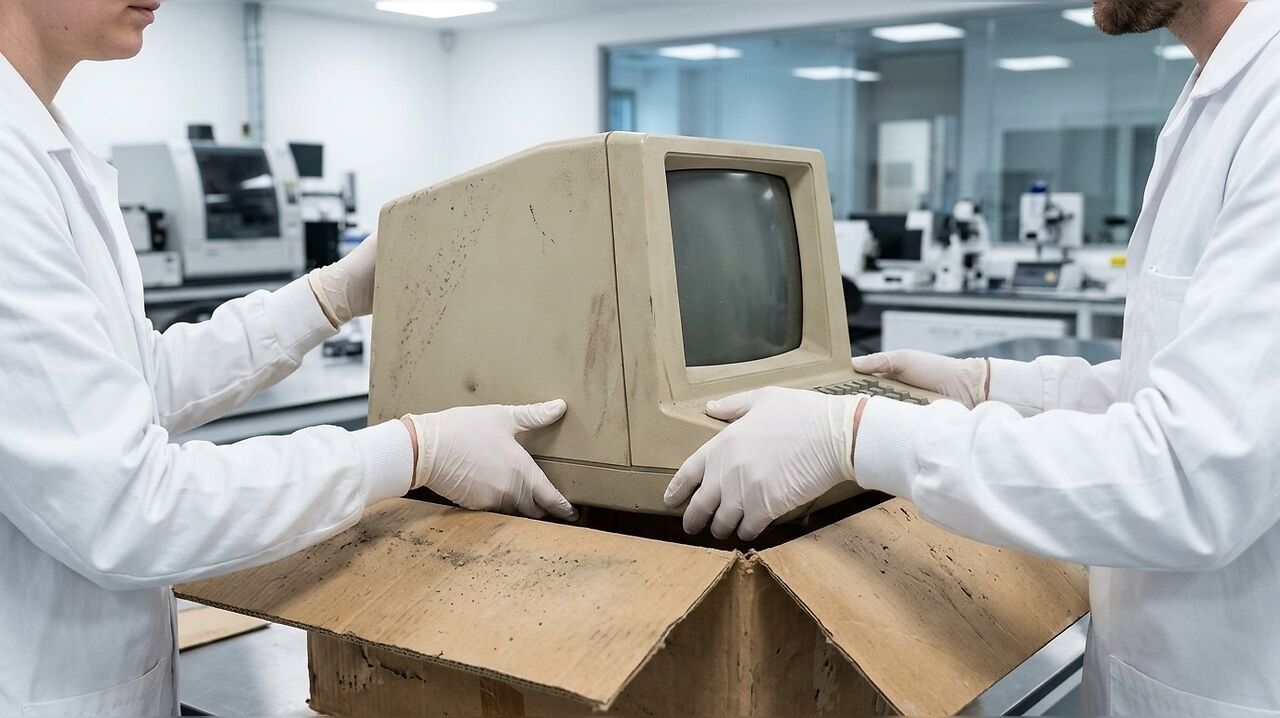
A piece of Canadian technological history has resurfaced after spending decades in obscurity. An
The discovery has generated significant interest among historians and computing experts due to the extreme scarcity of documentation surrounding this specific model. With only two known references to the Alphaplus 12 in existence—a brief mention in a 1981 trade magazine and a listing in a British museum archive—the machine represents a missing link in the evolution of early Canadian computing. Researchers at Carleton University noted that even the national science and technology museum, Ingenium, lacks a record of this particular unit in its extensive collection.
The Legacy of AES Data in Word Processing
The Alphaplus 12 was produced by Montreal-based
While other models in the Alphaplus family, such as the Alphaplus 14, are documented in archives as specialized word processors featuring integrated monitor-printers, the Alphaplus 12 has remained an enigma. The unboxing event at Carleton University’s Herzberg Building was designed to provide specialists with their first opportunity to examine the internal hardware and configuration of the device, potentially clarifying its technical specifications and its place within the broader AES product line.
A Growing Trend in Vintage Computing
The recovery of the Alphaplus 12 follows a series of notable vintage computing discoveries that have surfaced in recent years. Carleton University highlighted this find as part of a wider trend, referencing the 2023 discovery of approximately 2,200 NABU computers in a Massachusetts barn, as well as the recovery of Q1 microcomputers at Kingston University in London. These finds have underscored the importance of preserving hardware that might otherwise be lost to time.
For the researchers at Carleton, the primary goal of the unboxing was to document the machine’s components and assess what can be salvaged or learned from the surviving hardware. By examining the unit, which remained sealed in its original packaging for nearly 45 years, experts hope to fill a significant gap in the historical record of Canada’s early digital industry.




