
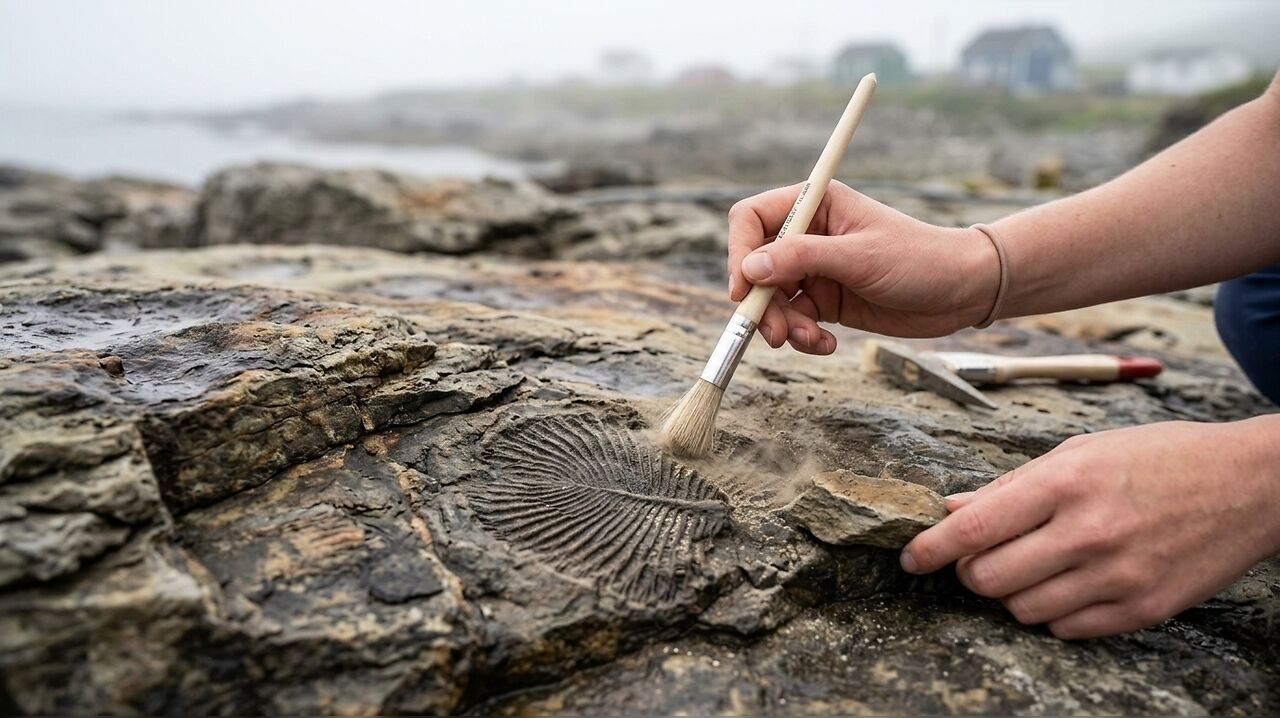
A graduate student at Memorial University has identified a previously unknown fossil species dating back 551 million years, a discovery that offers new insights into the evolutionary timeline of early animal life. Heléna Muirhead-Hunt, a palaeobiology student, unearthed the specimens at a site known as Inner Meadow in Upper Island Cove, Newfoundland.
The location is renowned for its Ediacaran-aged rocks, which are noted for the exceptional preservation of soft-bodied organisms that lacked bones or shells. While the site is typically associated with the Ediacara biota—a group of proto-animals that includes fractal-like rangeomorphs—the discovery of this new species marks a significant departure from the typical findings in the region.
Linking Ancient Fossils to Modern Comb-Jellies
Upon uncovering the initial specimen, Muirhead-Hunt consulted with her supervisor, Dr. Duncan McIlroy. The pair identified the fossil as a relative of
The new species has been formally named
Implications for Early Animal Evolution
The discovery of Edrathina obditchia is expected to contribute to a long-standing scientific debate regarding the earliest animal ancestors. For many years, researchers have questioned whether sponges or ctenophores represent the earliest branch on the animal tree of life. While this discussion has historically relied heavily on genetic evidence, the lack of Ediacaran-era ctenophore fossils had previously created a significant gap in the physical record.
By providing tangible fossil evidence that predates previous findings by 20 million years, this discovery helps address a missing link in the history of early animals. Scientists have long debated the simplicity of sponges versus the complex genetic coding found in ctenophores, and this new find provides a crucial data point for understanding the development of early animal characteristics.




