
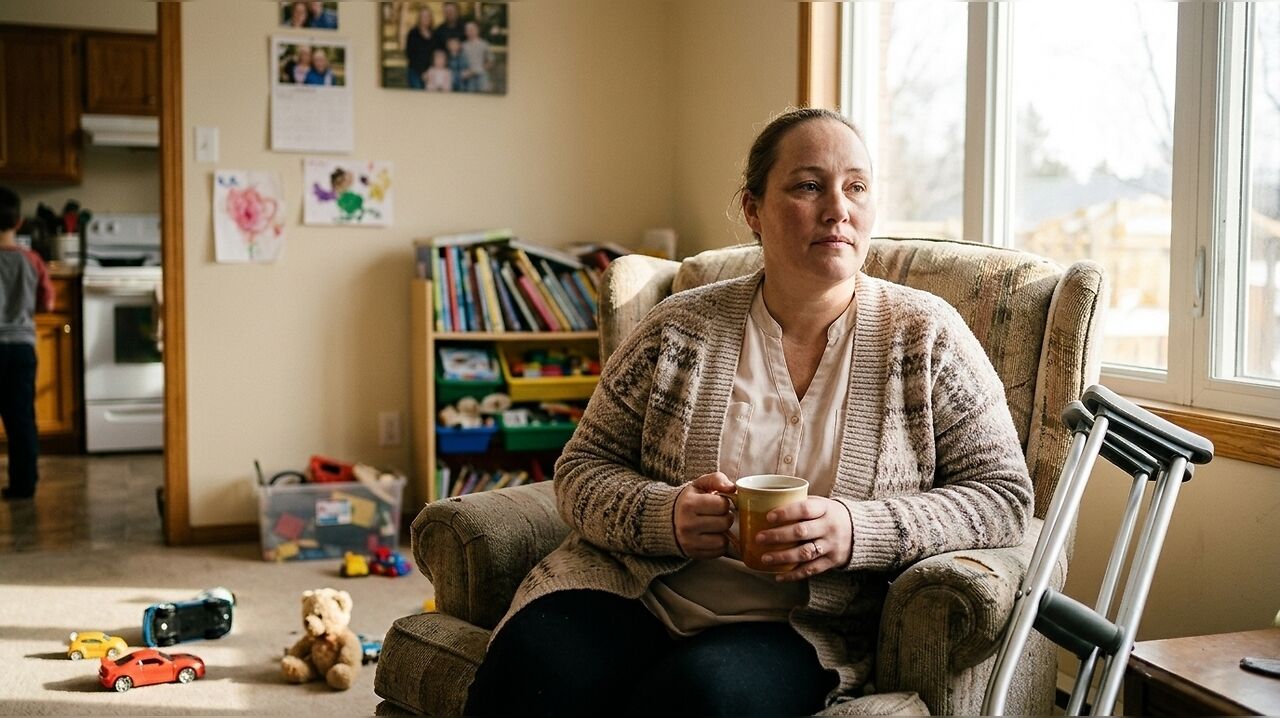
An Ontario mother of ten who sustained serious injuries while assisting stranded motorists has spoken out about a distressing financial dispute involving a crowdfunding campaign intended for her recovery.
The incident has drawn attention to the complexities of online fundraising and the potential for mismanagement when campaigns are controlled by third parties.
A Recovery Complicated by Financial Dispute
The ordeal began on January 1, 2026, when Mullett stopped to assist individuals in a stranded vehicle near Beaverton, Ontario. During the encounter, she was struck by another vehicle, resulting in injuries that required her to spend more than seven months in the hospital. As a mother of ten and the proprietor of an Indigenous food business, the sudden loss of her ability to work placed an immediate and severe strain on her household finances.
In the wake of the accident, a family member established a GoFundMe campaign to support Mullett and her children. According to Mullett, she had requested that the funds be managed by herself or her mother, but the organizer insisted that the account be held in the sister's name to facilitate banking requirements. When Mullett later sought an accounting of the funds, she was told that the missing money had been used for household supplies. Mullett disputes this, noting that she had already provided separate funds for those needs and that the family had also received gift cards for groceries.
Lessons for Future Crowdfunding
Following the deactivation of the initial campaign, Mullett has launched a new, self-managed fundraiser to cover ongoing medical expenses, home accessibility modifications, and daily living costs. As she continues her rehabilitation, she remains unable to return to her business, making the community's support critical to her family's stability. Her new campaign has already raised over C$26,000 toward a C$40,000 goal.
The case has prompted broader warnings from law enforcement and legal experts regarding the risks associated with online donations. Charity lawyer Mark Blumberg has advised that potential donors should verify the relationship between the organizer and the beneficiary before contributing. Experts emphasize the importance of establishing clear, transparent arrangements for how funds are withdrawn and distributed, particularly when the person in need is not the direct administrator of the campaign. For Mullett, the experience has added a layer of personal and financial hardship to an already challenging recovery process.




