
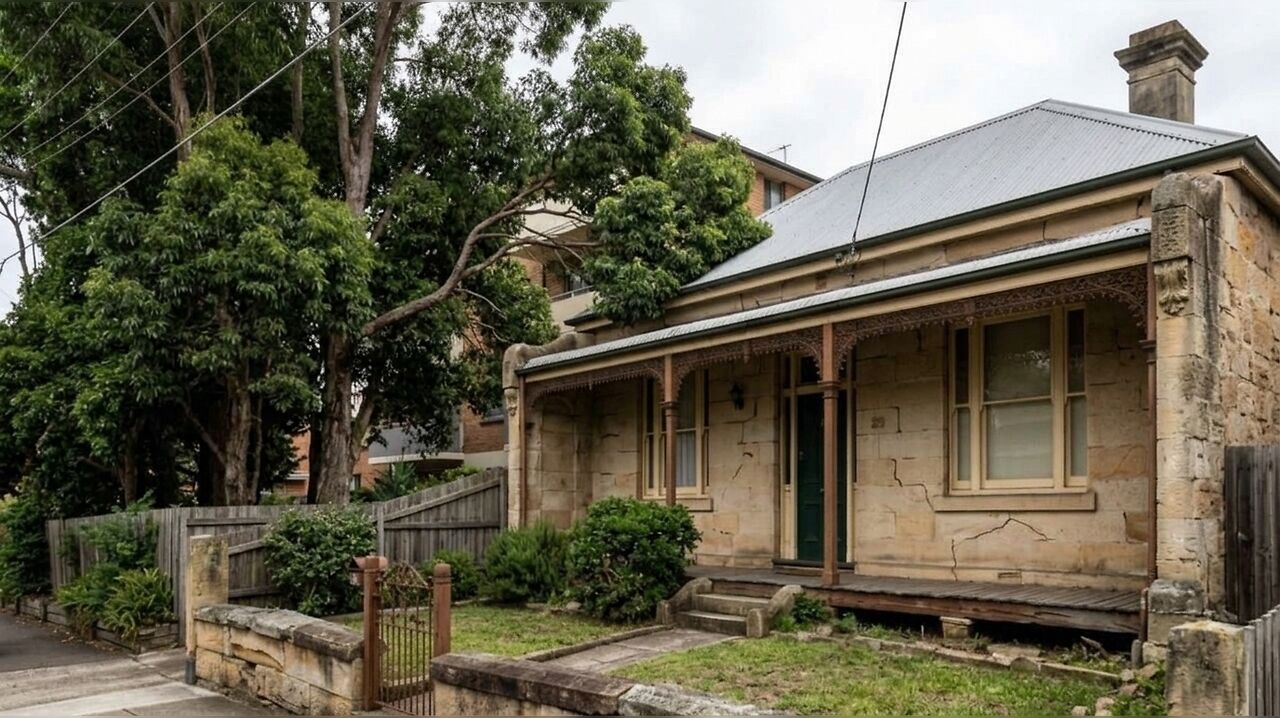
A homeowner in New South Wales has been unsuccessful in her legal bid to hold a neighbouring property accountable for structural damage to her 130-year-old heritage-listed residence. The
The property owner, Catherine Armstrong, had initiated the legal action against the Owners of Strata Plan 5548, the entity responsible for the adjacent apartment complex. She alleged that the trees were the primary cause of various structural issues, including cracks in sandstone walls, internal wall fractures, movement of the front verandah, and damage to both a retaining wall and a boundary fence.
Court Findings on Causation and Evidence
In the case of Armstrong v The Owners of Strata Plan 5548, the court acknowledged that the heritage home had indeed sustained damage. However, the presiding Commissioner determined that the applicant failed to establish, on the balance of probabilities, that the specific trees in question were the cause of the structural distress. The court emphasised that the mere proximity of trees to a damaged structure is insufficient to warrant legal intervention under the Trees (Disputes Between Neighbours) Act 2006.
The court’s decision was informed by a review of engineering and arboricultural evidence. Notably, excavation work conducted in 2022 failed to identify tree roots in the vicinity of the damaged front sections of the property. While roots were discovered near a rear extension, they were not located near the cracked sandstone wall that formed a central component of the claim. Furthermore, the court noted a lack of definitive testing, such as root mapping or microscopic examination, to link the trees to the structural movement.
Alternative Factors and Ruling
The evidence presented suggested that the damage was more likely linked to abnormal moisture conditions rather than tree root activity. The court identified several potential contributing factors, including the presence of a raised garden bed, a local watering system, drainage issues, leaking gutters, and the structural impact of a second-storey addition. The Commissioner concluded that while the heritage building requires maintenance and repair, the evidence did not support an order for the removal of the trees.
The court also addressed the status of the trees involved, noting that four of the six trees mentioned in the original complaint had already been removed. The Commissioner remained unconvinced by arguments that decaying roots from those removed trees would create voids sufficient to cause future structural instability. Consequently, the application for tree removal and financial compensation was rejected.




