
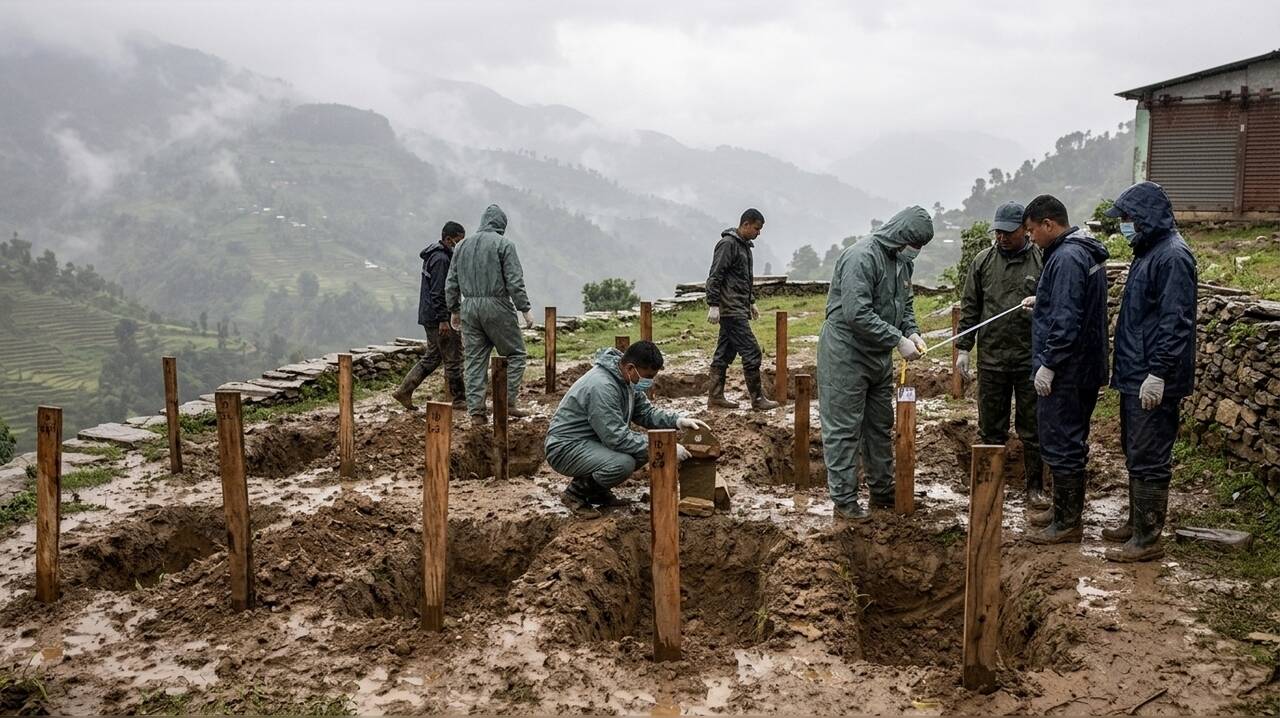
In a departure from traditional Hindu cremation practices, authorities in Nepal have begun burying unidentified victims of the country's recent, devastating floods. The decision follows a surge in recovered remains that has overwhelmed local mortuary facilities and created significant logistical challenges for officials tasked with managing the aftermath of the disaster.
The shift to burial is described by officials as a temporary, necessary measure rather than a change in religious custom. With morgues reaching capacity and the condition of recovered bodies deteriorating, authorities have implemented a systematic process to ensure that the deceased can eventually be identified and returned to their families for proper funeral rites.
Systematic Documentation and DNA Preservation
To facilitate future identification, officials are meticulously documenting each set of remains before interment. Rather than utilizing mass graves, authorities are assigning unique identification codes to every individual. This process includes the collection of DNA samples, which will be cross-referenced with samples provided by families searching for missing relatives. By preserving this genetic material, officials aim to overcome the difficulties posed by decomposition and the fact that many victims were recovered far from their homes.
Beyond genetic testing, the documentation process is comprehensive. Authorities are recording GPS coordinates for every burial site and maintaining detailed records that include photographs, descriptions of clothing, jewelry, and any distinct physical markers such as tattoos. The Nepal Police have also begun publicizing details of unidentified victims to assist families in their search efforts.
Logistics of Temporary Interment
The burial sites themselves are being prepared with future exhumation in mind. Graves are being dug to a depth of approximately 1.5 metres, with specific spacing maintained between each body to prevent DNA contamination and ensure that individual remains can be recovered without interference. This structured approach is intended to preserve the integrity of the evidence, allowing for a seamless transition should a family member come forward.
The scale of the crisis remains significant, with nearly a thousand bodies recovered and thousands of individuals still reported missing. For those who are identified through DNA or other markers, the current burial is not considered a final resting place. Once a positive identification is established, officials intend to hand the remains over to the families, enabling them to perform traditional funeral ceremonies according to their cultural and religious practices. This strategy reflects an ongoing effort by the state to balance the immediate public health requirements of the disaster zone with the long-term need to provide closure to the families of the missing.




