
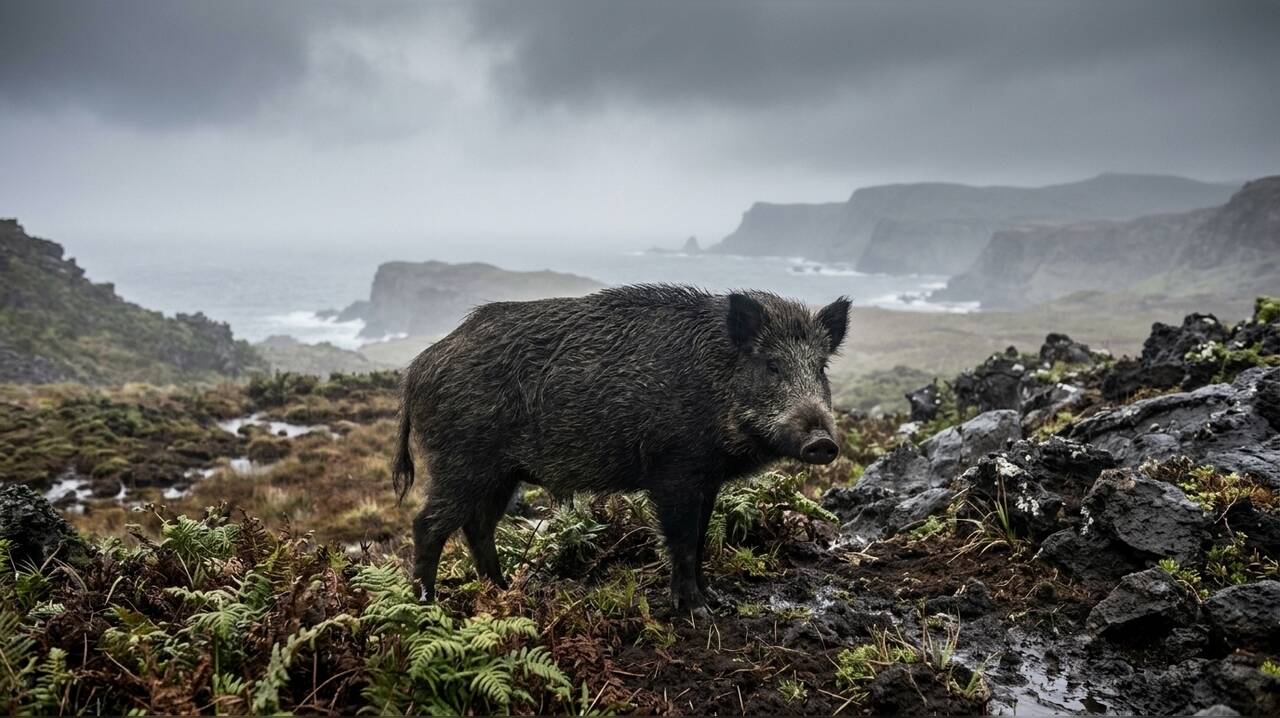
In the early 19th century, sailors navigating the treacherous Southern Ocean released a small group of domestic pigs onto the Auckland Islands, a rugged and windswept archipelago located 450 kilometres south of New Zealand. The animals were intended as a living food supply for potential shipwreck survivors, a common maritime practice of the era. For the next 192 years, these pigs thrived in total isolation, adapting to the harsh, subantarctic climate and evolving into a distinct, hardy genetic lineage.
By the turn of the 21st century, however, the ecological priorities for the islands had shifted. Conservation authorities identified the feral population as a significant threat to the archipelago’s native flora and fauna, particularly nesting seabirds. To restore the islands' natural environment, a decision was made to eradicate the invasive species. Before the campaign began, conservationists captured 17 individuals to ensure the survival of the unique breed, marking the end of their long tenure on the islands.
A Unique Genetic Heritage
The
The Rare Breeds Trust of New Zealand documented the transition of these animals from feral inhabitants to a protected, rare breed. Following their capture in the early 2000s, the 17 rescued pigs were relocated to the mainland. This move was part of a broader, complex conservation effort that sought to balance the urgent need for ecological restoration with the desire to preserve a rare, historically significant genetic resource.
Conservation and Future Prospects
The eradication of the feral population on the Auckland Islands led to immediate environmental changes, with native vegetation beginning to regenerate and seabirds reclaiming former habitats. Meanwhile, the rescued pigs were placed in controlled farm environments on the mainland. These animals are now managed by a small community of breeders and conservationists who prioritize maintaining the integrity of the original stock. While they are not used for commercial production, they are valued for their disease resistance and resilience, traits that remain of interest to smallholders.
The long-term survival of the Auckland Island pig remains dependent on careful breeding management and the dedication of those committed to maintaining their genetic diversity. While their time on the




