
In 2019,
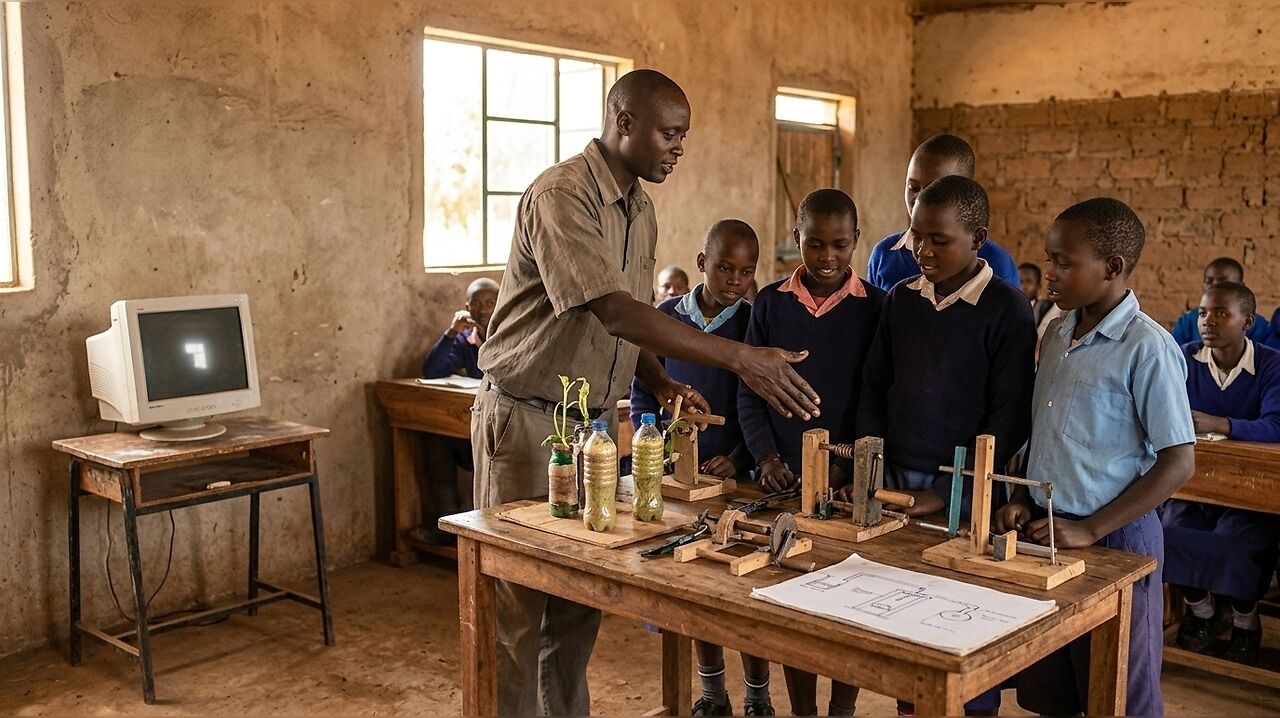
Tabichi taught at Keriko Mixed Day Secondary School in Pwani Village, a region frequently impacted by drought and food insecurity. The school environment was marked by severe resource limitations, including a student-teacher ratio of 58:1 and access to only a single computer for the entire student body. Many of the pupils faced significant personal hardships, with nearly 95% coming from impoverished backgrounds and approximately one-third being orphans or children from single-parent households.
A Commitment to Community and Innovation
As a member of the Franciscan religious order, Tabichi dedicated a substantial portion of his life to the welfare of his community. He consistently donated 80% of his monthly salary to support local families facing financial instability. Beyond his financial contributions, he invested significant personal time in his students, providing one-on-one tutoring in science and mathematics alongside four colleagues during weekends and after regular school hours to ensure those struggling academically received necessary support.
Despite the lack of infrastructure, Tabichi prioritised the integration of technology into his curriculum. He frequently visited internet cafés to download educational materials, which he would then utilise offline in his classroom. His pedagogical philosophy emphasised creativity as a vital tool for navigating resource-constrained environments. By expanding the school’s Science Club, he encouraged students to pursue practical research projects, leading to notable successes in national competitions. In 2018, his students secured first place in the public schools category at the Kenya Science and Engineering Fair with a device designed to assist individuals with visual and hearing impairments. Another group of students earned recognition from the Royal Society of Chemistry for developing a project that utilised local flora to generate electricity.
Legacy and Continued Impact
During the award ceremony in Dubai, Tabichi attributed his success entirely to the achievements of his students, stating that the prize served as a platform to showcase the potential of young people across the African continent. He expressed his intention to use the $1 million award to enhance school facilities, specifically by constructing a modern laboratory and implementing agricultural initiatives, such as drought-resistant farming, to combat local food insecurity.
Following his tenure at Keriko Mixed Day Secondary School, Tabichi has transitioned into a broader role within the education sector. He currently serves as the founder and programme lead for the Peter Tabichi Foundation, an organisation focused on developing inclusive teaching resources and fostering professional learning communities for educators throughout Kenya. Additionally, he has furthered his own academic pursuits, completing a Master of Arts in Education and International Development at University College London while continuing his advocacy for educational reform.




