
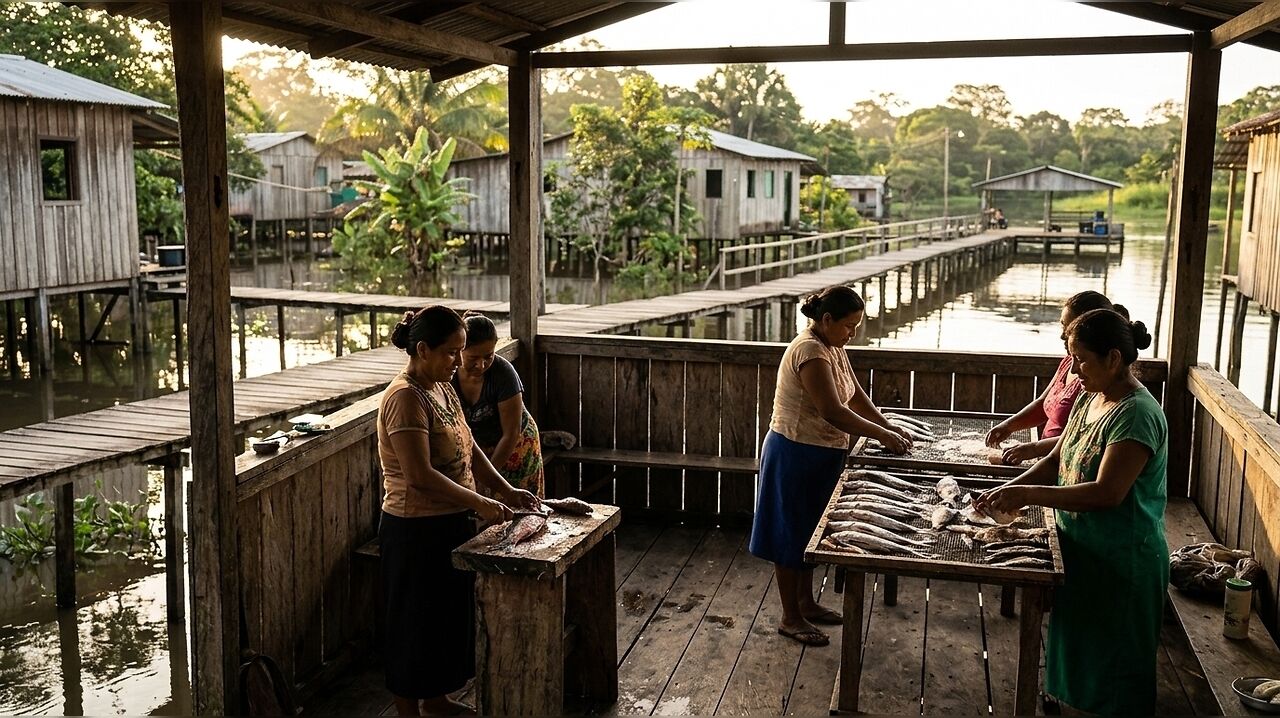
Decades ago, an Italian Jesuit priest stationed on Brazil’s remote Marajó Island devised an unconventional economic strategy to support an isolated community.
The initiative addressed significant logistical challenges faced by the local population. During the rainy season, the community struggled with seasonal flooding, relying on precarious wooden walkways to navigate the area. According to academic research and historical accounts, the funds raised from the piranha exports were directed toward the construction of 350 meters of wooden bridges, a community dock, a cemetery designed to withstand high water, and an 800-meter aircraft runway. These projects provided a vital lifeline for the residents of Santa Cruz do Arari, significantly improving connectivity in the region.
From Piranha Exports to Cultural Preservation
Beyond his efforts to improve physical infrastructure, Gallo became a central figure in the preservation of the region's cultural and archaeological heritage. His work began when local residents started bringing him historical fragments found across the island. This collection grew into a formal initiative, leading to the establishment of an organization in 1981 dedicated to managing these artifacts. By 1984, the collection was relocated to Cachoeira do Arari and opened to the public as the Museu do Marajó.
The museum gained recognition for its innovative approach to public education. Rather than relying on traditional static displays, Gallo developed interactive mechanical exhibits referred to as “hillbilly computers.” These wooden structures utilized handles, strings, and panels to engage visitors, incorporating local knowledge into the exhibition design. Academic studies have since highlighted this method as a unique form of community-centered museology.
Gallo remained in the region for roughly three decades, expanding his work into photography, archaeology, and community development before his death in 2003 at the age of 75. Today, his legacy is remembered through both the infrastructure that continues to serve the island and the institution he founded to document the history of Marajó.




