
A wave of protest has emerged within the Italian political landscape after Deputy Prime Minister and Foreign Minister
While discussing the advice he would offer his son regarding marriage, Tajani contrasted the appeal of a glamorous woman with what he described as a more reliable, serious partner. He suggested that a woman who is a good mother and remains faithful might be someone who chooses to wear skirts that are slightly longer. This framing of personal character through the lens of sartorial choices prompted immediate backlash from political opponents, who challenged the notion that clothing could serve as an indicator of a woman’s integrity or domestic reliability.
Senate Protest and Public Criticism
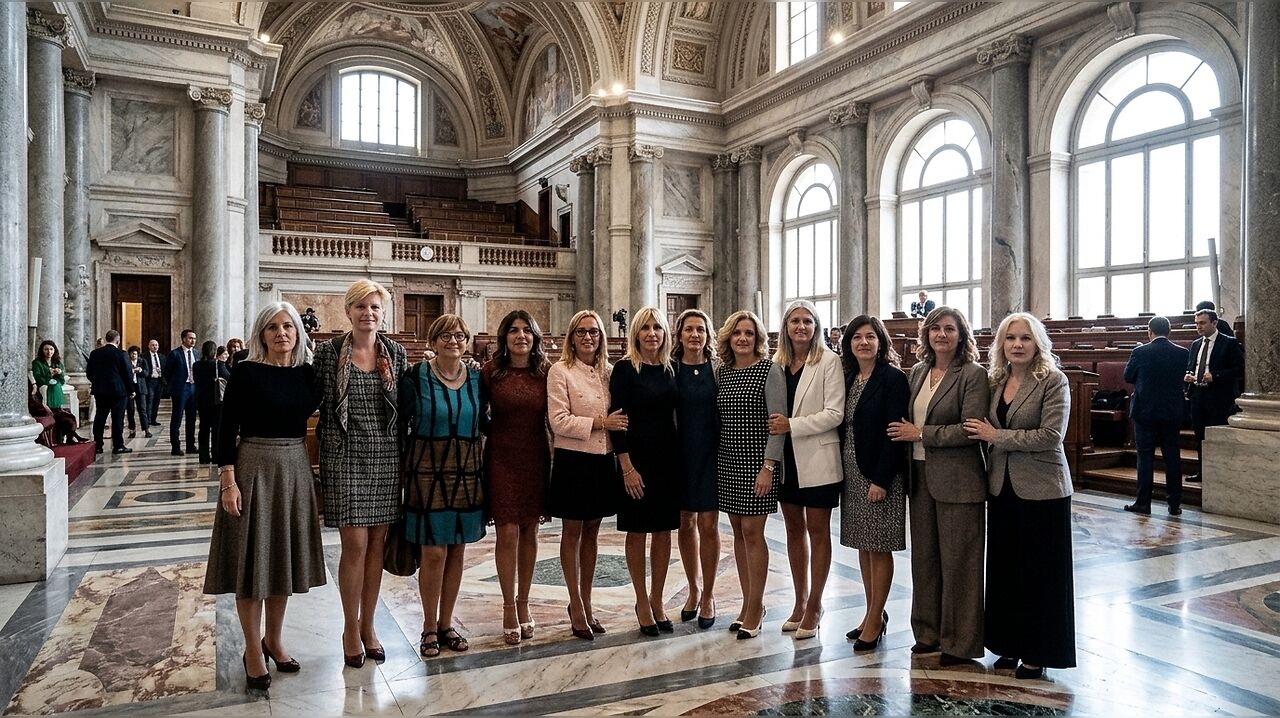
The response to these comments culminated on September 22, when a group of female opposition senators staged a collective protest inside the
The protest drew participants from across the political spectrum, including members of the Democratic Party, the Five Star Movement, and the Greens and Left Alliance. Beyond the Senate floor, individual politicians also took to social media to voice their dissent. Chiara Appendino, a former mayor of Turin and current Five Star Movement MP, posted a photograph of herself in a miniskirt, directly questioning the minister’s logic. She challenged the implication that her own clothing choices might render her less trustworthy or less capable as a mother, arguing that such rhetoric is outdated for a modern government.
Ministerial Apology and Broader Debate
The criticism intensified as other figures, such as Greens and Left Alliance spokesperson Fiorella Zabatta, condemned the focus on women’s attire. Zabatta argued that the government should prioritize issues of women’s safety and the prevention of violence against women rather than engaging in commentary on the clothing of living women. The incident has highlighted a broader, ongoing debate in Italy regarding women’s rights and the language used by public officials when discussing gender roles.
Following several days of mounting pressure, Antonio Tajani issued an apology while attending the United Nations General Assembly in New York. He stated that he never intended to offend women and offered an apology to anyone who felt slighted by his remarks. Despite the apology, the Senate protest has solidified the incident as a significant moment of friction, with opposition lawmakers using the event to emphasize that a woman’s professional or personal character cannot be defined by her wardrobe.




