
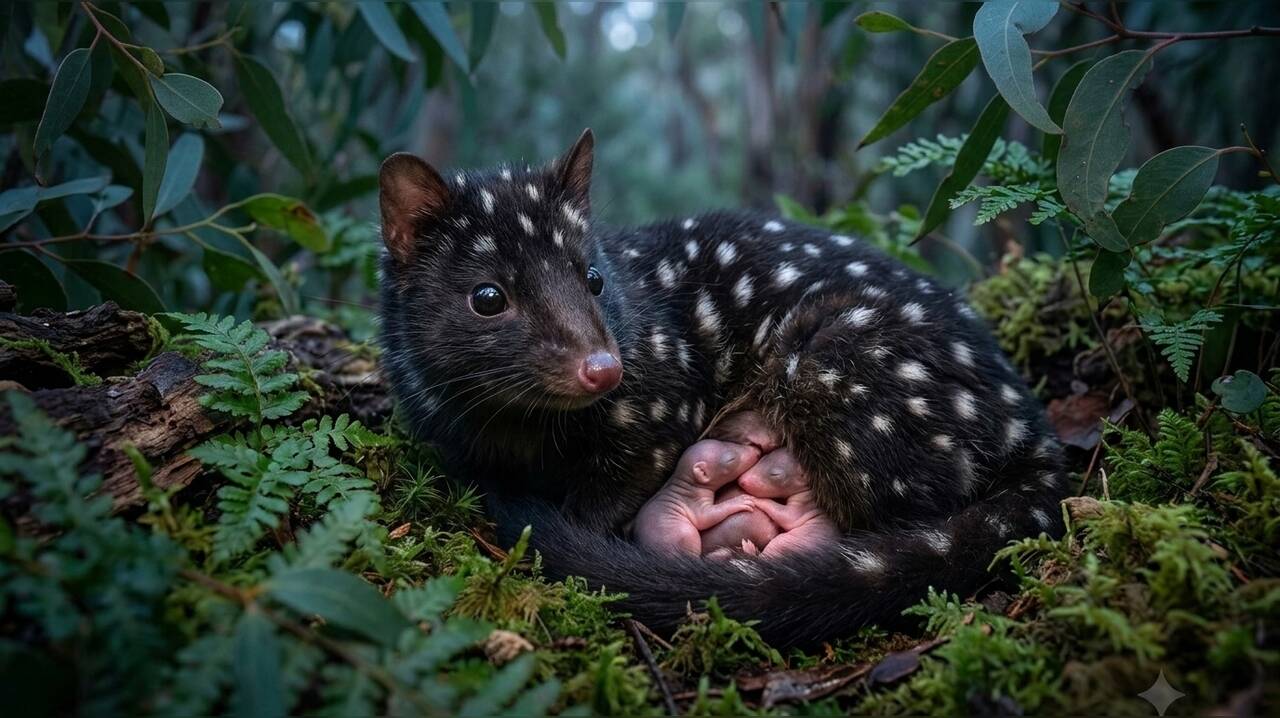
Conservation efforts to save the
The eastern quoll, a nocturnal species once common across the country’s eastern coastal regions, was declared extinct on the mainland by the 1960s. While a wild population persists in Tasmania, recent data indicates that even these remaining groups are facing a concerning downward trajectory, prompting urgent intervention from ecologists and wildlife sanctuaries.
A Complex Path to Recovery
The decline of the eastern quoll has been attributed to a combination of factors, including habitat loss, disease, and the introduction of invasive predators such as foxes, cats, and dogs. Although Tasmania has remained a vital refuge due to the absence of foxes, researchers have observed sharp population drops since the turn of the century. David Hamilton, a conservation ecologist at the Tasmanian Land Conservancy, noted that while some areas have seen a degree of recovery, others continue to struggle for reasons that remain under investigation.
In an effort to bolster these numbers, conservationists have turned to rewilding and captive breeding. A recent initiative at The Quoin, a private conservation property in Tasmania, saw the successful breeding of released quolls. One female has been documented carrying six joeys, a development that follows earlier, less successful attempts where captive-bred adults struggled to adapt to the wild. Experts now believe that incorporating both juveniles and adults into release programs, rather than relying solely on captive-raised adults, is key to establishing self-sustaining populations.
Overcoming Challenges on the Mainland
While the Tasmanian success provides a template for conservation, the return of the eastern quoll to mainland Australia presents distinct challenges. A 2018 pilot program in Booderee National Park saw the loss of 14 out of 20 released quolls within three months, primarily due to fox predation. Liz Gerber, a project lead at Sydney Zoo, explained that the quolls’ natural defense mechanism—a tendency to freeze when threatened—makes them particularly vulnerable to introduced predators that do not hunt like the native birds of prey the quolls evolved to avoid.
To mitigate these risks, current strategies focus on releasing captive-bred quolls into fenced, fox-free sanctuaries. Sydney Zoo, which launched a breeding program in 2024, recently released nine quolls into the Bannockburn Rewilding Sanctuary. Conservationists emphasize that the return of the species is not merely about biodiversity, but also about restoring the quoll’s ecological role as a scavenger and insectivore. By managing small mammal populations and assisting in disease control, the quoll is viewed as a critical component of a healthy bushland ecosystem that has been missing for too long.




