
In 1998,
The inspiration for the expedition struck Mason while he was serving with the French Foreign Legion in Africa. Reflecting on his time overlooking the Ethiopian landscape, he sought a challenge that offered a profound sense of personal autonomy. The decision to cross Australia on foot with camels was, in his words, a relatively spontaneous idea that eventually required months of meticulous preparation before he set out from Dalby.
A Bond Forged in the Desert
Among the three animals that supported his journey, Kabul, the lead camel, played a critical role in the expedition's success. Mason described the animal as powerful, reliable, and essential for navigating the extreme temperature fluctuations and the arduous terrain of the Australian outback. The pair’s partnership became a defining element of the trek, providing Mason with the stability needed to complete the eight-month journey.
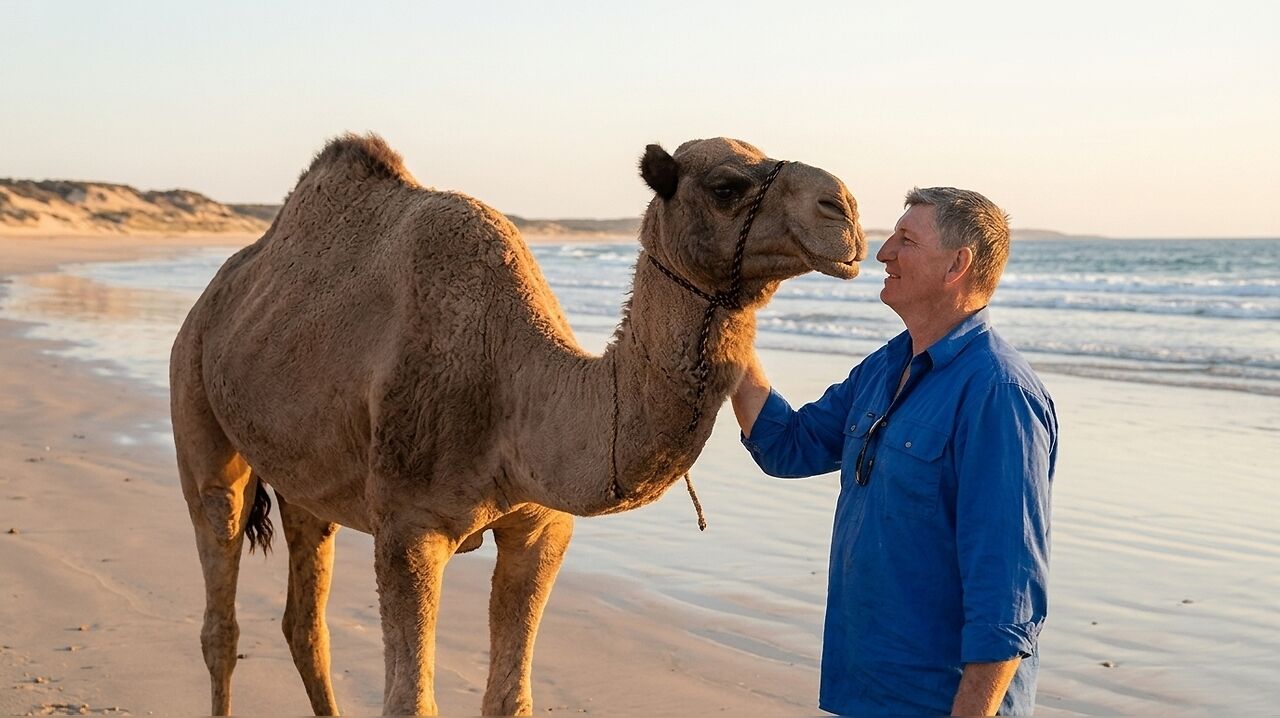
Following the completion of the walk, the camels were integrated into the camel trains operating on Cable Beach in Broome. Seventeen years later, in 2015, Mason returned to the Kimberley coast for an emotional reunion with Kabul. By that time, the camel was under the care of local cameleer John Geappen. Mason noted that the experience of the walk remained a significant influence on his life, describing it as a pursuit of freedom that he continued to reflect upon long after the journey concluded.
Life Beyond the Expedition
The 1998 crossing marked a pivotal chapter in Mason’s life, but it was not the end of his professional pursuits. Following his adventure, he served with the Australian Defence Force, completing four tours of duty in Iraq. He later transitioned into a career as a military lawyer based in Canberra. Despite his subsequent military service and professional responsibilities, Mason has frequently cited the 236 days spent on the road with his camels as an enduring memory that shaped his perspective on life and personal independence.




