
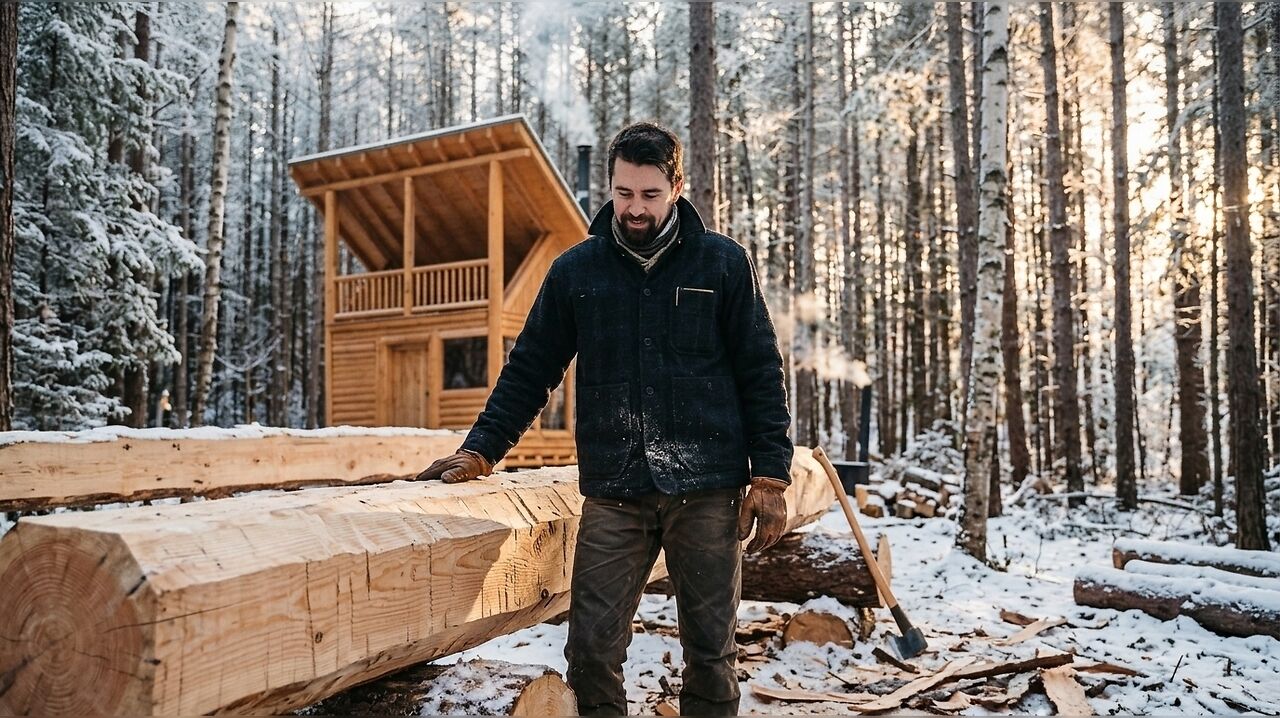
A Canadian woodworker has successfully completed a long-term wilderness project, constructing a fully functional
Known online as Trustin Timber,
Mastering the Wilderness Craft
The construction process was complicated by the harsh Canadian winters, which presented both physical and logistical hurdles. Bokshowan noted that the extreme cold often made the initial stages of work difficult, as he had to begin felling trees in freezing temperatures before physical exertion could provide any warmth. Over the eight-year period, he refined his approach, evolving from a novice to a skilled woodsman capable of managing complex tasks without modern mechanical assistance.
One of the most significant skills Bokshowan developed was the ability to control the direction of falling trees. By learning to guide timber to specific landing spots without the use of ropes, pulleys, or levers, he increased the efficiency of his harvesting. This technical growth, combined with learning how to properly dress and prepare for sub-zero conditions, allowed him to sustain the long hours required to gather the necessary materials for his retreat.
A Labor-Intensive Architectural Achievement
The completed cabin stands as a physical representation of the time and effort invested in its creation. By sourcing all materials directly from the surrounding landscape, the structure is deeply integrated into its environment. The project highlights the patience and resilience required for an off-grid lifestyle, where the transition from raw forest to a finished home is measured in years of manual labor rather than weeks of construction.
For Bokshowan, the cabin represents the culmination of a long-term commitment to self-reliance. The project demonstrates how the combination of grit and acquired




