
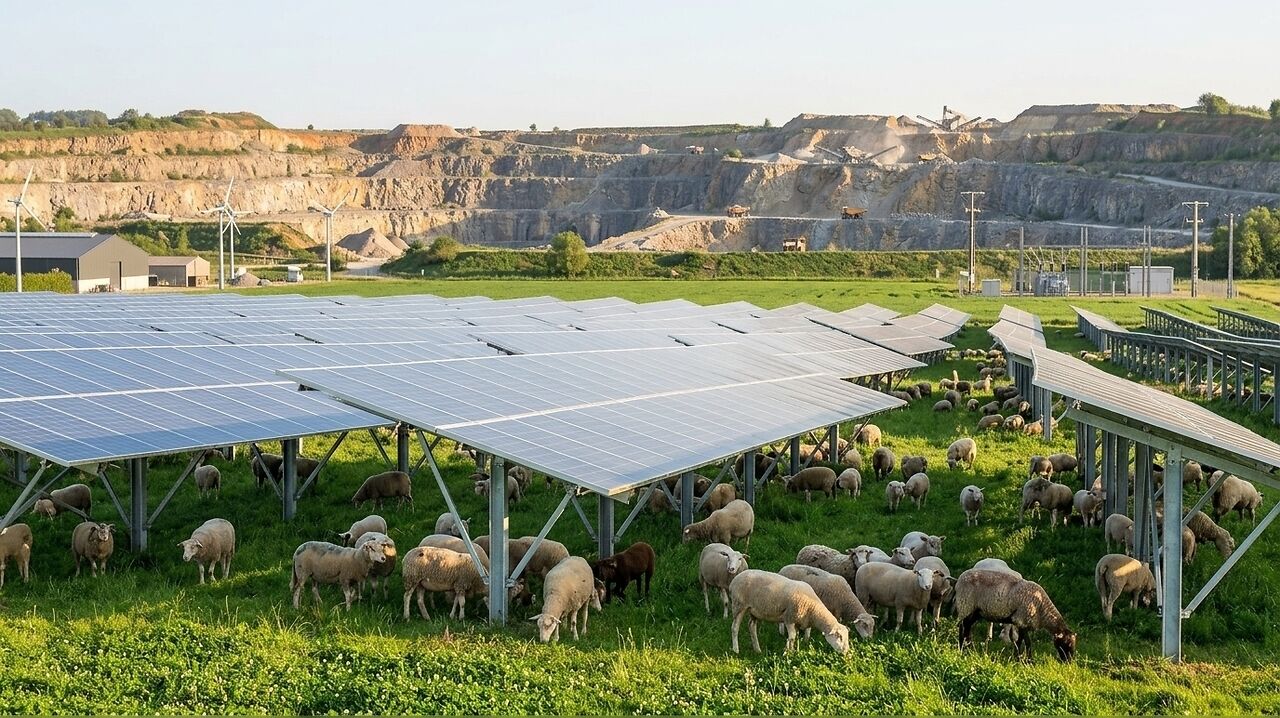
A pioneering agrivoltaic project has been launched in Florennes, Wallonia, where a quarry site is successfully integrating renewable energy production with traditional livestock farming. Developed by Calcaires Agri Énergie in collaboration with Ether Energy, the initiative utilizes 3.3 hectares of land to host a solar installation that operates in tandem with sheep grazing.
The installation features 3,240 photovoltaic panels with a total capacity of 2.27 MWc. To ensure the land remains viable for agriculture, the panels are elevated above the ground and spaced six metres apart. This specific configuration provides the necessary clearance for sheep to move freely beneath the structures, while simultaneously offering the animals shelter from adverse weather conditions.
Energy Production and Agricultural Integration
The project is designed to generate approximately 2.33 GWh of electricity annually. A significant portion of this output is dedicated to powering the operations of the nearby
Beyond energy generation, the project serves as a model for land-use efficiency. By partnering with the Grand-Bois farm in Gerpinnes, the developers aim to support local sheep farming, which is a strategic goal given that more than 80% of the mutton consumed in Belgium is currently imported. The arrangement provides the farmer with an additional income stream while ensuring the land remains in active agricultural use.
Environmental Impact and Future Sustainability
The initiative is projected to lower the quarry’s carbon footprint by preventing approximately 2,000 tonnes of CO₂ emissions each year. Furthermore, the design incorporates measures to promote biodiversity through the maintenance of natural features and the application of extensive farming practices. The project is intended to operate for a 30-year lifespan and is built to be fully reversible, ensuring the land can be returned to its original state if required.
Looking ahead, the developers plan to establish a Renewable Energy Community, further integrating the site into the local energy landscape. By balancing industrial power needs with agricultural preservation, the Florennes project highlights a dual-use approach to land management that seeks to address both renewable energy targets and the sustainability of local farming sectors.




