
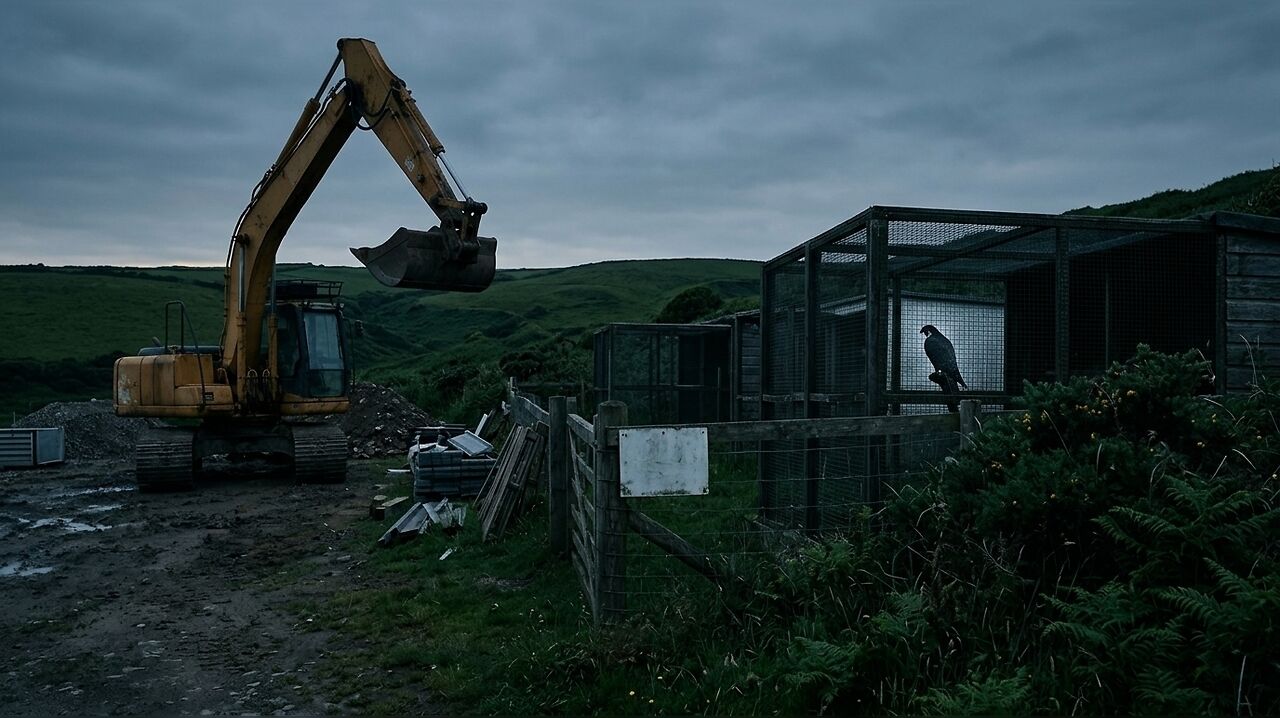
A protracted legal battle between a former reality television personality and his neighbours has culminated in a substantial financial judgment, with the case now potentially heading to the Supreme Court.
The dispute originated in Cornwall, where Thomas, a former London art dealer, relocated to farm land near St Just. His property bordered the premises of
Court Findings on Negligence and Nuisance
The legal proceedings, which were heard in the High Court in Bristol, centred on allegations that building work conducted on Thomas’s land created excessive noise and visual disturbances that proved fatal to the sensitive birds. The breeders claimed that the construction activity, which occurred during the critical breeding season between March and June, caused the falcons to become distressed, leading to the loss of eggs and the eventual death of three birds.
Judge Jonathan Russen KC ruled in favour of the falcon breeders, concluding that Thomas and his company, Upper Cot Estate Limited, had failed to exercise reasonable care. The court heard evidence, including video footage, showing the impact of the construction on the birds. A specific point of contention involved a JCB digger left with its bucket raised near the aviary for three days. The court accepted testimony that the machinery’s presence caused the falcons to become agitated, directly contributing to their deaths.
Appeal and Ongoing Legal Uncertainty
Following the High Court’s decision, which awarded the breeders roughly £300,000 in compensation and interest plus £180,000 in legal expenses, Thomas sought to challenge the ruling in the Court of Appeal. His legal team argued that the construction of a barn and the storage of materials were standard agricultural land uses and that he should not be required to maintain a buffer zone to accommodate the specific needs of a neighbouring business.
The Court of Appeal’s decision was split, with judges reaching different conclusions on the legal basis for liability. While the court dismissed the appeal regarding negligence, it allowed the challenge on the grounds of private nuisance. Lord Justice Nugee, while acknowledging that parking machinery on one’s own land is generally an ordinary activity, noted that the specific placement and duration of the equipment were unnecessary and avoidable. Lady Justice Whipple concurred on the negligence finding, emphasising that the defendants had failed to consider the interests of their neighbours. The case has now moved toward a potential appeal at the Supreme Court as both parties contest aspects of the appellate ruling.




