
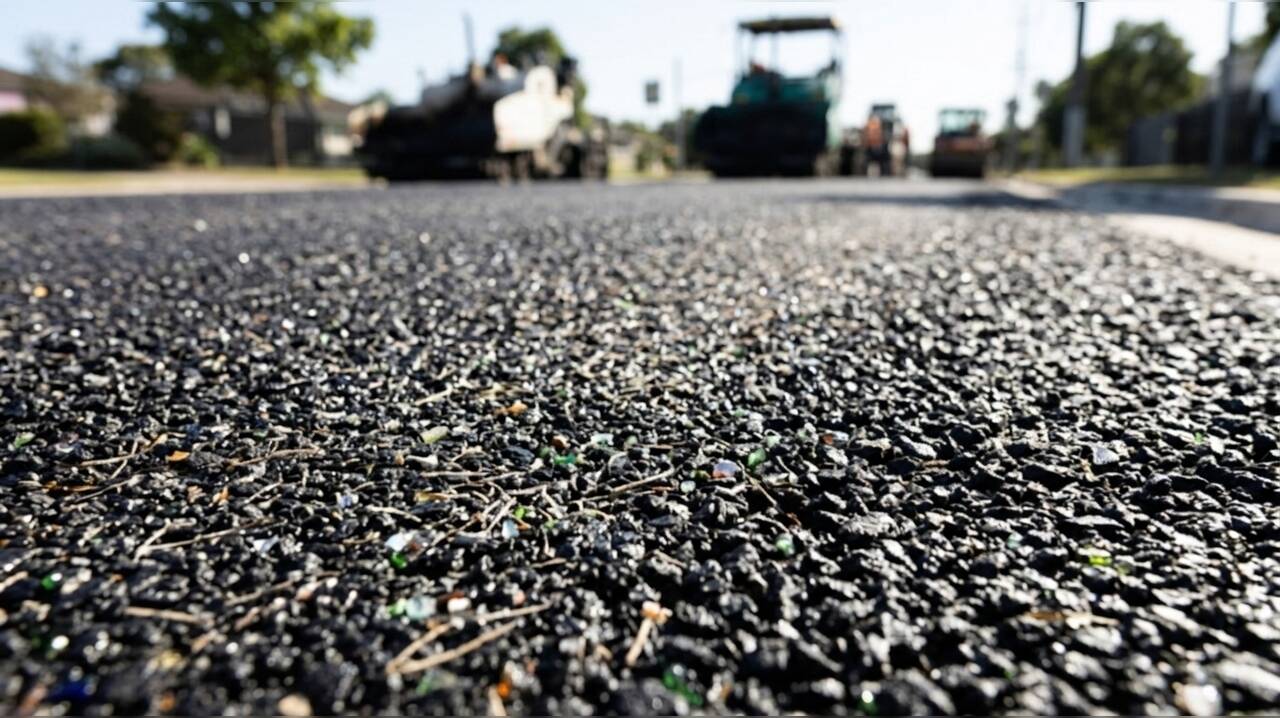
In a significant move toward sustainable infrastructure, road authorities in New South Wales, Australia, have successfully resurfaced suburban streets using a specialized asphalt mixture derived from thousands of
The initiative utilized roughly 135,000 discarded takeaway coffee cups and the equivalent of 1.2 million glass bottles. By integrating these recovered materials into the road base, engineers were able to reduce the carbon footprint of the asphalt by approximately 24% compared to conventional construction methods. The project encompassed sections of Jamison Road in South Penrith and Swallow Drive in Erskine Park, marking a notable milestone in Australian civil engineering.
Advancing the Circular Economy Through Innovation
The challenge of recycling takeaway coffee cups stems primarily from their internal waterproof lining, which complicates standard paper-processing systems. To overcome this, the project utilized the Simply Cups collection program, which allows for the separate gathering and processing of these cups. The resulting material, known as PAK-PAVE, was developed through a partnership between State Asphalt Services, the recycling firm Closed Loop, and the Simply Cups program, with support from the University of New South Wales.
Before the material was deployed on public roads, it underwent rigorous testing to ensure it met safety and durability standards. Experimental strips were subjected to heavy-load vehicle traffic and laboratory stress tests, where the recycled asphalt reportedly performed on par with traditional surfaces. Beyond coffee cups, the mixture incorporates crushed recycled glass, reclaimed asphalt pavement, and steel furnace slag, ensuring that more than half of the road-making materials are sourced from recycled waste rather than virgin resources.
Scaling Waste Recovery for Industrial Use
The Penrith project highlights a broader shift toward a circular economy, where the goal is to keep materials in use for as long as possible. Industry experts, including Rob Pascoe of Closed Loop, have emphasized that successful recycling requires more than just collection; it necessitates the creation of a viable commercial market for the recovered materials. By transforming waste into a functional product like road surfacing, the project provides a scalable model for reducing landfill reliance.
The initiative also aligns with national efforts to bolster domestic recycling infrastructure and reduce waste exports. Proponents of the model suggest that such projects offer economic benefits alongside environmental ones, noting that the processing and repurposing of waste materials can generate more employment opportunities than traditional landfill disposal. As technology continues to evolve, the long-term ambition for firms like State Asphalt Services remains the development of road surfaces constructed almost entirely from recycled components, effectively turning everyday waste into a permanent part of the nation's infrastructure.




