
Researchers at the
Projections indicate that Australia will face a significant waste challenge by 2050, with an estimated one million tonnes of decommissioned solar panels expected to enter the waste stream. These panels contain between 300 and 500 tonnes of silver, a precious metal that is frequently lost when panels are discarded, as current recycling efforts often focus only on glass and aluminium.
Advancing silver recovery through continuous flotation
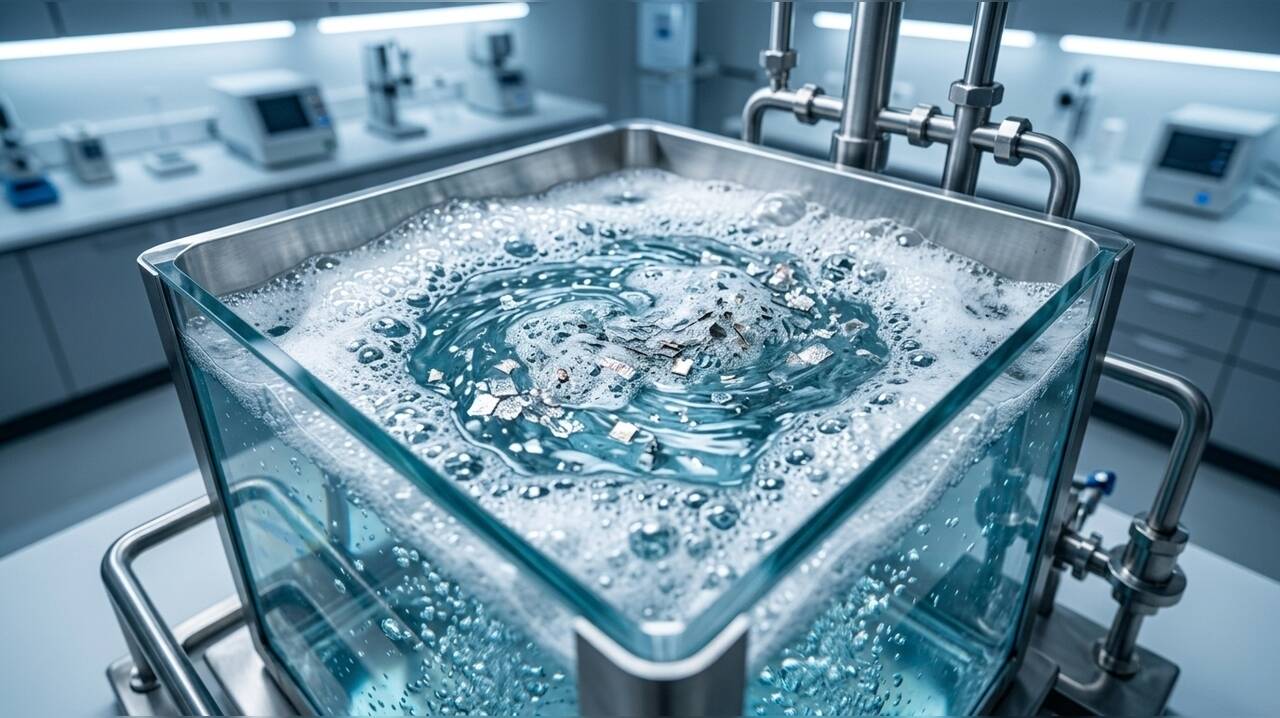
The research team has utilised a froth flotation process, a technique traditionally employed in mineral processing, to isolate silver from solar-cell components. By using water, air, and minimal chemical additives, the method allows silver particles to attach to air bubbles, facilitating their separation from other materials. This approach offers a distinct advantage over conventional acid-leaching techniques, which are often more expensive and generate hazardous waste that requires complex management.
In a recent study published as a preprint on ChemRxiv, the team demonstrated the effectiveness of this process through continuous operation. During a 90-minute pilot test, researchers processed 22 kilograms of solar-cell material—equivalent to approximately 468 kilograms of rooftop photovoltaic panels. The trial achieved a recovery rate of nearly 100 per cent, concentrating the silver into a high-value product that represented only 1.25 per cent of the original mass. This resulted in an 83-fold increase in silver concentration compared to the raw material.
Improving the commercial viability of recycling
The economic feasibility of recycling remains a primary hurdle for the solar industry. Currently, the cost of recycling a single solar panel ranges between $10 and $15, whereas landfill disposal typically costs only a few dollars. By successfully recovering silver—the most valuable component within a solar cell—researchers believe they can significantly narrow this cost gap, making recycling a more attractive option for waste management facilities.
Associate Professor Mahshid Firouzi noted that the ability to scale this technology is essential for its future adoption. The team’s latest findings suggest that the flotation process can operate continuously at a larger scale while maintaining high recovery efficiency. Beyond solar panels, the researchers are now exploring whether this method can be adapted to reclaim valuable materials from other electronic waste streams, such as printed circuit boards. As the volume of retired solar infrastructure continues to grow, this development provides a potential pathway to keep valuable resources in the economy rather than in landfill.




