
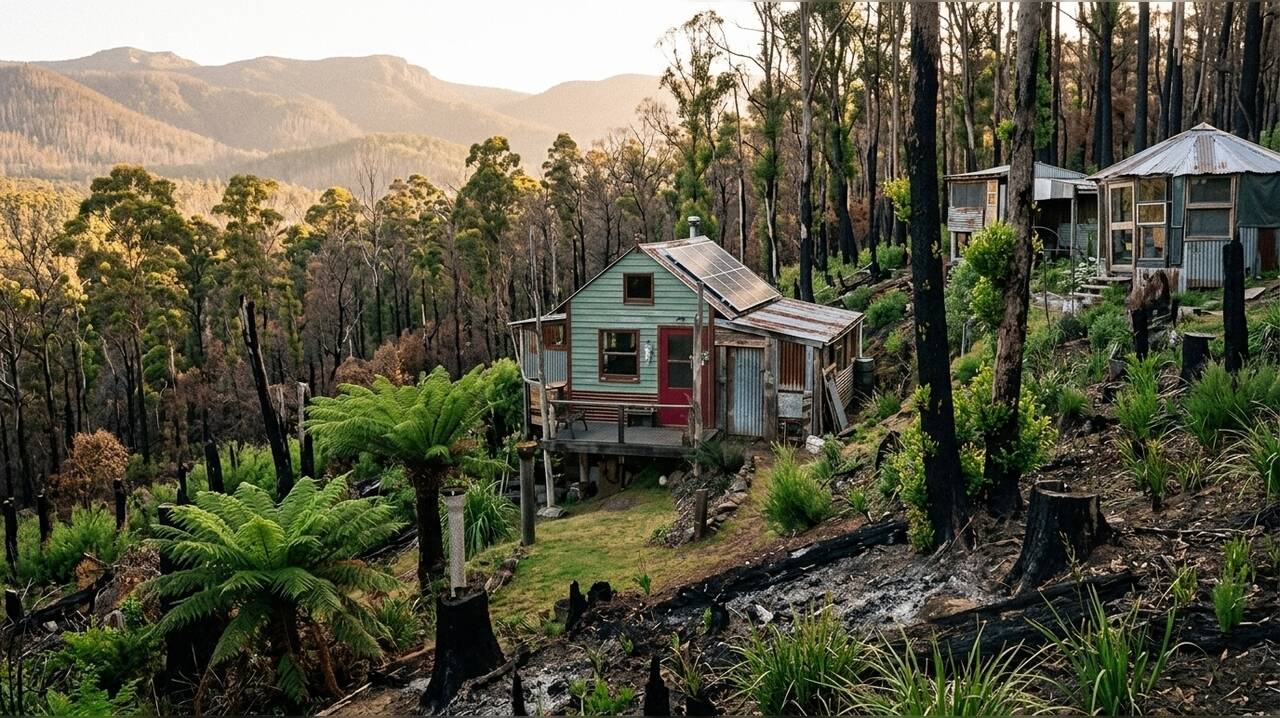
A young Australian artist has demonstrated a resilient approach to housing by constructing an off-grid cabin in Tasmania for less than AU$10,000. The project, which utilized salvaged materials, was initiated after a devastating bushfire destroyed her original home just 18 months after she had moved onto her 25-acre property.
Faced with the loss of her home and limited financial resources, the artist opted to bypass traditional construction routes. Instead, she spent months sourcing discarded timber, corrugated metal, and secondhand glass from salvage yards and sites affected by fire. This hands-on approach allowed her to create a functional, self-contained living space while avoiding the burden of a significant mortgage.
Sustainable Design and Off-Grid Living
The cabin is designed to operate entirely independently of public utility networks. To manage Tasmania’s variable climate, the structure incorporates solar panels paired with a battery storage system, providing sufficient energy for essential appliances and lighting. Water needs are met through a rainwater harvesting system, where precipitation is collected from the metal roof, filtered, and distributed via gravity to the kitchen and bathroom.
The interior and exterior design choices were driven by both cost-efficiency and safety. The use of metal sheeting on the exterior provides a non-combustible barrier, while the strategic placement of windows maximizes solar gain during the island’s cold winters. Inside, the artist utilized reclaimed wooden floorboards and timber panels, effectively repurposing materials that might otherwise have been sent to landfills. A wood-burning stove serves as the primary heat source, and a composting toilet eliminates the need for a connection to a municipal sewer system.
Alternative Housing Trends in Australia
The project has gained attention as a case study for low-cost, sustainable living, particularly as many Australians grapple with rising property prices and the increasing threat of environmental disasters. According to reports from alternative housing publications, the cabin highlights a growing interest in self-built, smaller-scale dwellings that prioritize environmental sustainability and financial independence.
While the cabin serves as a successful example of recovery, such projects often navigate complex regulatory landscapes. Local government planning requirements and stringent fire safety codes can present significant hurdles for homes constructed from unconventional or recycled materials, especially in regions prone to bushfires. Despite these challenges, the artist continues to reside on her land, focusing on her creative work while allowing the surrounding native vegetation to regenerate following the fire. By minimizing initial construction costs and eliminating monthly utility bills, she has established a living situation that remains financially manageable.




