
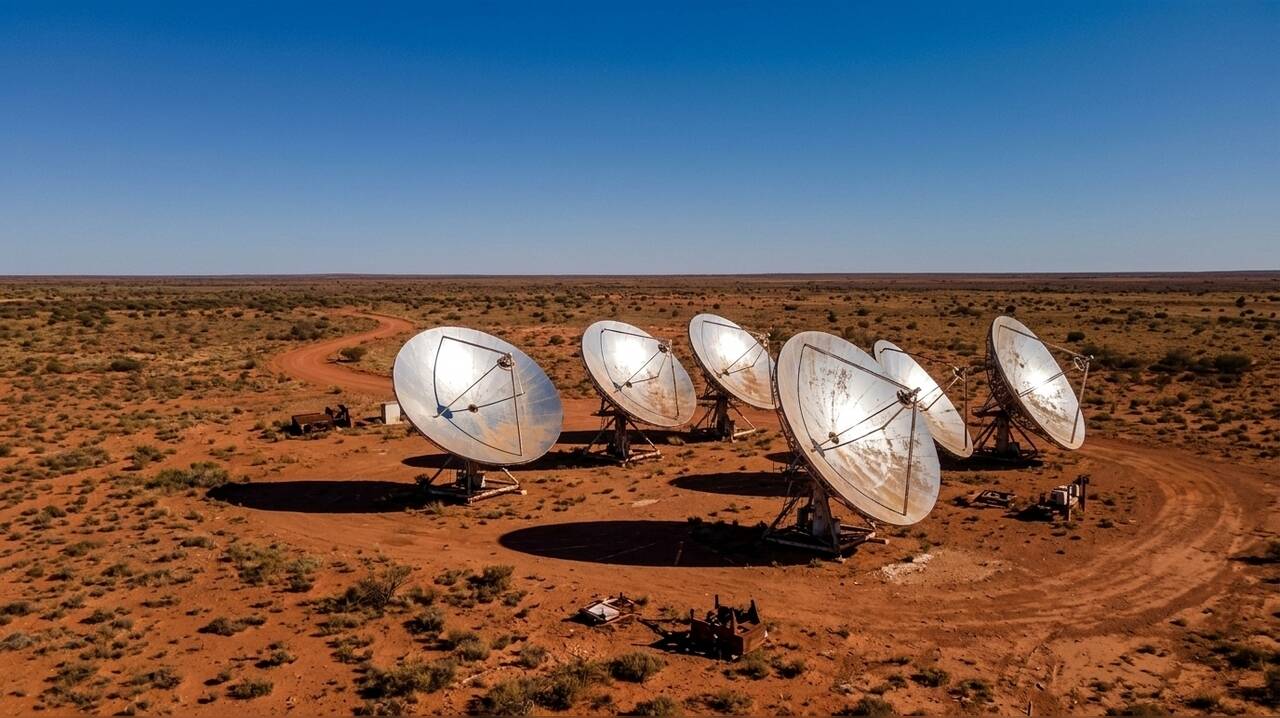
Australia’s first solar power station, a pioneering facility established in the remote outback town of White Cliffs in 1981, has been formally added to the New South Wales state heritage register. The site, which once utilized a network of parabolic dishes to provide electricity to a hospital, school, post office, and 12 homes, is now recognized as a landmark in the history of large-scale solar energy.
Located in the semi-arid plains of far western New South Wales, the project was designed to address the logistical and environmental challenges of powering a community situated far beyond the reach of the main electricity grid. By utilizing solar thermal technology, the station offered a sustainable alternative to the expensive and difficult process of transporting diesel fuel to the isolated settlement.
A Technological Milestone in the Outback
The White Cliffs station featured 14 parabolic dish collectors equipped with tracking systems that followed the sun’s movement across the sky. These dishes concentrated sunlight onto receivers, heating a working fluid that drove a generator to produce electricity. The system was integrated into a local mini-grid, supported by battery storage for nighttime use and diesel generators that served as a backup during periods of low solar irradiance or maintenance.
Operating for more than a decade, the facility served as a real-world test for solar thermal technology. It faced significant environmental hurdles, including extreme heat, dust, and the need for specialized maintenance in a remote location. Despite these challenges, the project proved that solar energy could reliably support critical community infrastructure, drawing international attention from engineers and researchers at a time when large-scale renewable applications were rare.
Preserving a Legacy of Renewable Innovation
The station ceased operations in the mid-1990s as energy policies shifted and newer technologies emerged. However, the recent heritage listing by the New South Wales government ensures that the site’s physical remnants—including the dish bases, control buildings, and substations—will be preserved. The designation does not involve returning the plant to operation but focuses on the conservation of the structures and the installation of interpretive signage to educate visitors on the site’s historical importance.
For the residents of White Cliffs, the heritage status acknowledges the town’s contribution to Australia’s broader energy narrative. As the country continues to expand its solar capacity through modern photovoltaic farms and rooftop installations, the White Cliffs site remains a tangible link to the early efforts to harness the outback’s abundant sunlight. The project stands as a testament to the initial, ambitious steps taken to transition remote communities away from fossil fuel dependence, providing a historical foundation for the nation’s current renewable energy landscape.




