
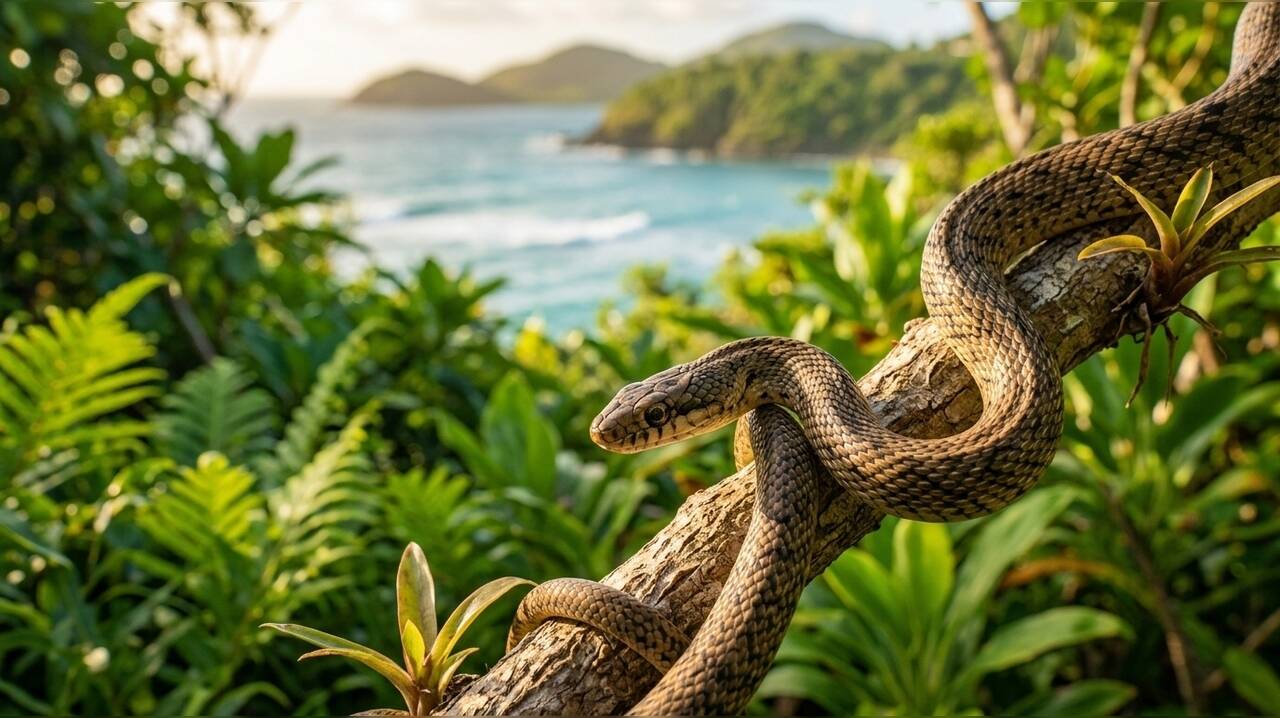
A long-term conservation initiative has successfully brought the
The recovery effort, detailed in research published on ResearchGate, began with an urgent intervention on Great Bird Island. A consortium of local and international conservation groups focused on the eradication of black rats, which posed a severe threat to the remaining population. The impact of this measure was immediate; the number of racers doubled shortly after the intervention and continued to climb, demonstrating the effectiveness of targeted habitat management.
Expanding the Habitat to Ensure Long-Term Survival
Recognizing that the limited space on Great Bird Island would eventually cap the population growth, conservationists implemented a 10-year strategy to establish new colonies on other offshore islands. The project team identified Rabbit, Green, and York islands as suitable sites, provided that invasive mammals—specifically rats and mongooses—were first removed to protect the snakes and their primary food source, lizards.
Between 1999 and 2012, researchers translocated 86 racers to these three locations. According to the study, the snakes adapted successfully to their new environments, with no recorded fatalities during the transfer process. The success of these reintroductions was confirmed within three years, as researchers began observing unmarked, locally-born snakes on all three islands, signaling that the populations were self-sustaining.
Growth and Future Challenges
The study noted that the translocated snakes appeared to thrive in their new habitats, showing signs of accelerated growth compared to those on the more crowded Great Bird Island. By 2015, the total population reached an estimated 1,135 individuals, before settling at 1,108 in 2016. This expansion allowed the species to occupy approximately 63 hectares of land, a substantial increase from their 1995 stronghold.
Beyond the physical relocation of the snakes, the program included extensive public education campaigns aimed at shifting local perceptions of the species. Conservationists worked to highlight the harmless nature of the racers and their importance to the local ecosystem. Despite these gains, researchers cautioned that the species remains vulnerable. The long-term survival of the Antiguan racer continues to depend on ongoing efforts to prevent the re-introduction of invasive mammals and the protection of their habitats from development. Experts suggest that establishing additional sites will be necessary to further mitigate risks to the population.




