
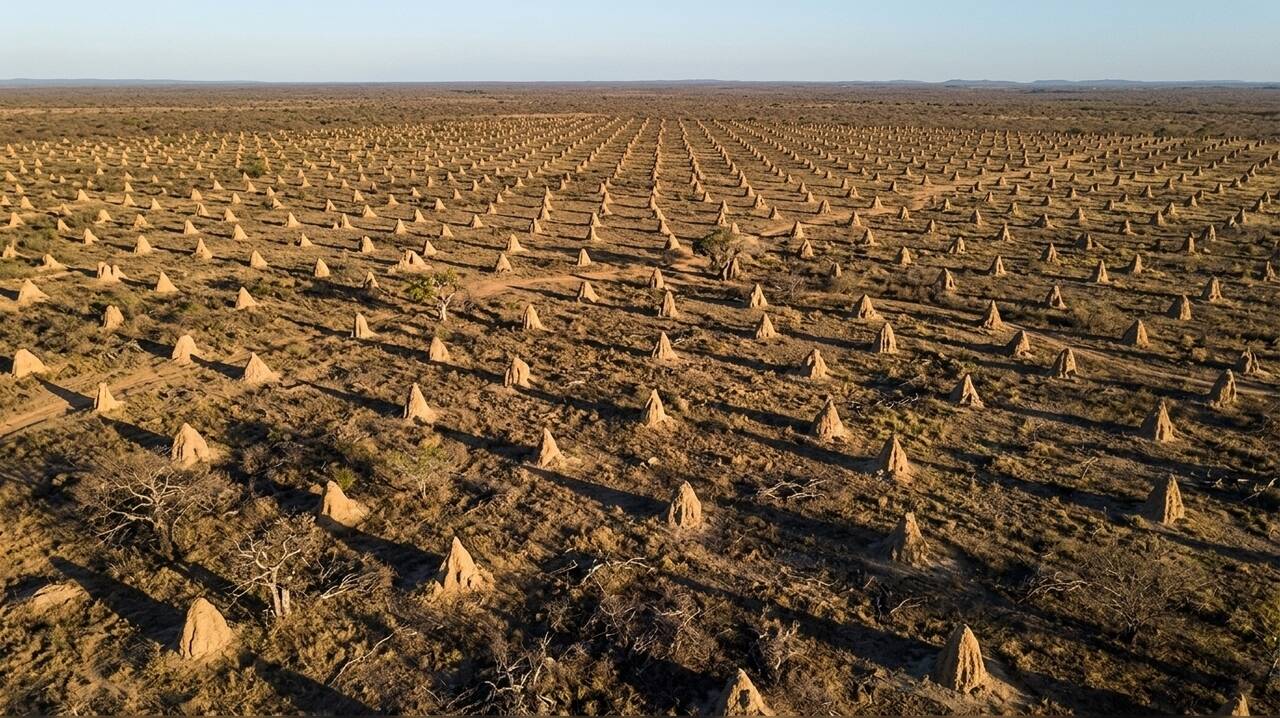
A vast, ancient landscape in northeastern Brazil has revealed a hidden architectural secret that spans an area roughly the size of Great Britain. Approximately 200 million earthen mounds are distributed across 230,000 square kilometres, forming a pattern that researchers have identified as the largest known example of
The mounds, which are created by the termite species
Uncovering the Origins of the Earthen Mounds
To determine the age of this landscape, scientists collected soil samples from the centres of 11 mounds, employing optically stimulated luminescence dating. The results indicated that the mounds were deposited between 690 and 3,820 years ago. This timeline suggests that the landscape was not formed in a single event but rather through a continuous, multi-generational process that has persisted for nearly four millennia, rivaling the age of some of the oldest known termite structures in Africa.
Upon inspecting hundreds of these mounds, including those exposed by road construction, researchers found no internal chambers, passages, or elaborate architecture typically associated with termite nests. The mounds are essentially amorphous piles of waste soil. Beneath the surface, however, the termites maintain a sophisticated system of narrow horizontal galleries and tunnels. These tunnels are kept sealed, and the insects emerge only briefly through temporary openings to forage for fallen leaves before closing the access points again.
The Purpose of the Subterranean Network
The researchers propose that the termites developed this vast underground infrastructure to navigate the challenges of the caatinga forest, an environment characterized by seasonal dryness and episodic food availability. By maintaining a permanent, interconnected tunnel system, the termites can move safely across the landscape while efficiently disposing of the soil generated by their excavations. This system allows the colony to access food sources with minimal exposure to the surface.
The distribution of the mounds is remarkably uniform, with an average separation of approximately 20 metres and a density of about 1,800 mounds per square kilometre. While the researchers investigated whether this spacing was the result of competition or aggression between colonies, they found no evidence to support that theory. Instead, the study suggests that the regular pattern emerged through a process of self-organisation, as the insects utilized their tunnel network to optimize food collection and waste disposal over thousands of years.




