
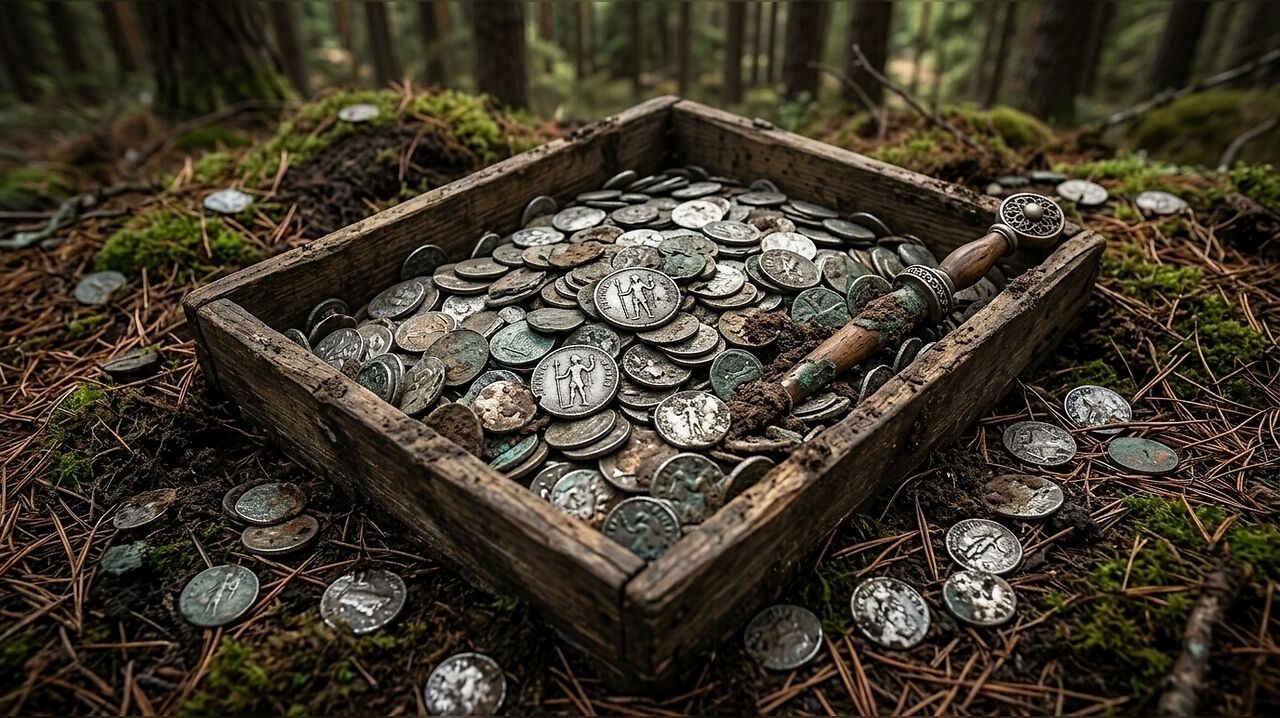
A chance discovery while digging for fishing bait near a summer home on the Mörkö peninsula has led to the recovery of the largest medieval
The discovery was reported to the Stockholm County Administrative Board by the finder and her husband shortly after the initial unearthing. This prompt notification allowed professional archaeologists to secure the site and document the context of the burial before the material was transferred to the National Heritage Board, known as the Riksantikvarieämbetet, for a comprehensive assessment. Following a detailed analysis, the state authority moved to redeem the hoard in May 2026, awarding the finders 4 million Swedish kronor in recognition of its exceptional archaeological value.
Historical Significance and Composition of the Hörningsholm Hoard
The collection, now referred to as the Hörningsholm hoard, weighs approximately 4.7 kilograms and offers a unique window into the economic and social landscape of 12th-century Sweden. While the hoard spans the late Viking Age and the early Middle Ages, the majority of the silver pieces date to the 1100s. Among the most notable items are coins bearing the inscription “KANUTUS,” which researchers link to the reign of King Knut Eriksson, who governed Sweden during the latter half of the 12th century.
Beyond royal currency, the hoard contains a significant number of ecclesiastical coins, often referred to as bishop coins. These pieces are distinguished by imagery depicting figures holding a crozier, the traditional staff of a bishop, rather than the standard royal iconography of the era. Additionally, the collection includes coins associated with Gotland, some of which feature architectural designs that authorities suggest may represent early church buildings. This blend of royal, religious, and regional currency provides researchers with a rare, concentrated dataset regarding the monetary circulation and societal structures of the period.
State Acquisition and Preservation
Under Swedish heritage legislation, archaeological finds composed of precious metals must be reported to the authorities to determine if they should be retained by the state. The decision to redeem the Hörningsholm hoard for 4 million kronor reflects both the sheer scale of the discovery and the high cultural value of the artifacts. By bringing the collection into the national archaeological archive, the government ensures that the items will be preserved and studied rather than remaining in private hands.
The National Heritage Board has emphasized that the size and diversity of the find make it a landmark discovery for Swedish history. By documenting the 144 non-coin objects alongside the massive silver cache, experts hope to gain further insights into the trade networks and daily life of the early medieval population. The exact location of the find remains confidential to protect the integrity of the site, while the hoard itself is now set to be integrated into Sweden’s national collection.




