
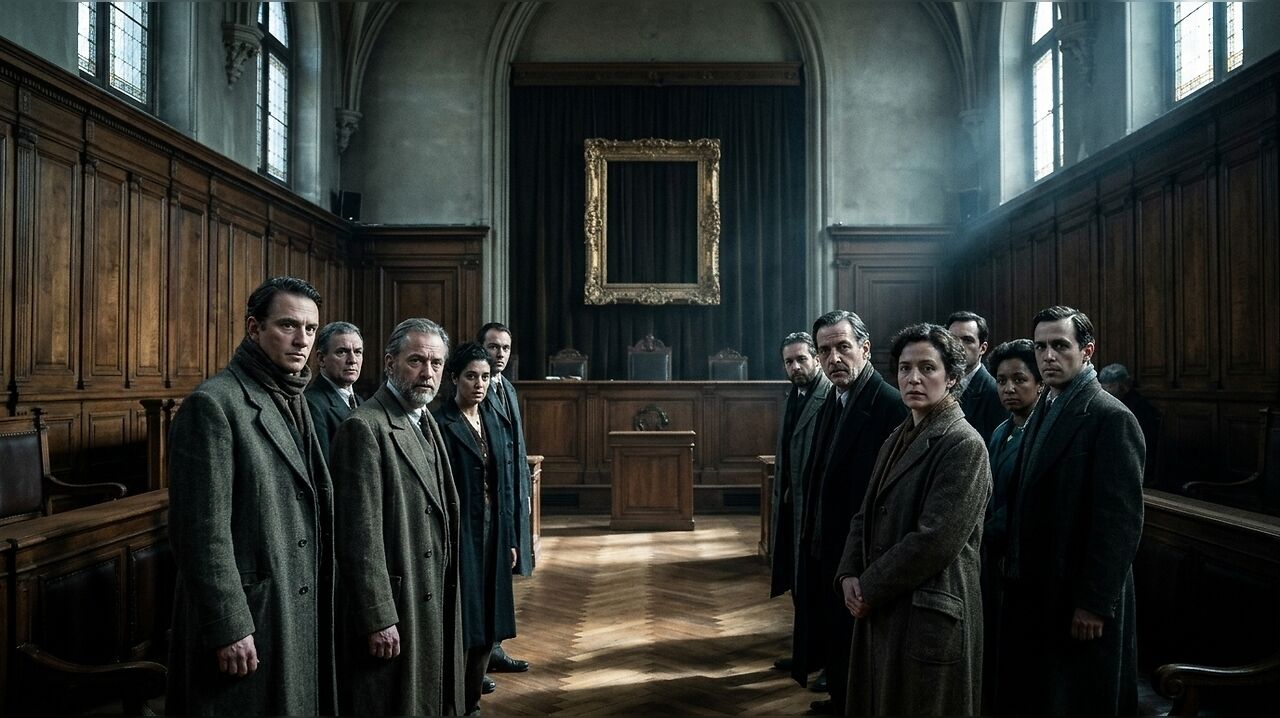
A legal battle is unfolding in a Paris court over the 2024 sale of a
Seven descendants of Flavian are seeking to overturn the agreement that facilitated the sale, arguing that the majority of the family was excluded from the negotiation process. While the painting was sold in London in June 2024, the legal proceedings in France have raised significant questions regarding both the legitimacy of the settlement and the historical status of the artwork, which appears in a French government register of property reported as looted during World War II.
Disputed Provenance and Settlement Claims
The core of the dispute involves conflicting interpretations of the painting’s history. The Flavian heirs contend that the work was among the assets confiscated from their ancestor in 1941. Conversely, Sotheby’s and the Toronto-based asset recovery firm Mondex Corporation have presented research suggesting the painting may have been sold to a British collector, Edward Le Bas, in 1938, prior to the German occupation. This research, conducted by scholar Mary Kate Cleary, notes an absence of the painting from the records of the Einsatzstab Reichsleiter Rosenberg, the Nazi task force responsible for systematic art looting.
The legal challenge also focuses on the procedural handling of the settlement. The plaintiffs assert that only two of the family’s descendants, Gilles and Nicolas Flavian, signed the agreement that allowed the auction to proceed. Other family members claim they were not consulted and were only later informed of the deal via a letter from Mondex, which indicated that an 8% share of the net sale price had been accepted on their behalf. Sotheby’s has maintained that the settlement was fully disclosed in its auction catalogue and that it acted in accordance with the agreement reached between the consignor and the representatives.
Jurisdiction and Impending Ruling
Beyond the merits of the looting allegations, Sotheby’s has challenged the jurisdiction of the French court, arguing that the transaction occurred in London and involved parties with no direct connection to France. The heirs’ legal counsel, Corinne Hershkovitch, maintains that the case is fundamentally linked to the alleged seizure of the property in Paris, justifying the court’s involvement. The court is scheduled to deliver its ruling on November 5, 2026.
The outcome of this hearing is expected to clarify whether the settlement can be annulled, though it may not provide a definitive resolution to the painting’s complex wartime history. The case underscores the ongoing challenges in addressing restitution claims for art that has circulated through international markets for decades, often accompanied by incomplete historical records and fractured family claims. For now, the legal status of the painting and the rights of the Flavian descendants remain subject to the court’s forthcoming decision.




