
The
The construction of the basilica has evolved significantly since the first stone was laid in 1882. While Gaudí initially utilized traditional masonry and sandstone sourced from Barcelona’s Montjuïc mountain, the depletion of local resources and the increasing complexity of the design necessitated a shift in methodology. Today, the project integrates digital modelling, including CAD and BIM software, to translate Gaudí’s original three-dimensional plaster models into precise architectural components. Because the site is constrained by its urban location and high visitor traffic, much of the assembly is now performed off-site, with prefabricated elements transported to the basilica for final installation.
Advanced Bonding for Structural Integrity
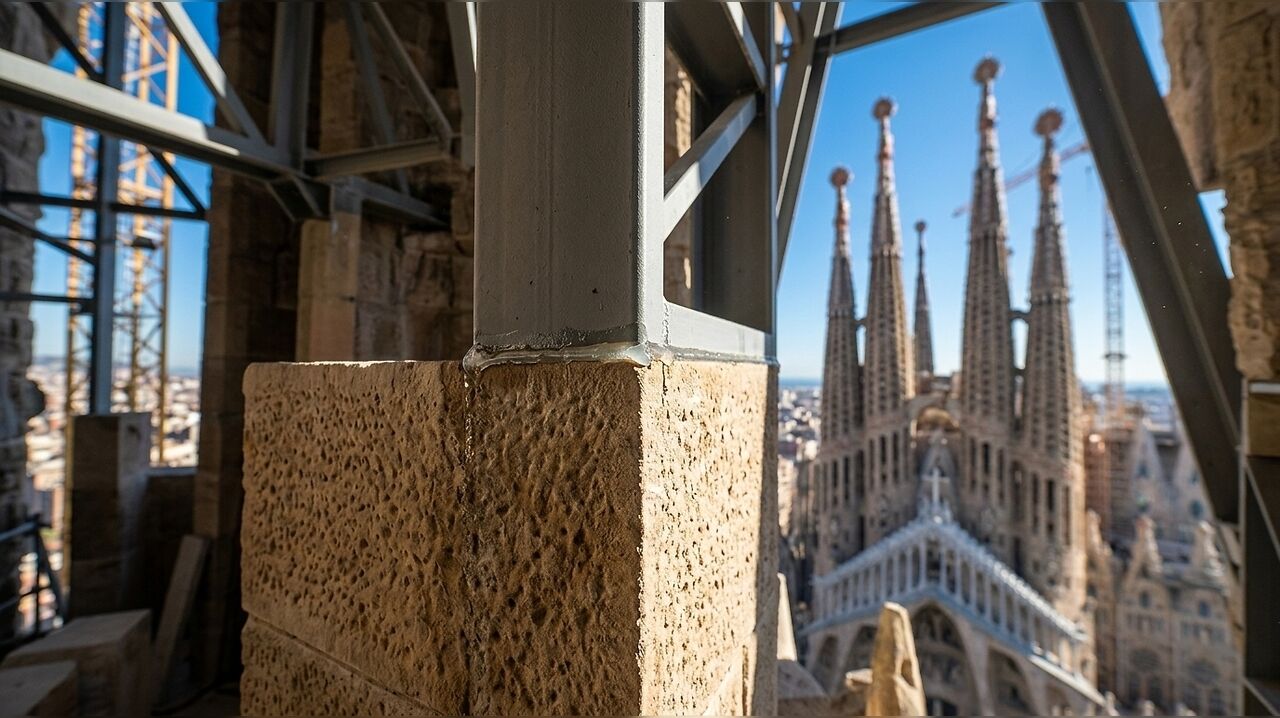
A critical component in the recent assembly of the basilica’s 826 stone panels is the use of a high-performance
This engineering solution is essential for maintaining the stability of the Tower of Jesus Christ, the tallest in the complex. The adhesive provides the necessary strength to support the massive cross crowning the tower while ensuring the structure remains rigid under pressure. The durability of these bonds is particularly significant given the basilica’s proximity to the Mediterranean Sea, which exposes the building to high salinity and the risk of corrosion. Furthermore, the adhesive helps the structure endure constant vibrations caused by two underground metro lines that run beneath the site.
A Century-Long Architectural Evolution
The collaboration between the Sagrada Familia’s construction board and external technical partners has been ongoing for over a decade. The project, which is funded entirely through visitor contributions, operates without a fixed budget or a rigid timeline, reflecting the unique nature of its development. Assistant Architect David Puig noted that modern technology has been instrumental in bringing to life architectural concepts that Gaudí had envisioned but could not fully execute during his lifetime.
While the central tower was completed this year, the basilica remains an active construction site. The project continues to draw on a multidisciplinary team of approximately one hundred professionals, alongside various external corporate collaborations. Although 2026 has long been cited as a symbolic target for completion—marking the centenary of Gaudí’s death—the work remains in progress as the team continues to navigate the logistical and structural challenges of finishing one of the world’s most complex architectural landmarks.




