
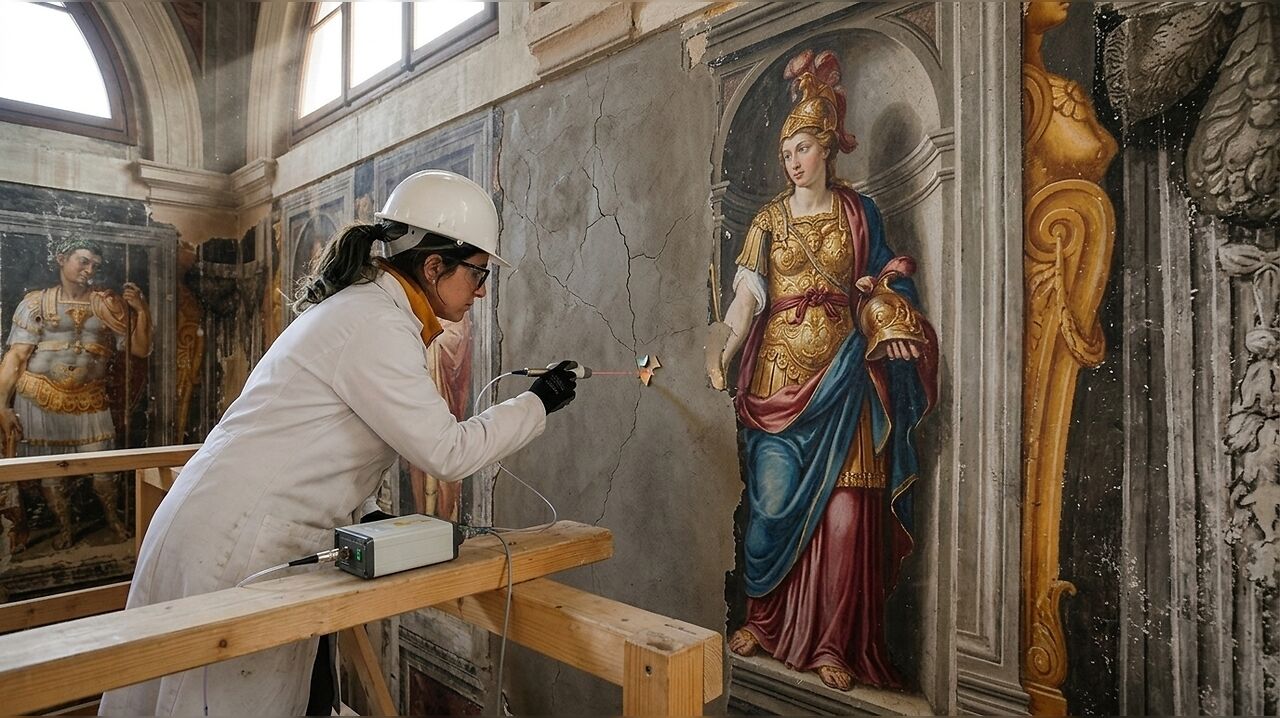
A long-neglected Renaissance villa near the Colosseum in Rome is yielding a remarkable artistic discovery as conservators peel back centuries of plaster and paint. The
The murals, which feature mythological figures, goddesses, and soldiers, were deliberately obscured in the 17th century after the property was transferred to a religious institution. Nuns operating a school and orphanage within the villa reportedly found the nude and semi-nude pagan imagery offensive, leading them to cover the elaborate wall decorations with plain plaster. This act effectively erased the Renaissance artwork from the building's interior for three centuries.
A Renaissance Masterpiece Re-emerges
Constructed between 1534 and 1547, the villa was originally designed to showcase the prestige of its owner, Eurialo Silvestri, a chamberlain to Pope Paul III. The residence was intended to reflect the high social standing of its occupants, featuring intricate coats of arms and classical motifs inspired by the surrounding ancient Roman ruins. Over the years, the property hosted various prominent figures, including members of the Medici and Colonna families.
The current restoration project, estimated at approximately 40 million dollars, involves both structural stabilization and the delicate removal of the later layers of paint. Conservators are utilizing advanced techniques, such as laser cleaning and water-based methods, to carefully strip away the obscuring materials without damaging the fragile original pigments underneath. Paola Mezzadri, a restorer working on the project, noted that while initial tests confirmed the existence of the artwork as early as 2002, a lack of funding under the previous religious ownership prevented full-scale restoration until the recent acquisition by the regional government.
Ongoing Discoveries and Historical Layers
The restoration has already yielded significant findings, particularly in the Hall of Divinities, where monumental figures of goddesses painted in vivid oranges, yellows, and greens have been exposed. Art historians are currently investigating the origins of the work, with some researchers pointing to the influence of Prospero Fontana and the circle of the renowned artist Raphael. Further exploration is underway in the Hall of the Emperors, where depictions of Roman leaders such as Titus and Hadrian, alongside scenes of cavalry and battle, are being uncovered.
The villa’s history is further complicated by its more recent past. Following the departure of the religious order around 1970, the building endured decades of neglect, serving at various times as a community arts center and a site for political activism. Restorers have reported finding 20th-century graffiti layered alongside the Renaissance masterpieces, providing a unique record of the building's varied history. While the restoration is ongoing and no date has been set for a public opening, the project continues to reveal a hidden gallery that has survived centuries of religious objection and abandonment.




