
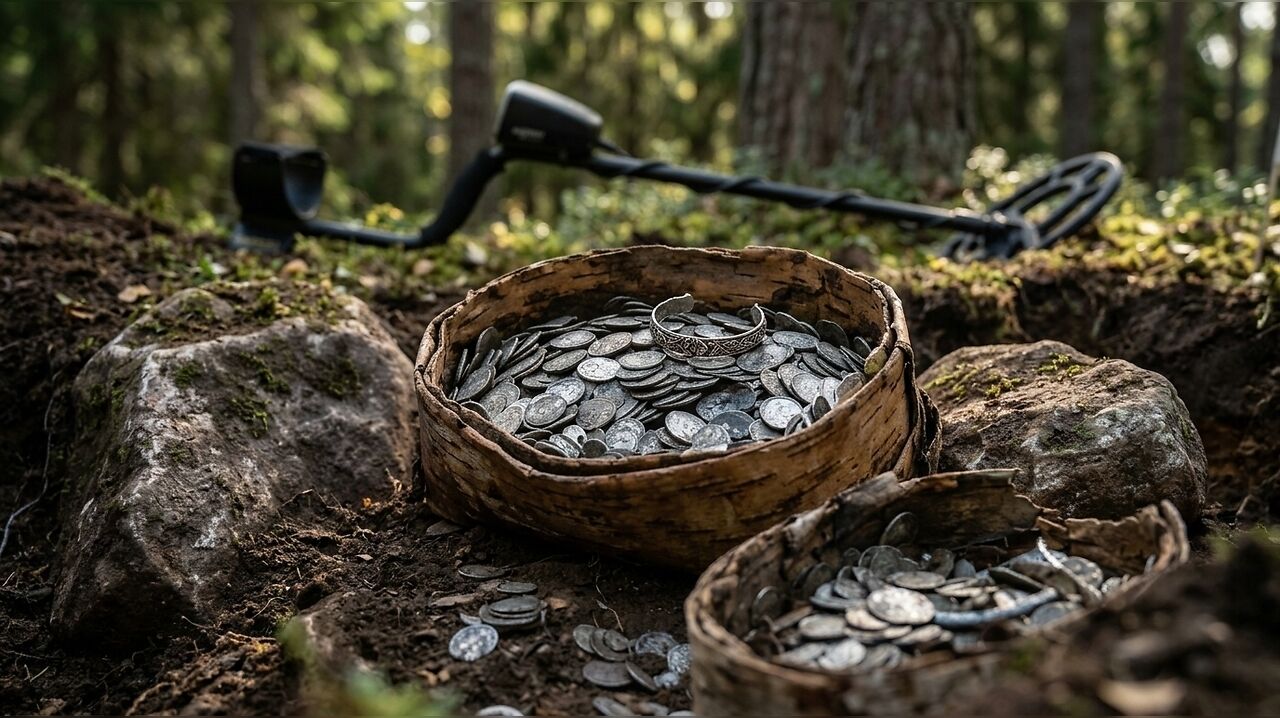
A metal detector enthusiast has uncovered a significant archaeological find in the town of Sysmä, Finland, marking the largest discovery of Viking-era silver ever recorded in the country. The hoard, which weighs approximately 4.5 kilograms, was unearthed on September 3 by
The discovery consists of thousands of silver coins, a silver bracelet, and various other silver objects. These items were not scattered randomly but were carefully stored in two separate containers fashioned from birch bark. The containers were buried between stones at a depth of nearly half a metre, positioned approximately 12 metres apart from one another.
A Record-Breaking Archaeological Find
Following the initial discovery, Esko Tikkala, an archaeologist representing the Lahti City Museums, arrived at the site the next day to examine the items. Official reports from Finland’s national public broadcaster, Yle, have confirmed that this collection is the largest known coin hoard from the country’s late Iron Age period.
The scale of the Sysmä find significantly surpasses the previous record-holder, a hoard discovered in Nousiainen. That earlier find, which had long been considered the most substantial Viking-era collection in Finland, contained approximately 1,700 coins and weighed just over two kilograms. The new discovery more than doubles that weight, though the precise number of coins remains to be determined.
Ongoing Research and Analysis
Because the coins remain clumped together and have not yet been cleaned or separated, experts have not been able to provide an exact count or a definitive total weight. Researchers are now tasked with the delicate process of cleaning and cataloguing the items to establish their precise age and historical significance.
For the individual who made the find, the discovery was an unexpected outcome of a hobby that rarely yields such results. Lappinen noted that the vast majority of signals detected during his outings typically turn out to be scrap metal or debris. The discovery of the two birch-bark containers, however, has provided historians with a rare, intact look at a substantial cache of late Iron Age silver, with further analysis expected to provide a clearer understanding of the hoard’s origins and its place in regional history.




