
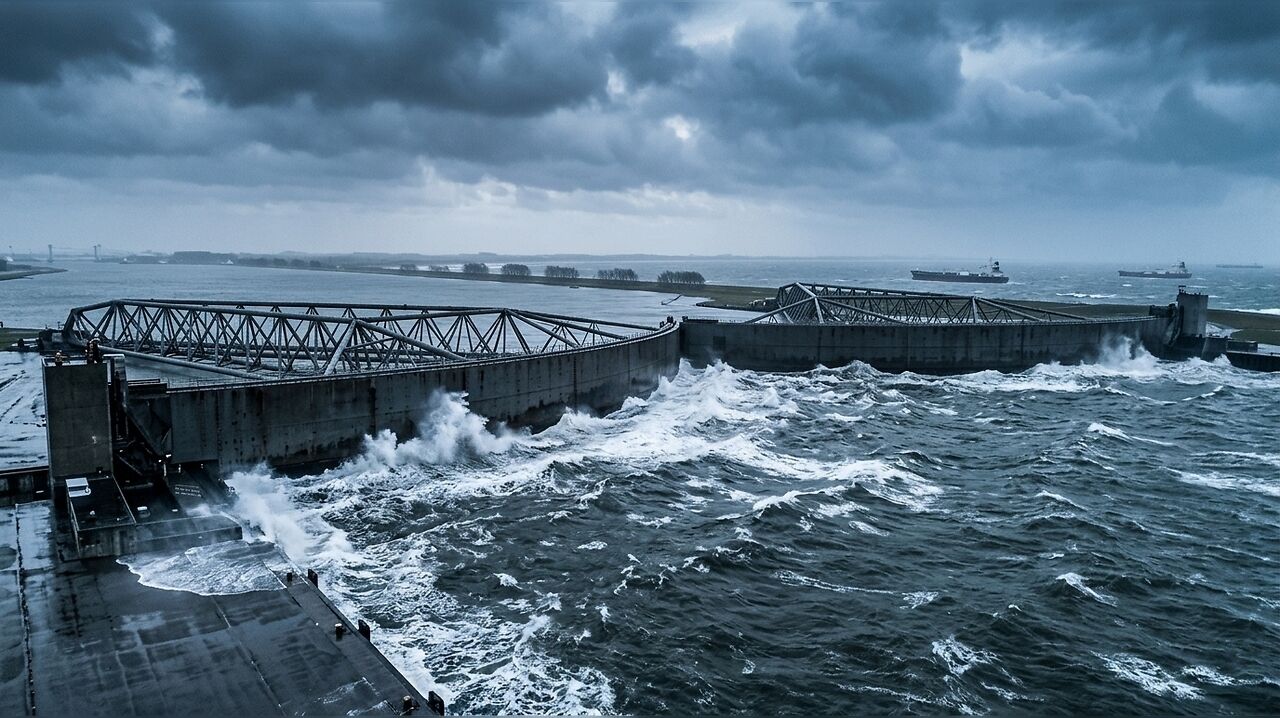
The Netherlands maintains one of the world's most sophisticated flood defence systems, anchored by the
Managed by
Engineering and Operational Mechanics
Constructed between 1991 and 1997, the barrier was not part of the original Delta Plan but was developed following an extensive review process involving the municipality of Rotterdam, local water authorities, and independent committees. These groups evaluated various designs based on economic impact, construction timelines, and environmental integration. The resulting structure relies on two massive gates, each 22 metres high and 15 metres deep, which are supported by ball-and-socket joints measuring 10 metres in diameter and weighing 680 tons each.
The closing process is entirely automated. When water levels near Rotterdam are forecast to exceed three metres above the reference level—or 2.9 metres near Dordrecht—the gates fill with water and sink to the riverbed. This operation takes approximately two hours. While the system is designed to function without human intervention, an operational team remains on standby to monitor the process and intervene if necessary. Rijkswaterstaat also employs a specialized risk-assessment model to ensure the reliability of the closing mechanism.
Historical Performance and Monitoring
The barrier has been tested by several severe weather events over the decades. It first closed at its official threshold on 21 December 2023, when forecasts for Rotterdam reached the three-metre mark. Prior to this, the barrier had been activated twice at a lower, precautionary threshold of 2.6 metres: once in November 2007 and again in January 2018. On several other occasions, including storms in 2002, 2013, and 2014, the water levels came within centimetres of triggering the automatic closure.
Public education regarding these defences is managed through the Keringhuis water information centre in Hoek van Holland. The centre provides details on the barrier's history, its technical specifications, and the ongoing maintenance required to keep the region safe from North Sea surges. Through this combination of automated technology and constant monitoring, the Dutch authorities continue to manage the risks posed by the sea to the low-lying province of Zuid-Holland.




