
A primary school in the remote Italian hamlet of
The reopening marks a rare exception to Italian educational regulations, which typically mandate a minimum of 15 pupils to establish a primary class. Authorities granted the waiver to support the isolated community, where the lack of local schooling had threatened to force families to move away from the island.
A Lifeline for an Isolated Community
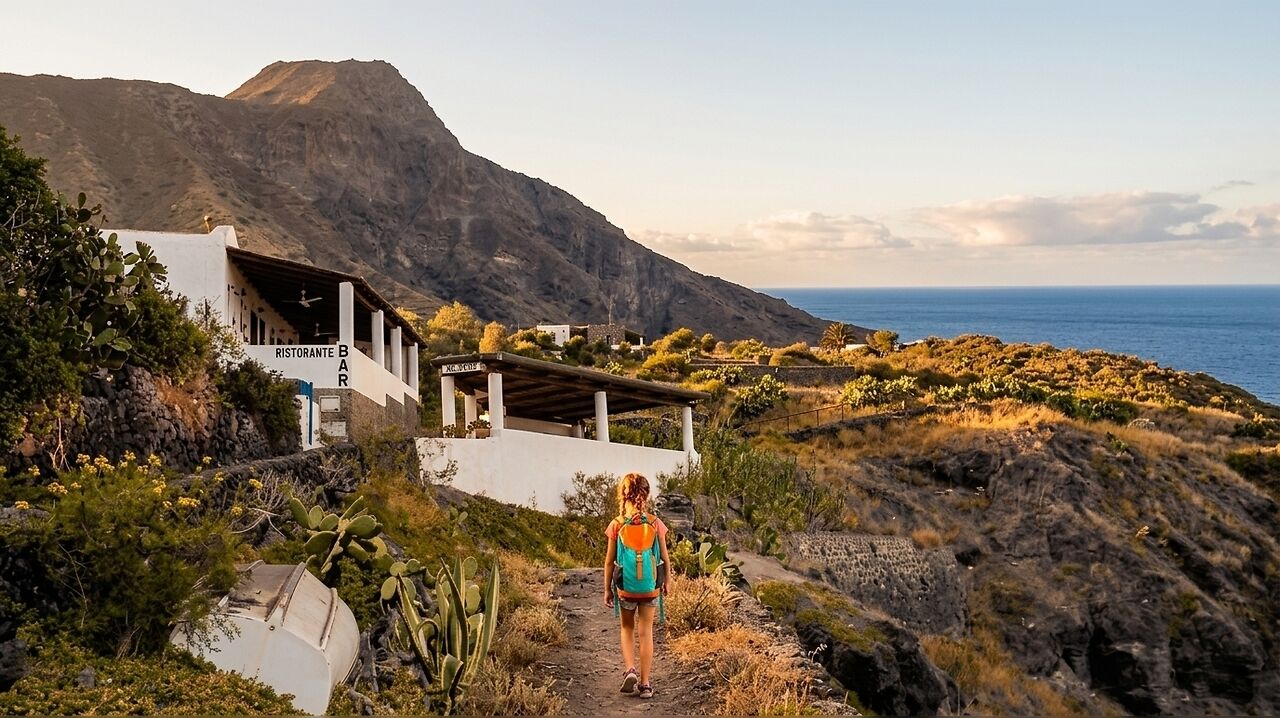
Ginostra is often referred to as an island within an island. As part of the town of Lipari, the village lacks road connections to the rest of Stromboli and is accessible only by sea. Residents rely on donkeys for logistics and tankers for water, creating a lifestyle that is physically and logistically disconnected from the mainland and larger regional hubs.
Aysha’s parents, Monica Abbate and Raffa Bazine, had long advocated for the school’s reopening. They argued that the alternative—commuting by hydrofoil to the main island of Lipari—was unsustainable, particularly during winter months when storm surges frequently disrupt maritime travel. Abbate noted that without the local school, the family would have been forced to split up, with the child and mother relocating while the father remained to manage his construction business.
Following a formal request submitted by the Lipari government in January, the regional school office for Sicily approved the initiative. The school is now housed in a building owned by the local Catholic parish. Teacher Laura Mongi, who relocated from the outskirts of Milan, has been assigned to lead the classroom, following a customized ministerial program designed to meet the unique needs of the student.
Education as a Fundamental Right
The reopening has been framed by local officials as a vital step in preserving the community. Mayor Riccardo Gullo described the move as a gesture of solidarity, emphasizing that education should be considered a fundamental right regardless of a student's geographic location. Father Nino Pirrotta, the local parish priest, added that the school serves as a essential focal point for the village, which has a population of approximately 40 residents.
While the school provides a solution for Aysha, its long-term future remains uncertain. Officials have clarified that the current arrangement is a response to a specific, immediate need, and the school’s continued operation will depend on future enrollment numbers. The situation highlights the ongoing challenges faced by families in the Aeolian archipelago, where schooling gaps persist in other remote areas like Filicudi. For now, however, the school bell has rung in Ginostra for the first time in 20 years, allowing the family to remain in the environment they describe as their home.




